
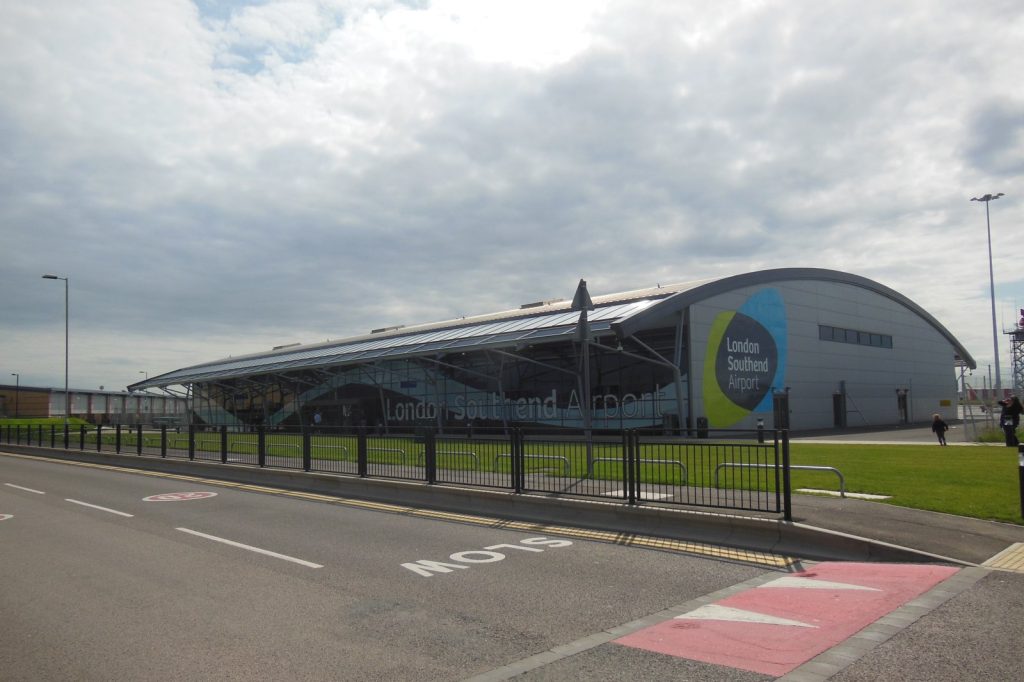
LONDON SOUTHEAST — A Beechcraft King Air B200 crashed shortly after departing London Southend Airport on July 13, killing all four people on board. The twin-turboprop aircraft became airborne for only a brief period before falling to the ground and catching fire. Emergency responders arrived to find the aircraft engulfed in flames, but they were unable to rescue the occupants.
The incident has triggered a wave of scrutiny directed at both the airport and the aircraft model. London Southend Airport, which began operations in the early 1900s as a wartime airfield and later evolved into a modern transport hub, attracts travelers seeking an alternative to larger airports such as Heathrow or Gatwick.
That convenience now carries a burden of uncertainty. The Beechcraft King Air B200 is widely used by corporations, charter operators, and private owners. It is known within the aviation industry for its reliability and safety record. That reputation now stands challenged by the crash.
Investigators will examine the wreckage in detail, reviewing maintenance logs, pilot qualifications, and every mechanical component. The central question extends beyond what specifically failed.
Authorities will also assess whether airport procedures could have identified any potential issue before the aircraft departed. Air travel inherently involves risk, a fact that passengers generally accept in theory. The Southend crash makes that risk tangible.
Four people have died, and their families now belong to a statistic the aviation industry continually strives to reduce. London Southend Airport will face intense examination.
Its emergency response protocols and safety procedures will be analyzed. The surrounding community of Southend-on-Sea is in shock. Crashes of this nature are rare in this region, and the event has shaken local confidence.
The investigation will take time to complete. The cause could be mechanical failure, human error, or a combination of factors.
The stakes, however, are clear. When a crash occurs at a regional airport, the entire network of smaller airfields feels the impact. Travelers begin to question safety.
Businesses reconsider their choice of departure point. The airport itself must ask what it might have overlooked.
For now, there are no answers. Only the wreckage remains. Only four lives lost.
Only a grieving community waiting while experts sift through metal and memory to determine what went wrong.




