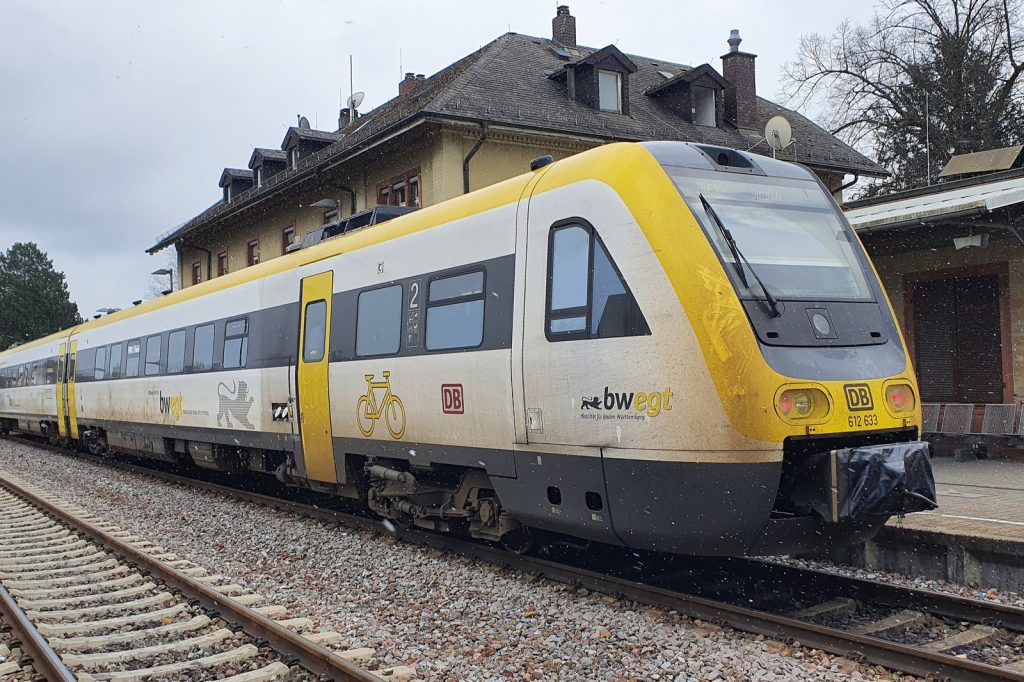
The verified development: on the evening of July 27, 2025, a Deutsche Bahn regional express from Sigmaringen to Ulm left the rails near Riedlingen, in Germany’s southwestern state of Baden-Württemberg, roughly 160 kilometers west of Munich, and three people died. The railway and Ulm police confirmed that “a train traveling the route between Munderkingen and Riedlingen derailed”, and by the first accounts “there were about 100 passengers on the train” when “at least two carriages partially derailed”. Rescue work did not pause at dark: “Rescue operations on the derailed train continued through the night”, and “train traffic on the section between Munderkingen and Sigmaringen has been temporarily suspended”.
By the next day the dead had names and ages. A railway union confirmed one of the dead was a male trainee of 36; police named the others as the train driver, a 32-year-old man, and a woman of 70 riding as a passenger. Martin Burkert, who chairs the EVG railway and transport union, spoke for the workforce: “Our deepest sympathy goes out to the families and friends of the deceased,” he said, and then for his own: “We mourn the loss of the two colleagues who lost their lives in the line of duty.”
The casualty ledger carried two figures, and honesty requires both. According to the regional daily Schwaebische, carried in the first day’s reporting, “three people died as a result of the accident, 34 were injured, including three in serious condition”. The district fire chief put the count higher: “Around 50 are injured, a number of them seriously, according to the district fire chief”, as Deutsche Welle summarized the overnight figures. The gap between 34 and roughly 50 is the ordinary arithmetic of a moving disaster, injured passengers walking away, then presenting at hospitals, and neither number was reconciled in the first days.
The cause, as investigators reconstructed it, ran downhill. A storm had crossed the region earlier in the evening; Germany’s weather service, the DWD, said “Up to 50 liters per square meter fell within an hour on Sunday evening”, rainfall its spokesman Marco Pukert “classified as the highest degree of intense rain”, measured not at the site but by radar, since “The nearest station in Altheim, six kilometers away, recorded 22 liters per square meter in two hours”. Police said the heavy rain set off a landslide that shoved earth and debris across the tracks, and the express hit it. On Monday the picture sharpened. “It is believed that heavy rain in the area of the accident caused a sewage shaft to overflow”, Ulm police and Ravensburg prosecutors said in a joint statement, and “The water triggered a landslide on the embankment next to the tracks, which in turn caused the derailment.”
Strategically, the episode is less about a railway than about water. The train did not fail; the ground under the railway did, saturated by an hour of rain of an intensity German classifiers rank at the top of their scale, and, on the investigators’ preliminary read, drained by infrastructure, a sewage shaft, that was never designed for that hour. The calculus every rail network now runs is whether its embankments, culverts and drains were engineered for a climate that has moved. What this signals from Baden-Württemberg is that the answer, when the rain finally tests it, arrives in the space of one evening, on a Sunday express full of ordinary passengers. Three people are dead, dozens are injured, and the operative lesson is the least dramatic one in infrastructure: the danger was not on the timetable. It was under the tracks, waiting for weather.
Sources
- Three people died in a train derailment in Baden-Württemberg (VIDEO) — Amoledo US
- Germany updates: Train derails, killing at least 3 people