
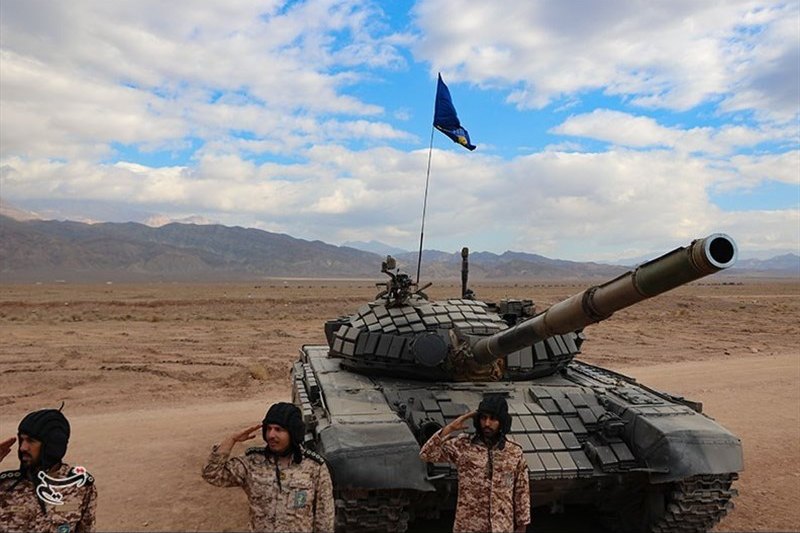
Asian traders sent Brent crude to $65.65 a barrel, up 4.5 percent, before dawn on Wednesday, 8 January 2020, after Iran fired more than a dozen ballistic missiles at two Iraqi bases hosting American troops. Gold, the yen and U.S. Treasuries jumped while Tokyo’s Nikkei 225 slid 2.5 percent as investors priced in the risk that reprisals could disrupt tanker traffic through the Strait of Hormuz, the choke-point for a fifth of world supply.
The Islamic Revolutionary Guard Corps claimed responsibility for the salvo, which began around 1:30 a.m. local time. U.S. Central Command said “more than 12” missiles struck Al-Asad airbase west of Baghdad and a base near Erbil in northern Iraq; no American fatalities were reported.
The attack came less than 48 hours after Tehran buried Qasem Soleimani, the Quds Force commander killed by a U.S. drone on 3 January outside Baghdad airport. President Trump told reporters that night the strike had foiled “imminent and sinister” plans against U.S. diplomats and service members, while Secretary of State Mike Pompeo said intelligence showed Soleimani was “actively plotting” operations in Iraq, Syria and Lebanon. Energy traders woke to a classic risk-off playbook.
Brent’s overnight spike to $65.65 was the highest since mid-September, when a drone attack on Saudi Aramco facilities briefly knocked out 5 percent of global output. “Geopolitical risk is back on the premium sheet,” said Helima Croft, head of commodity strategy at RBC Capital Markets, in a note to clients.
“The market had grown complacent assuming the U.S. shale cushion could absorb any Middle East shock.” Gold rallied 2.3 percent to $1,588 an ounce, its strongest level since 2013, and the Japanese yen hit a three-month high against the dollar. Equity futures pointed lower across Europe and the United States, with the S&P 500 mini-contract down 1.7 percent at the Tokyo open. Continental Resources founder Harold Hamm, speaking by phone from Oklahoma City, cautioned that the rally may have legs beyond the headlines.
“We’re heading toward a structural tightening regardless of what happens in the Gulf,” he told CNBC. Hamm, a long-time advocate of lifting U.S. export restrictions, predicted $75 crude within six months as global inventories shrink. His view contrasts with shale executives who argue Permian output can ramp quickly if prices hold above $60.
The Energy Information Administration said last week U.S. production hit a record 12.9 million barrels per day in October, but growth is slowing as investors demand returns over volume. House Speaker Nancy Pelosi said she would press ahead with a vote on a war-powers resolution intended to limit the president’s ability to strike Iran without congressional approval.
“The administration took action without consulting Congress and without respecting the Constitution,” Pelosi told reporters on Capitol Hill. Senate Minority Leader Chuck Schumer warned that “escalation begets escalation” and called for immediate briefings. Republican leaders closed ranks behind the White House.
“The president acted decisively to protect Americans,” Senate Majority Leader Mitch McConnell said. “Iran’s latest attack proves the regime still views terror as statecraft.” Senator Lindsey Graham tweeted that any attempt to tie the president’s hands “would embolden Tehran and demoralize our allies.” Roughly 21 million barrels of crude and condensate flow daily through the 21-mile-wide strait, making it the world’s most sensitive energy waterway.
The U.S. Fifth Fleet, based in Bahrain, escorted tankers during the 1980s “Tanker War” and again after mysterious attacks last summer Washington blamed on Tehran. Iran has repeatedly threatened to close the channel if its own exports, now near zero under U.S. sanctions, are blocked. Analysts at ClearView Energy Partners estimate a three-week closure could push Brent past $90, shaving 0.5 percent off global GDP.
Shipping associations have already advised vessels to transit only at night and to disable automatic identification systems near Iranian waters, raising insurance premiums. Wednesday’s price surge erased the New Year’s losses for energy equities, with ExxonMobil and Chevron each up more than 2 percent in pre-market trade. Yet the underlying math is sobering: OPEC spare capacity is below 3 million barrels a day, U.S. shale rig counts keep falling, and Chinese import quotas for 2020 point to record purchases.
If diplomacy fails and rockets fly again, the next jump may not stop at $65.




