
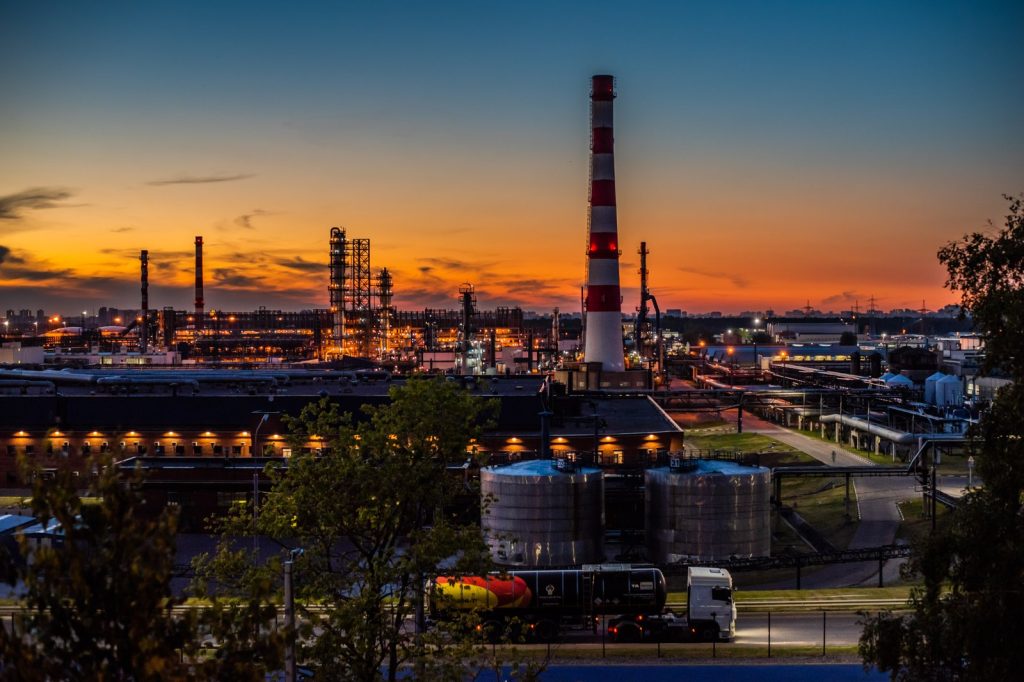
Drone Strikes and Market Reactions
The first major strike struck the Andreapol oil depot on January 30, 2025. Brent crude rose 2.5 percent, reaching $82 per barrel, as traders began to factor in potential supply disruptions. Days later, on February 3, 2025, a strike on the Volgograd Refinery drove a further 1.8 percent increase, lifting Brent to $84 per barrel. Then, on February 5, 2025, the attack on the Novoshakhtinsk Refinery pushed prices to $85 per barrel. Each escalation widened the risk premium built into crude prices, according to recorded market data.
Russia remains a major oil exporter. The International Energy Agency reported that the country shipped approximately 4.5 million barrels per day in 2024. The attacks have raised concerns about reduced domestic refining capacity, which analysts note could limit exports of refined products such as diesel and fuel oil. In response, Moscow has moved to maintain crude export volumes by redirecting supplies to alternative buyers. China and India, the record shows, have increased their purchases of Russian crude since the onset of the war. This shift has partially offset pressure on Russian export revenues, though the G7 price cap of $60 per barrel has limited the Kremlin’s earnings from those sales.
To circumvent the price cap and Western sanctions, Russia has deployed a shadow fleet of tankers, according to analysts tracking the trade. This fleet operates outside standard insurance and regulatory frameworks, enabling continued shipments to willing buyers. The effectiveness of this fleet in sustaining export volumes will be a key factor in the coming months.
Refining Vulnerabilities and Global Consequences
Russia’s refining sector has long been a central node in global oil markets. Since the Soviet era, the country’s refineries processed a large share of domestic crude into fuels for both domestic use and export, supplying European and Asian markets. Major complexes such as Volgograd and Novoshakhtinsk were built or expanded in the late twentieth century to handle growing volumes of Urals crude and deliver gasoline, diesel, and fuel oil to customers across the former Soviet Union and beyond. These refineries were designed to operate within integrated supply chains, relying on pipelines and storage networks that stretched deep into Europe before the current conflict altered trade flows.
Refining capacity determines how much crude can be turned into usable products rather than shipped raw. When refineries operate at full capacity, they absorb domestic output and limit exportable crude; outages shift the balance toward raw crude shipments. Russia’s refining fleet has faced periodic disruptions from accidents, sanctions, or maintenance, but the scale of the Ukrainian drone strikes marks an escalation in targeting critical infrastructure. Historically, such attacks on refining sites led to temporary fuel shortages in neighboring regions and wider price swings as traders reassessed supply risks.
Today, the issue is more consequential because of Russia’s diminished access to Western markets and technology. Since the invasion of Ukraine, the European Union and the United States have imposed sanctions that restrict exports of refining equipment and services to Russia. This has slowed maintenance and modernization, making the system more vulnerable to sudden losses in processing capacity. At the same time, Russia has redirected most of its crude exports toward Asia, but those shipments earn less due to the G7 price cap. If refining capacity declines further, the country could struggle to produce enough diesel and fuel oil to meet domestic demand or fulfill export contracts, tightening product markets in Asia and beyond.
Analysts at the World Bank have issued a warning that further disruptions to Russian energy infrastructure could push oil prices above $100 per barrel. Such a scenario, they caution, would have significant implications for global inflation and economic growth, particularly in import-dependent economies. The trajectory of oil prices in the coming months will depend in part on the frequency and scale of further strikes on Russian energy assets, as well as on the capacity of Moscow’s shadow fleet to sustain export volumes. Traders and policymakers alike are watching for any escalation that could tighten global supply further. The World Bank’s warning of a possible breach of the $100 threshold underscores the stakes for the broader global economy.




