
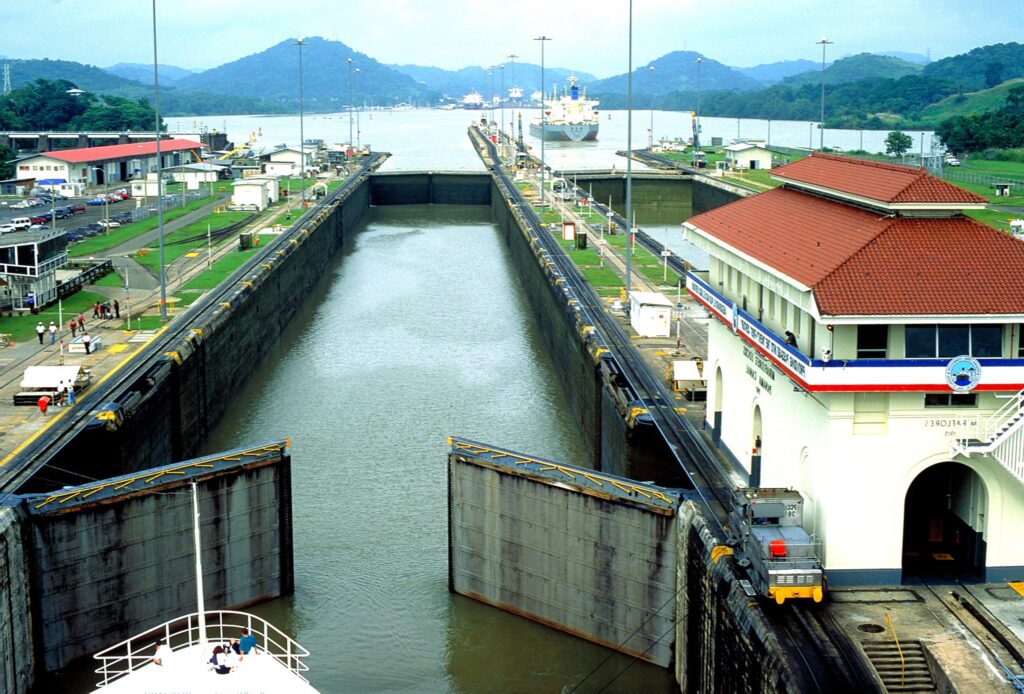
PANAMA CITY, July 10 — The Panama Canal Authority released new operational data today detailing the precise mechanics of the lock system that has moved global commerce for over a century. The record shows that the canal uses a series of locks to raise ships from sea level to the level of Gatun Lake — 85 feet, or 26 meters, above sea level — and then lower them on the opposite side. The original locks, built between 1904 and 1914, consist of three distinct sets.
On the Atlantic side are the Gatun Locks, which have three chambers. On the Pacific side, the Pedro Miguel Locks have one chamber, and the Miraflores Locks have two chambers.
Each chamber measures 1,000 feet in length, 110 feet in width, and 40 feet in depth. The locks are filled and emptied by gravity, drawing water from Gatun Lake, which is itself fed by rainfall in the surrounding watershed. According to the filing, the original locks use miter gates, each weighing 745 tons.
These gates are operated by electric motors. A typical transit from ocean to ocean takes between eight and ten hours.
Electric locomotives, known as mules, guide ships through the chambers, with two locomotives positioned on each side of the vessel. Sources familiar with the system note that the 2016 expansion added a new set of locks. These new locks are 1,400 feet long and 180 feet wide.
Instead of miter gates, they use rolling gates, each weighing 3,300 tons. The expansion also introduced water-saving basins that recycle 60 percent of the water per lockage.
The Gravity of the System
On the timeline, the original lock design has remained largely unchanged since its completion in 1914. The reliance on gravity-fed water from Gatun Lake means the canal’s operation is directly tied to rainfall patterns in the watershed. This dependency has become a subject of increasing scrutiny as climate patterns shift.
The miter gates, at 745 tons each, are a signature of the original construction. They swing open and closed like doors, a design that has proven reliable for more than a century.
The electric motors that operate them were state-of-the-art when installed and have been maintained and upgraded over the decades. The new locks, by contrast, represent a significant engineering departure. The rolling gates slide sideways into recesses in the lock walls.
At 3,300 tons each, they are more than four times heavier than the original miter gates. The water-saving basins, which capture and reuse 60 percent of the water from each lockage, address a critical vulnerability: the canal’s dependence on freshwater from Gatun Lake.
The Mechanics of Transit
A ship entering the canal from the Atlantic approaches the Gatun Locks. The three chambers lift the vessel in stages. Once at the level of Gatun Lake, the ship crosses the lake, which sits 85 feet above sea level.
On the Pacific side, the vessel descends through the single chamber at Pedro Miguel Locks, then through the two chambers at Miraflores Locks. The electric locomotives, or mules, run on tracks along the lock walls.
Two mules on each side of the ship maintain tension on cables, keeping the vessel centered in the chamber as water levels change. This system prevents the ship from drifting into the lock walls during the filling or emptying process. The entire transit, from ocean to ocean, takes between eight and ten hours.
That time includes the passage through the locks and the crossing of Gatun Lake.
Water Management and Future Pressures
The 2016 expansion’s water-saving basins mark a notable innovation. By recycling 60 percent of the water per lockage, the new locks reduce the strain on Gatun Lake. The original locks, by contrast, release fresh water into the ocean with each transit.
The canal’s reliance on rainfall in the watershed means that drought conditions can directly affect operations. In recent years, the authority has imposed draft restrictions on ships transiting the canal, limiting the weight of cargo vessels can carry.
The new locks, with their water-saving basins, offer a partial buffer against such restrictions. The record shows that the canal continues to operate as a critical chokepoint for global trade. The lock system, both old and new, remains the mechanism that makes that transit possible.
Looking ahead, the canal authority faces the challenge of maintaining aging infrastructure while adapting to changing environmental conditions. The original locks, now more than a century old, require ongoing maintenance.
The new locks, in operation since 2016, represent a modern alternative but come with their own operational requirements. The data released today provides a detailed picture of a system that has evolved over more than a century. The original locks, built with miter gates and electric motors, continue to operate alongside the newer rolling gates and water-saving basins.
The canal remains a feat of engineering that moves ships between two oceans, using gravity, rainfall, and electric locomotives to accomplish what was once considered impossible.
{“@context”: “https://schema.org”, “@type”: “NewsArticle”, “headline”: “Panama Canal Locks Lift Ships 85 Feet Above Sea Level”, “description”: “PANAMA CITY, July 10 — The Panama Canal Authority released new operational data today detailing the precise mechanics of the lock system that has moved…”, “datePublished”: “2026-07-10T09:30:00+00:00”, “author”: {“@type”: “Person”, “name”: “Ariel Antonio”}, “publisher”: {“@type”: “Organization”, “name”: “InfoPulse Today”, “url”: “https://newsfeed.2bme.xyz/”}}




