
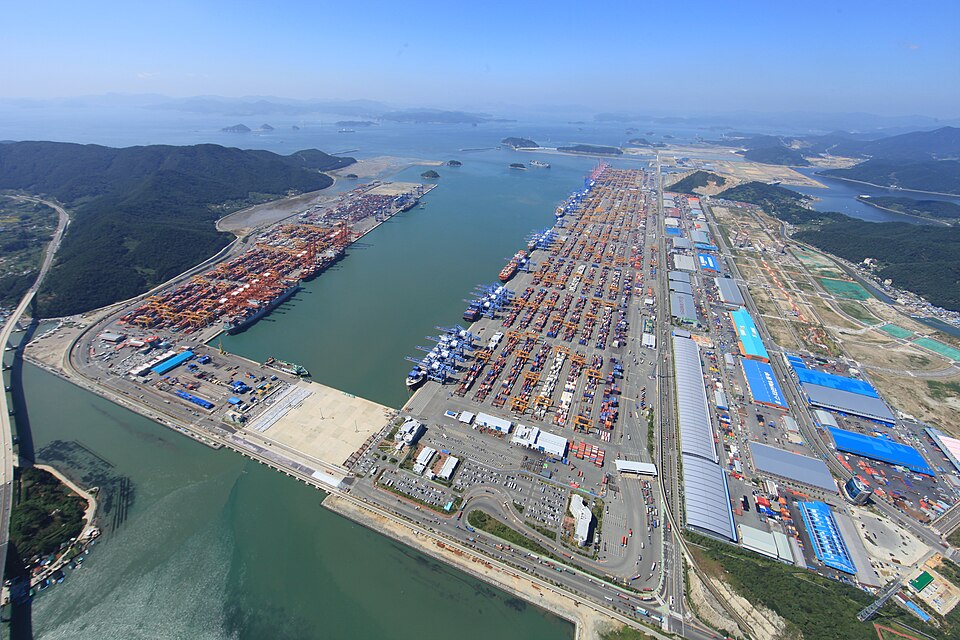
SEOUL — South Korea is within striking distance of becoming only the fourth country in the world to post $1 trillion in annual exports, a milestone that would cement its position as a global manufacturing heavyweight alongside the United States, China, and Germany. According to the country’s trade ministry, cumulative exports stood at $986.6 billion as of December 9, 2024, leaving a shortfall of about $13.4 billion to hit the target by year’s end.
Trade, Industry and Energy Minister Ahn Duk-geun announced the outlook during a meeting with business leaders in Seoul that day, expressing confidence in the goal on the back of strong semiconductor, automobile, and shipbuilding sales. The export surge has been powered by global demand for memory chips, particularly high-bandwidth memory (HBM) used in artificial intelligence applications, alongside a recovery in the automotive sector.
Data shows exports for the first 20 days of December rose 6.8% year-on-year, indicating continued momentum into the final stretch.
From $100 billion to $1 trillion
South Korea’s export trajectory has been steep. The country shipped $100 billion worth of goods in 1995 and surpassed $600 billion in 2022. The $1 trillion target was first set by the government in 2011, and the country came close in 2022 with $683.9 billion before a global economic slowdown intervened.
A weaker won has made South Korean goods more competitive internationally, officials noted, while demand from its top two trading partners has held firm. Exports to China increased 4.5% year-on-year, and shipments to the United States rose 10.2%.
The trade surplus stood at $45.6 billion as of November 2024. Small and medium-sized enterprises have also contributed to the run, with their exports climbing 8.1% in the first 11 months of 2024, according to the Korea International Trade Association, which called the milestone a testament to exporter resilience.
Manufacturing at the core
Manufacturing accounts for about 27% of South Korea’s GDP, and the country’s export engine is driven by conglomerates such as Samsung Electronics, Hyundai Motor, and SK Hynix. The government has backed the push through free trade agreements with 59 countries, including the United States, the European Union, and China, and is seeking to expand its network in emerging markets like India and Southeast Asia. The Bank of Korea has projected 2.2% economic growth for 2024, partly supported by export performance.
A record year could also boost investor confidence in the won and local financial markets, analysts said. Challenges persist, including geopolitical tensions, global supply chain disruptions, and competition from other exporting nations.
The final trade figures for 2024 are expected to be released in early January by the Korea Customs Service, and all eyes will be on whether South Korea can close the gap and join the exclusive $1 trillion club.




