
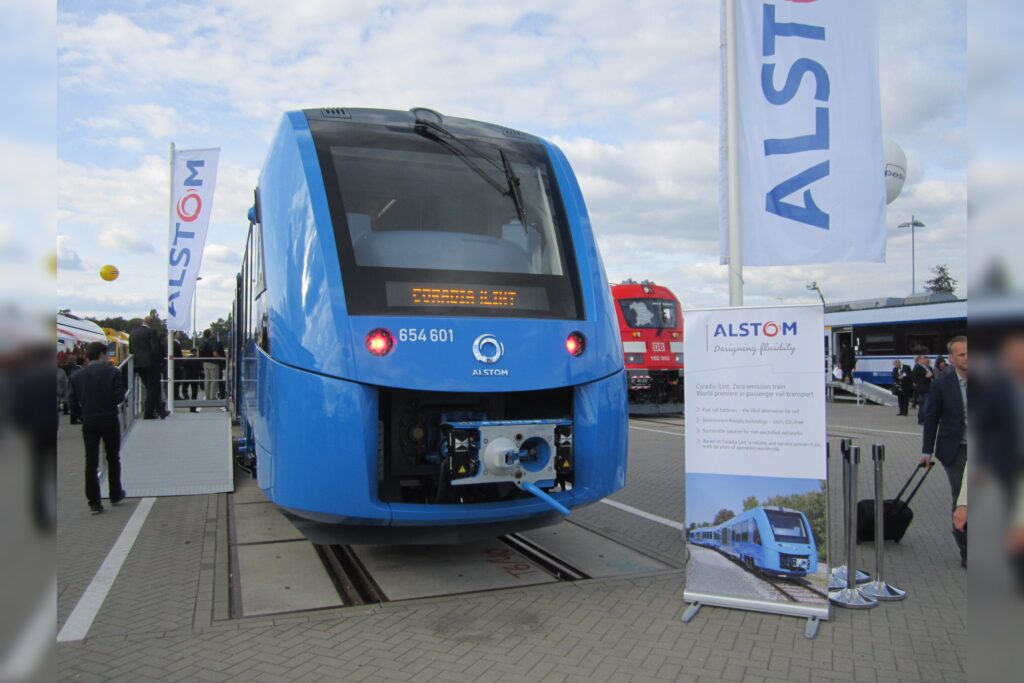
NEW DELHI, July 17 — India has joined a small club of nations now operating hydrogen-powered trains, according to data from railway authorities. The country’s entry into this niche but growing global market carries implications for Central Asian energy exporters, as hydrogen fuel demand could reshape regional trade flows.
The Indian train runs on the 89-kilometre Jind–Sonipat section of the Northern Railway in the state of Haryana. Officials noted the locomotive is entirely indigenous, designed and developed by the Research, Design & Standards Organisation under the Atmanirbhar Bharat initiative — a government push for self-reliance in manufacturing.
Germany, Japan, China and the United States are the other countries with hydrogen train operations or pilot projects.
Germany began operating the world’s first hydrogen fuel cell train, the Coradia iLint, in 2018 on a regional line in Lower Saxony. That deployment proved hydrogen could replace diesel on non-electrified rail routes. Japan has tested hydrogen-powered trains as part of its broader hydrogen society strategy, the company said. China has developed its own hydrogen tram and locomotive prototypes. The United States has several hydrogen train pilot projects, including in California and Illinois.
Market and trade implications
For Kazakhstan and other Central Asian energy producers, the expansion of hydrogen rail represents a potential new demand centre. The region currently exports significant volumes of natural gas and coal, but hydrogen — produced from natural gas with carbon capture or from electrolysis using renewables — offers a diversification pathway. Data from international energy agencies shows hydrogen-powered rail consumes less fuel per kilometre than diesel locomotives, but the fuel itself requires new supply chains.
India’s decision to develop its hydrogen train domestically rather than import foreign technology signals a strategic industrial choice. The RDSO-led design means Indian Railways can scale production without licensing fees or foreign component dependencies. Officials noted the Atmanirbhar Bharat framework prioritises local engineering firms and supply chains.
Technical and operational context
The Jind–Sonipat section is a relatively short route, but railway authorities view it as a proving ground. Hydrogen fuel cell trains emit only water vapour, eliminating diesel exhaust on the line. The fuel cells combine stored hydrogen with oxygen from the air to generate electricity, which powers traction motors.
Germany’s Coradia iLint demonstrated that hydrogen trains can match diesel range and performance on regional routes. India’s entry into this field is notable because its train is entirely indigenous, the company said. That contrasts with some other national programmes that rely on technology transfer from European or Japanese manufacturers.
What to watch next
The key question for energy markets is whether India scales its hydrogen rail programme beyond the single test route. A broader rollout would create sustained demand for hydrogen fuel, potentially opening export opportunities for Central Asian producers with existing gas infrastructure and renewable energy potential for electrolysis.
Railway officials have not announced expansion plans, but the completion of the RDSO-designed train gives Indian Railways a platform to evaluate costs and operational reliability before committing to larger orders.




