
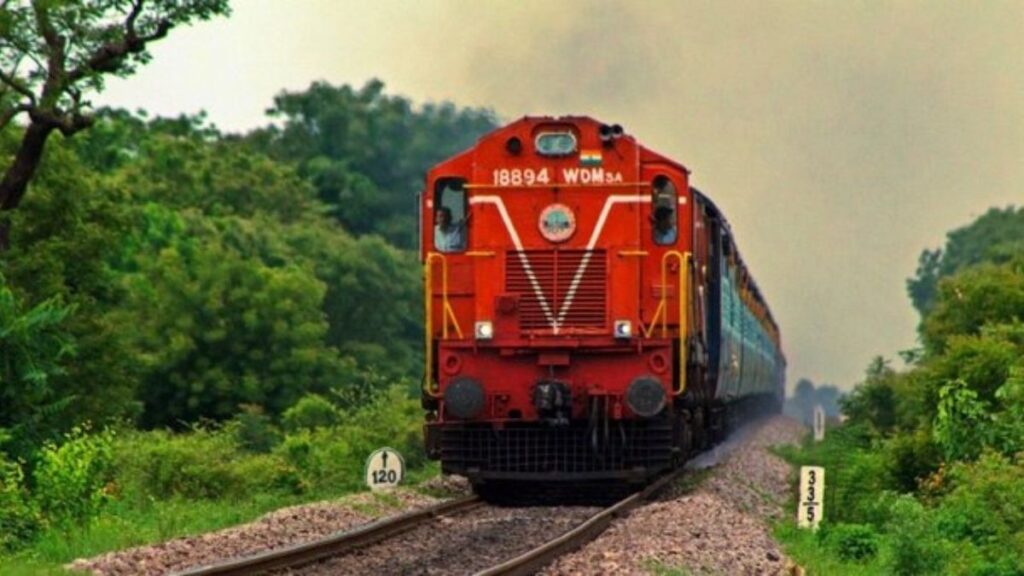
NEW DELHI, July 17 — The first hydrogen-powered train in India does not roar. It hums. And from its exhaust, only water vapour drips.
Indian Railways has unveiled a locomotive that runs on a 1,200 kW hydrogen fuel cell propulsion system, generating its own electricity onboard through a chemical reaction between hydrogen and oxygen. For those involved, the achievement represents a quiet revolution in how the country moves people and goods.
The train carries no overhead electric wires. It has no diesel engine. Instead, hydrogen storage tanks sit aboard the locomotive, feeding the fuel cell that powers the journey.
The only byproduct of that chemical process is water vapour, making it a zero-emission vehicle in operation. At its heart, this is a story about rethinking what a train can be.
The system was designed and developed by the Research, Design & Standards Organisation (RDSO) of Indian Railways. The train has a design speed of 110 kmph, though it is approved to operate at a maximum of 75 kmph. That operating speed, while modest by bullet-train standards, suits the regional and suburban routes where such technology can have the greatest impact.
India is not alone in this pursuit. Hydrogen fuel cell trains have already been tested or deployed in Germany, Japan, China, and the United States. Each country is wrestling with the same fundamental question: how to decarbonise rail transport without sacrificing range or reliability.
What unfolded in India, however, carries particular weight. The country operates one of the largest railway networks in the world, much of it on diesel.
Electrification of the entire network remains a monumental task. Hydrogen offers an alternative path — one that does not require stringing catenary wires across thousands of kilometres of track. The train’s dedicated refuelling infrastructure is part of the package.
That means hydrogen must be produced, stored, and delivered to the trackside. It is a supply chain that does not yet exist at scale in India, but the locomotive itself proves the concept is viable.
For those involved in the project at RDSO, the stakes are clear. A successful hydrogen train programme could reshape Indian rail travel for decades. It could also serve as a template for other nations with vast, partially electrified networks.
The technology is still early in its deployment. The train approved to run at 75 kmph is a first step, not a final destination. What comes next — longer routes, higher speeds, more trains — will depend on how the hydrogen ecosystem grows around it.
For now, the train sits on the tracks, ready to move. And when it does, it will leave nothing behind but water.




