
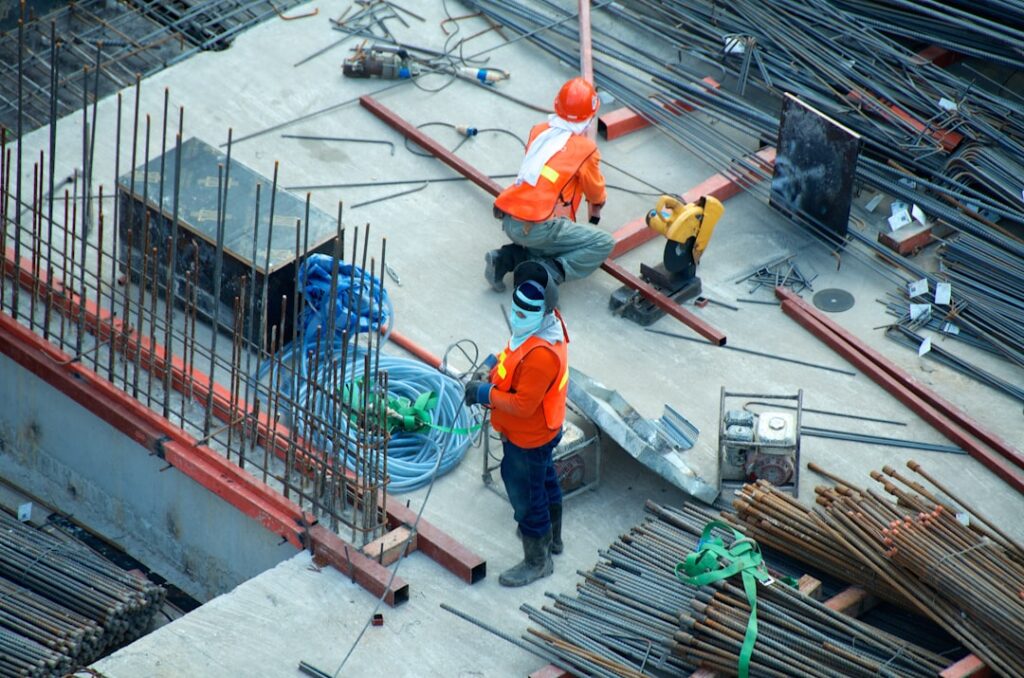
A fire at a construction site in Busan, South Korea, on February 14, 2025, resulted in six deaths and seven injuries. The incident occurred in the same year that global construction spending reached $11 trillion in 2022, highlighting a persistent disconnect between industry investment and worker safety.
The Busan fire represents both a local tragedy—with six families mourning and seven workers hospitalized or recovering—and a broader indicator of systemic safety failures within the construction sector. The International Labour Organization estimates that at least 60,000 construction workers die annually worldwide, equivalent to more than 160 deaths each day. South Korea has its own troubling safety record. In 2022, the country enacted the Serious Accidents Punishment Act, which holds corporate executives criminally liable for safety violations.
This legislation followed a series of high-profile industrial deaths but did not prevent the Busan fire. The construction industry’s $11 trillion in global spending in 2022 represents substantial financial resources.
However, a fraction of that amount, if directed toward fire suppression systems, evacuation plans, and worker training, could have potentially altered the outcome in Busan. The industry continues to treat safety as a cost rather than an investment, operating under tight deadlines and narrow profit margins. Construction plays a vital role in economic development, contributing roughly 16 percent of South Korea’s GDP.
The sector builds housing, factories, and infrastructure, but it also creates hazardous conditions that lead to fires, falls, and structural collapses. The report on the Busan fire notes that the industry “must also focus on” safety, indicating insufficient attention to worker protection.
South Korean authorities will likely investigate the Busan fire for safety violations, potentially leading to charges. However, the underlying pressures that contributed to the accident—demands for fast, cheap construction and tolerance of risk—remain unchanged. These conditions are not limited to Busan or South Korea but exist globally.
The $11 trillion figure represents not only economic activity but also exposure to risk. As urbanization increases demand for construction services, more sites will employ more workers, creating more opportunities for accidents.
Safety measures such as fire extinguishers, emergency drills, and slower schedules require spending that does not generate immediate financial returns. The Busan fire is a predictable outcome of a system prioritizing speed and cost over human life. The construction industry understands what safety improvements are necessary, but the question remains whether it will implement them before the next tragedy occurs.




