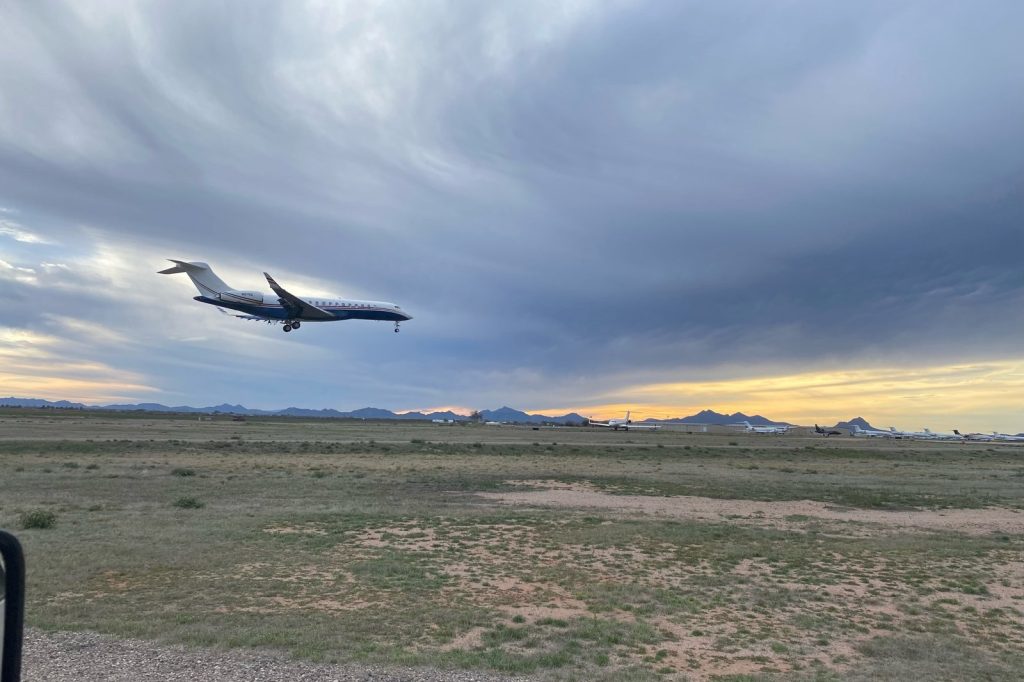
Investigators are now sifting through wreckage at Marana Regional Airport. Two planes, a Lancair 360 MK II and a Cessna 172S, hit each other midair on February 19. Two people died.
The cause is not yet known. The fallout from this crash will ripple through the general aviation community for months.
The Lancair 360 MK II is a high-performance machine. Pilots fly it for speed, for aerobatics, for the pure thrill of it. The Cessna 172S is the opposite.
It is the workhorse of flight schools. Student pilots learn in them.
Instructors teach in them. They are everywhere. Two such different aircraft crossing paths in the same sky ended in disaster.
That collision raises immediate questions about who was where and why. Air traffic control at smaller airports like Marana is often limited. Some fields have no tower at all.
Pilots rely on a common radio frequency, calling out their position and intentions. It is a system built on trust and vigilance.
When that system fails, the results are final. The National Transportation Safety Board will now examine every detail. They will look at radio calls.
They will study flight paths. They will check the weather.
They will determine if the pilots saw each other. All of that takes time. For the families of the two victims, the wait is agonizing.
They want answers. They want someone to say what went wrong. They may never get a fully satisfying one.
Midair collisions are rare but they are not unheard of. Each one scars the community.
Pilots hear about it. They think about it. They second-guess their own habits in the cockpit.
Flight schools that use Cessna 172s will take notice. A collision involving their primary training aircraft hits close to home.
The 172S is the model many students fly first. It is stable, forgiving, reliable. It is also small and hard to see against the ground or the sky.
The Lancair is faster and sleeker. It can cover ground quickly. A pilot in a Lancair climbs into a different performance envelope.
Mixing those two types of traffic in uncontrolled airspace is routine. But routine does not mean safe.
The broader general aviation sector now faces renewed scrutiny. Light aircraft under 12,500 pounds serve a critical function. They move people and goods into remote areas.
They support medical evacuations. They power tourism.
They are the backbone of small-town air travel. But they operate in a system that is less structured than commercial aviation. No flight attendants.
No dispatchers. Often, no radar separation. Just a pilot, a plane, and a radio.
Safety advocates will push for changes. They may call for more mandatory collision avoidance equipment.
They may demand better training on see-and-avoid techniques. They may lobby for more controlled airspace around busy regional airports. Each of these ideas carries a cost.
Equipment is expensive. Training takes time.
Expanding controlled airspace requires federal action. Not every pilot wants it. Not every airport can afford it.
The accident at Marana is a tragedy. It is also a test. The investigation will produce a probable cause.
It will issue recommendations. Whether those recommendations lead to real change is another question.
The aviation industry has a long memory for accidents. It also has a short one for inconvenience. The two people who died on February 19 deserve more than a report filed away in a cabinet.
They deserve a system that learns. Whether that happens depends on the will of regulators, the pressure of the flying public, and the hard work of investigators who now hold the wreckage in their hands.