
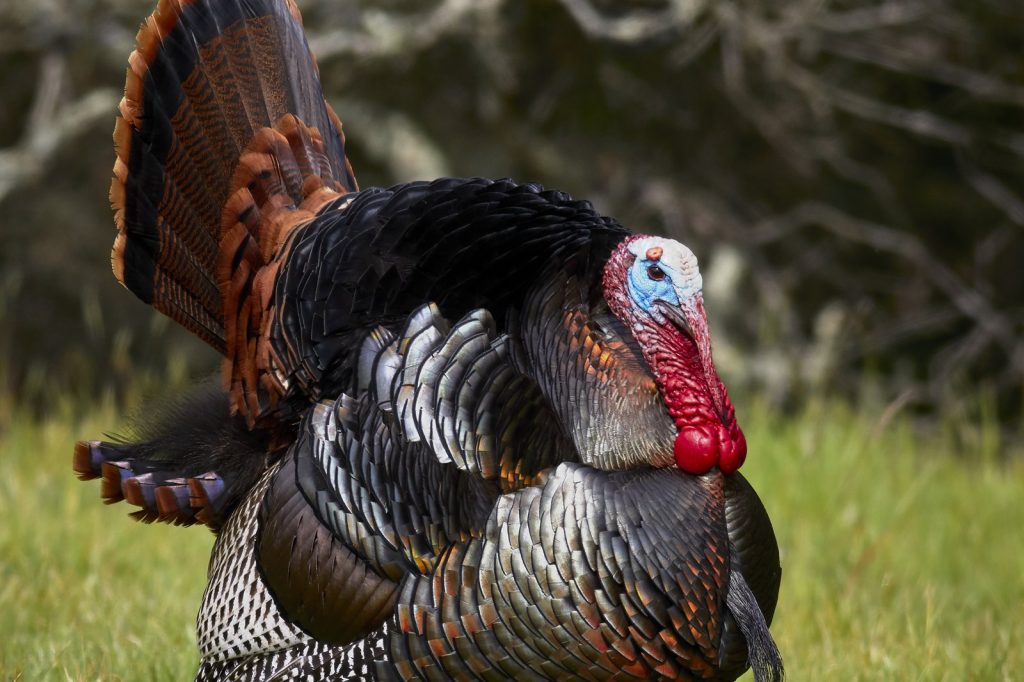
State wildlife officials are once again calling on hunters, hikers, and outdoor enthusiasts to help monitor Michigan’s wild turkey population through an annual citizen-science project now in its fourth year. The Michigan Department of Natural Resources has opened its turkey brood survey, which runs from July 1 through Aug. 31, and asks the public to report sightings of hens with young turkeys, known as poults, along with any adult males, called toms.
Participants submit information through an online form that includes the date and county of the sighting, as well as the number of toms, hens, and poults observed. “Summer is one of the best times of year to see wild turkey families,” said Adam Bump, the DNR’s upland game bird specialist.
“Every brood observation helps us better understand how many young turkeys are surviving and where reproduction is occurring across Michigan.” The agency views public participation as a way to turn casual observers into data collectors for a couple of months each year, a practice that wildlife managers say yields valuable insights into the health of the turkey population across the state.
Citizen Scientists Help Track Reproduction
The survey, limited to a two-month window each summer, enables biologists to track turkey reproduction in every county and adjust management strategies accordingly. By submitting their observations, members of the public become citizen scientists contributing to a broader understanding of how many young turkeys survive from year to year.
The DNR uses this brood data to gauge whether reproduction is occurring at sustainable levels and to identify geographic patterns in nesting success. This year marks the fourth iteration of the survey, which has become a standard tool in the agency’s wildlife management toolkit. Michigan’s annual brood survey is not an isolated effort. It is part of a larger multistate initiative supported by the National Wild Turkey Federation that employs a standardized survey protocol to monitor turkey populations across the bird’s expanded range.
This coordinated approach ensures that data collected in Michigan can be compared with findings from other states, giving wildlife agencies a regional picture of wild turkey health and reproduction trends. The consistency of the protocol allows biologists to detect changes in population dynamics over time and to adapt hunting regulations and habitat management practices as needed.
A Conservation Success Story Decades in the Making
The presence of wild turkeys in all of Michigan’s 83 counties today stands as one of the state’s greatest conservation achievements. The bird, scientifically known as Meleagris gallopavo, once thrived across much of North America, but European settlement disrupted its habitat and unregulated hunting drove most populations to local extinction by the early twentieth century.
By 1900, the species had vanished from Michigan entirely, a fate mirrored in many eastern states. Restoration efforts began in the 1950s, when state wildlife agencies and conservation groups captured surviving populations in other regions and released them into suitable forests and woodlands. Michigan’s reintroduction started with releases in the southern Lower Peninsula and gradually expanded northward, often using wild-trapped birds from successful pockets in neighboring states.
Decades of trapping, transport, and habitat protection allowed the population to rebound beyond its historic range. Today, wild turkeys live in every corner of the state, and the species is managed as a renewable wildlife resource that supports regulated hunting seasons—one in spring and another in fall—that draw tens of thousands of participants and their spending power to Michigan’s rural communities.
The wild turkey’s recovery illustrates how targeted conservation can reverse extirpation and restore both ecological and economic benefits. Regulated hunting generates revenue for local economies and for state conservation programs. Citizen science programs like Michigan’s annual brood survey further strengthen wildlife management by turning outdoor recreationists into data collectors, helping biologists track reproduction and adjust regulations.
The survey also reflects a sustained commitment by the DNR and its partners to monitor the bird’s progress across its expanded range, ensuring that one of America’s most iconic game birds continues to thrive in the Great Lakes state.




