
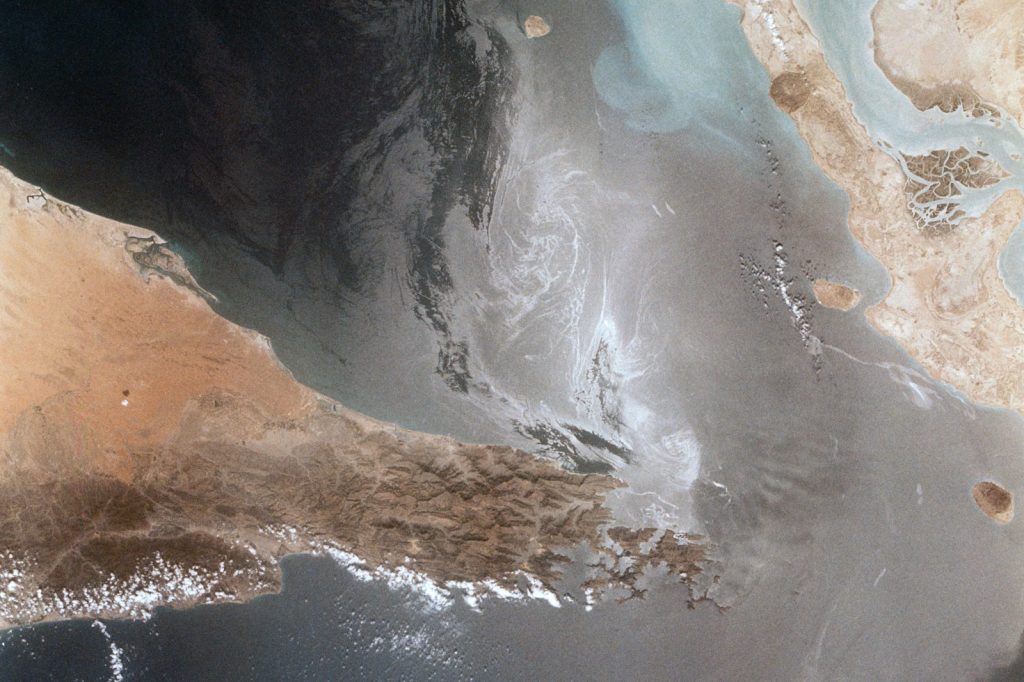
One-fifth of the world’s daily oil consumption moves through the Strait of Hormuz. That figure is now in question. Shipping data reviewed by industry analysts shows a measurable drop in vessel traffic through the strait after a strike on a commercial vessel Saturday.
The decline, recorded by Sunday evening, is the first concrete disruption to the waterway since the attack. No group or state has formally claimed responsibility.
Regional security officials are treating it as a deliberate act against commercial navigation. The numbers tell a clear story. Vessel-tracking services reported a reduction in both inbound and outbound traffic.
At least two major oil tanker operators have already diverted vessels to alternative routes. Those diversions add significant transit time and fuel costs — a direct hit on the economics of moving crude through the chokepoint.
Insurance premiums for vessels still willing to transit the strait have risen sharply. Several shipping firms have issued internal notices pausing new bookings for Hormuz transits pending security assessments. That pause is not public policy.
It is private risk management, and it is happening now. The strait itself is narrow — about 21 miles wide at its narrowest point. Iran’s Islamic Revolutionary Guard Corps maintains a significant presence along the northern coast.
The Saturday strike, described by sources familiar with the incident as a precision strike on a commercial vessel, has not been formally claimed. But the IRGC’s posture along that coast is a fact of geography and military deployment that any shipping planner must now factor in.
Crude benchmarks have not yet moved. Traders are watching the next 48 hours. Washington has long warned that any sustained disruption to Hormuz would trigger a spike in global energy prices.
That warning is now being tested against real-world data. The U.S. Navy’s Fifth Fleet, based in Bahrain, has not issued a formal statement on the traffic drop.
A defense official familiar with the matter said the Navy is monitoring the situation and maintaining its regular patrol posture. No escalation. No public posture change.
The patrols continue as before. The numbers that matter: one-fifth of global oil consumption daily. Two tanker operators already rerouted.
A measurable drop in traffic within 24 hours of the strike. Insurance premiums up.
New bookings paused. The next 48 hours watched by traders. This is not a crisis yet.
It is a measurable disruption with clear data points. The strike happened Saturday.
By Sunday evening, the traffic drop was real. The question now is whether the numbers will hold, deepen, or reverse. The answer depends on whether more operators follow the two that have already diverted, whether insurance costs push more firms to pause bookings, and whether the next 48 hours bring a price response in the crude market.
The strait handles roughly a fifth of global oil consumption. That is the single most important number in this story. Every other figure — the drop in transits, the diverted vessels, the rising premiums — flows from what that number means.
If the waterway becomes unreliable, the math of global energy supply changes. For now, the data is clear.
Traffic is down. The strike was deliberate. No one has claimed it.
The IRGC is on the northern coast. The Fifth Fleet is watching.
Traders are waiting. The numbers will tell the rest.




