
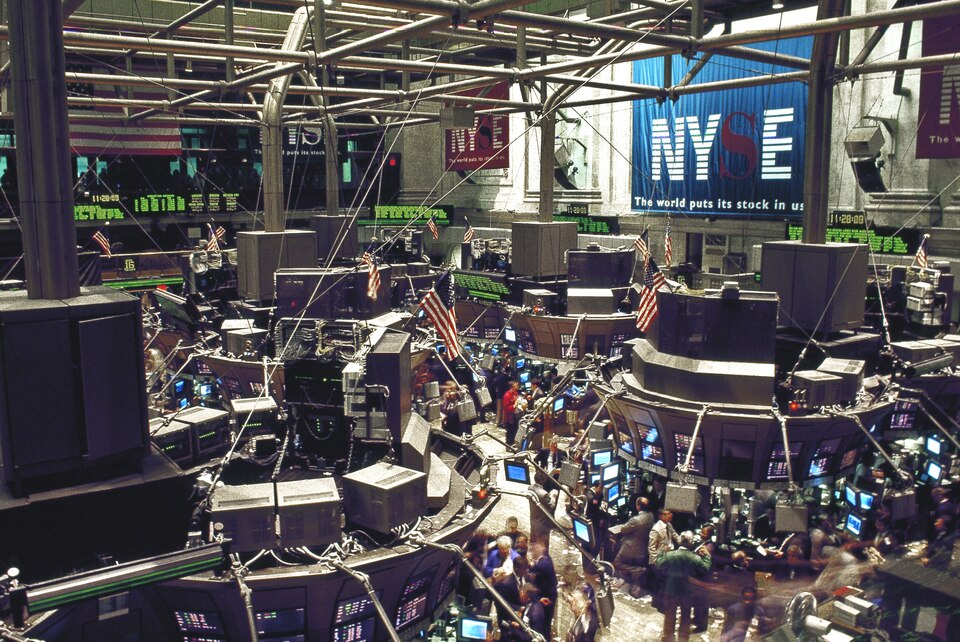
NEW YORK, October 2 — Global stock markets saw volatility driven by bond market swings, while artificial intelligence optimism provided support to Wall Street indices. The bottom line: bond market movements, shaped by shifting expectations around monetary policy, triggered ripple effects across equities, but AI enthusiasm acted as a counterweight to fixed-income-driven uncertainty. By the numbers: yields on government bonds, especially U.S. Treasuries, fluctuated as traders reassessed the timing and pace of potential interest rate cuts by the Federal Reserve.
These bond market swings triggered ripple effects across equity markets, with technology and growth-sensitive stocks showing heightened sensitivity to changes in long-term interest rates. Despite the bond-induced turbulence, optimism surrounding advancements in artificial intelligence, including corporate investments and product launches in generative AI, helped underpin buying interest in major U.S. stock indices.
The S&P 500 and Nasdaq Composite demonstrated resilience, closing higher on days when bond yields retreated from recent peaks, reflecting a market dynamic where AI enthusiasm acted as a counterweight to fixed-income-driven uncertainty. Trading volumes increased in both bond and equity markets during periods of heightened volatility, indicating active repositioning by institutional investors. Analysts noted that the divergence between bond market caution and AI-driven equity optimism highlighted a bifurcation in market sentiment, with fixed income pricing in higher-for-longer rates while equity investors focused on long-term productivity gains from AI adoption.
The interplay between these forces contributed to intraday swings in major indices, particularly in sectors such as semiconductors, software, and cloud computing, which are viewed as beneficiaries of AI expansion. The bond market, also known as the debt or credit market, allows participants to issue new debt in the primary market or trade existing securities in the secondary market.
It is dominated by the United States, which accounts for about 40% of the global market. In 2026, the total global debt outstanding was estimated at $143.15 trillion, with the U.S. market representing $58 trillion, according to SIFMA. Bonds and bank loans together form the credit market, which is about three times the size of the global equity market.
Unlike bank loans, bonds are typically securities under U.S. regulation and may be held by retail investors, though most outstanding bonds are held by institutions like pension funds, banks, and mutual funds. Nearly all average daily trading in the U.S. bond market occurs between broker-dealers and large institutions in a decentralized over-the-counter market. However, some corporate bonds are listed on exchanges.
Bond trading prices and volumes are reported via FINRA’s TRACE system. Government bonds, due to their size and liquidity, serve as a benchmark for measuring credit risk and are often used to infer changes in interest rates or the shape of the yield curve.
In low-risk countries like the U.S. and Germany, government bond yields are considered indicative of a risk-free rate, while other bonds in the same currency carry higher yields due to greater default risk. The primary risk of default remains failure to pay in full or on time. Looking ahead, investors will watch for further signals from the Federal Reserve on rate policy and continued AI-related corporate developments that could influence equity market direction.




