
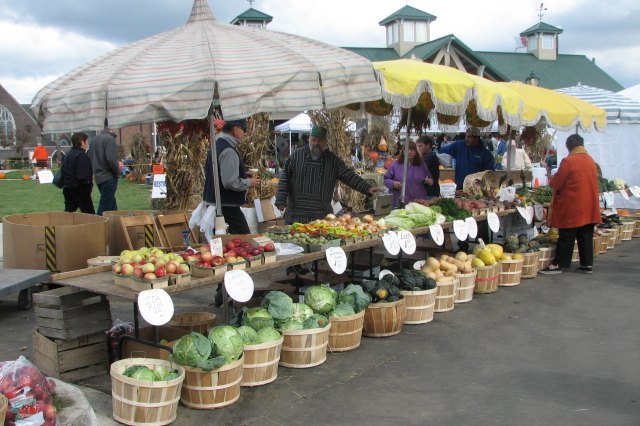
A growing number of American farmers say they are done waiting for fair prices from the large corporations that dominate grain and commodity buying — and are instead selling what they grow directly to consumers, hunters and neighbouring ranchers.
The frustration is rooted in hard economics. After several strong years, U.S. crop prices have slumped. Corn and other row crops have faced weak demand and oversupply heading into the 2026 season, squeezing margins even as the cost of seed, fertiliser, fuel and equipment stays stubbornly high. For many growers, the math on selling into the traditional commodity system no longer works.
Peanuts tell a similar story. Agricultural economists and farm-press reporting describe high acreage, oversupply and poor contracts pushing grower returns toward break-even. One widely shared farmer account online put the squeeze in blunt historical terms, contrasting peanut prices of roughly $750 to $800 a ton in the 1980s with figures closer to $380 today. Recent market outlooks have pegged peanut prices in the neighbourhood of $375 to $450 a ton — and once decades of inflation and far higher input costs are factored in, that flat-to-lower nominal price helps explain the anger in farm country.
Rather than accept those terms, some farmers are cutting out the middleman. Instead of hauling corn to a grain elevator or processor, they sell it directly to deer hunters who use it for feed and bait, to cattle operations looking for affordable feed, and to households — turning part of the crop into cornmeal and grits sold farm-to-table. “It’s straight from me to you,” as one farmer put it in a clip circulating on social media.
Direct marketing is not new, but the approach has gained momentum as distrust of consolidated agribusiness deepens. Selling locally lets a grower capture more of the final price, build a loyal customer base, and sidestep contracts they view as stacked against them. The trade-off is labour: direct sales mean handling marketing, packaging, logistics and food-safety rules that a commodity buyer would otherwise absorb.
Washington has acknowledged the strain. The U.S. Department of Agriculture has rolled out bridge-assistance payments aimed at steadying farm incomes, a signal that the downturn in crop prices is being felt across the sector, not just by a handful of operators.
For the farmers going direct, the appeal is as much about control as cash. After years of taking whatever price the big buyers offered, many say selling to their own communities finally puts them back in charge of their livelihoods — even if it means more work for every dollar earned.
Sources: U.S. Department of Agriculture; agricultural market outlooks and farm-press reporting, 2025-2026; farmer accounts shared on social media.




