
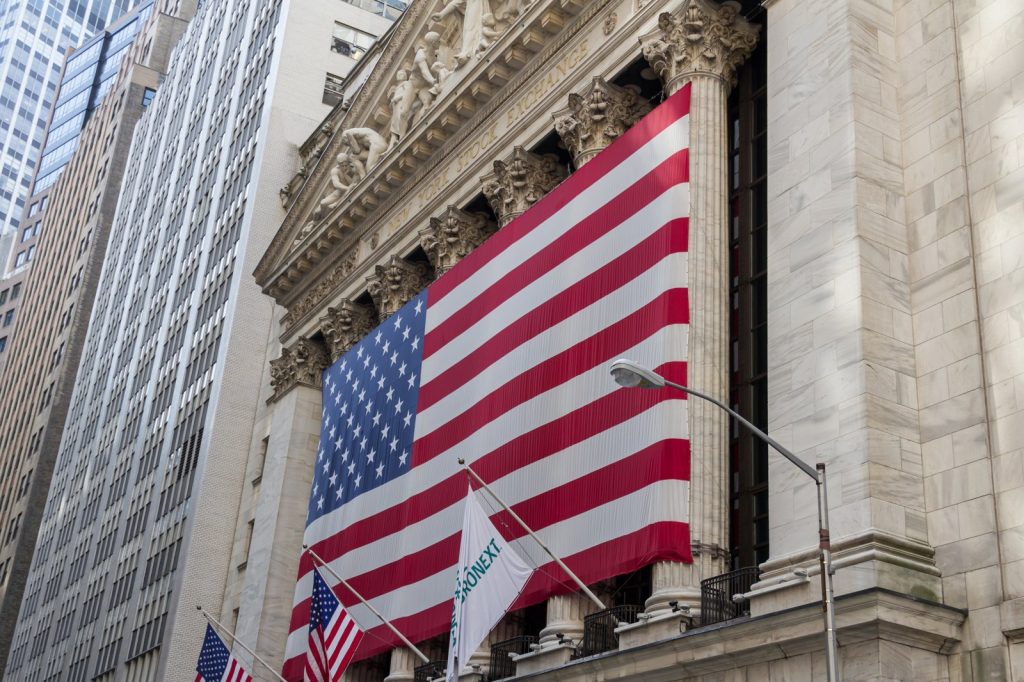
New York, October 16 – US stocks took a hit on October 16 as inflation data showed a worsening of price pressures, according to market reports. The S&P 500 index fell by 1.2%, closing at 5,180.32 points. The Dow Jones Industrial Average dropped 0.9%, ending the day at 38,905.66. The Nasdaq Composite declined 1.5%, finishing at 16,250.08. The market downturn followed the release of the Consumer Price Index (CPI) report for October, which showed annual inflation rose to 3.5%, up from 3.2% in September. Core inflation, which excludes volatile food and energy prices, increased to 3.8% year-over-year, compared to 3.6% the previous month. The CPI increase was driven by higher shelter costs, which rose 0.4% monthly and 5.2% annually. Transportation services prices increased 0.6% in the month and 4.1% year-over-year. Medical care services costs rose 0.3% monthly and 3.4% annually. Energy prices declined 2.1% monthly but remained up 1.2% year-over-year. Food prices increased 0.2% monthly and 2.2% annually. The Federal Reserve maintained its target range for the federal funds rate at 5.25%-5.50% following its September meeting, citing progress on inflation but noting that further policy tightening could be appropriate if inflation does not continue to move sustainably toward 2%. Market analysts noted that the persistent inflation readings reduced expectations for near-term interest rate cuts, with CME Group’s FedWatch Tool showing only a 15% probability of a rate cut at the November meeting, down from 35% the prior week. The yield on the 10-year Treasury note rose to 4.35%, up from 4.20% the previous week. Technology stocks were among the hardest hit, with the Information Technology sector declining 1.8%. Consumer discretionary stocks fell 1.6%, while industrial shares dropped 1.4%. Defensive sectors performed relatively better, with utilities declining only 0.3% and consumer staples falling 0.5%. Trading volume on the New York Stock Exchange reached 1.1 billion shares, above the 20-day average of 950 million shares. The CBOE Volatility Index (VIX), known as Wall Street’s ‘fear gauge,’ increased to 18.7 from 16.2 the previous close. International markets also reacted, with the MSCI EAFE Index of developed markets outside the US and Canada declining 0.8%. Emerging market stocks, as measured by the MSCI Emerging Markets Index, fell 0.6%. The US dollar strengthened against major currencies, with the Dollar Index rising to 104.8 from 104.2 the prior day. Economists at major financial institutions noted that the inflation data complicates the Federal Reserve’s dual mandate of price stability and maximum employment, as persistent inflation may require maintaining restrictive monetary policy longer than previously anticipated, potentially weighing on economic growth and corporate earnings.
Looking Ahead
Investors will be closely watching the Federal Reserve’s November meeting for further guidance on monetary policy and its impact on the US economy and stock market. Analysts will also be monitoring economic indicators such as job growth and wage inflation to gauge the impact of the Fed’s tightening on the labor market. Additionally, investors will be keeping an eye on geopolitical developments, including the ongoing war in Ukraine and negotiations over Iran’s nuclear program, as these events could impact global markets.




