How MSCI’s Downgrade Could Isolate Indonesia’s Stock Exchange from $19 Billion in Global Capital
JAKARTA, October 17, 2026 — Indonesia’s stock market has lost its footing as MSCI’s proposed reclassification from emerging market to standalone status threatens to cut off $19 billion in passive investment flows. The mechanics here are simple: if the downgrade goes through, funds tracking MSCI’s indexes will sell holdings, deepening a selloff that has already erased 40% of the Jakarta Composite’s value this year.
The Index Effect: Why $19 Billion Could Walk Out the Door
MSCI’s decision hinges on liquidity and accessibility standards that Indonesia’s market has long struggled to meet. The catch is that the country’s equity market—ASEAN’s largest at nearly $1 trillion—accounts for 72% of its nominal GDP, making it disproportionately reliant on foreign capital. When MSCI announced its review, the Jakarta Composite Index plunged 11.57% in a single day, its worst drop since the 1998 Asian financial crisis, triggering a 30-minute trading halt.
The numbers tell the story: MSCI’s emerging-market indexes attract trillions in passive investments, and Indonesia’s removal would force funds to divest roughly $19 billion in holdings. The ripple effect would be immediate—active investors, already wary, would likely follow suit, accelerating outflows. On closer reading, the market’s 956 listed companies and 19 million investors may find themselves isolated from the very capital that has fueled growth.
The rupiah has already weakened to 18,070 per dollar, nearing its all-time low, as currency traders bet on further depreciation. The catch is that Indonesia’s market has been bleeding value for months—down 40% year-to-date, the worst performer in Asia. The spillover remains limited, but for Indonesia, the isolation risk is real.
A Market Built on Colonial Foundations, Now Facing Modern Flaws
The Indonesia Stock Exchange (IDX) traces its origins to 1912, when the Dutch established a colonial trading hub in Batavia (now Jakarta). Over a century later, the market has evolved—but its governance gaps have not. MSCI’s concerns center on transparency, corporate ownership structures, and liquidity. The IDX’s history includes mergers, such as the 2007 consolidation with the Surabaya exchange, but its current challenges stem from modern failures to meet global standards.
The consultation period offers Indonesia eight months to address MSCI’s objections, but past reforms have failed to secure inclusion. The question now is whether Jakarta can deliver on liquidity and accessibility before the June 2027 deadline. The stakes are high: without emerging-market status, Indonesia risks becoming a financial backwater, its market treated as a speculative bet rather than a core investment destination.
The mechanics here are clear—MSCI’s decision is not about politics but about risk. The rupiah’s plunge and the market’s collapse reflect investor doubts. The catch is that Indonesia’s equity market has already fallen to 2020 lows, signaling deep pessimism. Without intervention, the isolation could last for years.
What Comes Next: The Clock Is Ticking
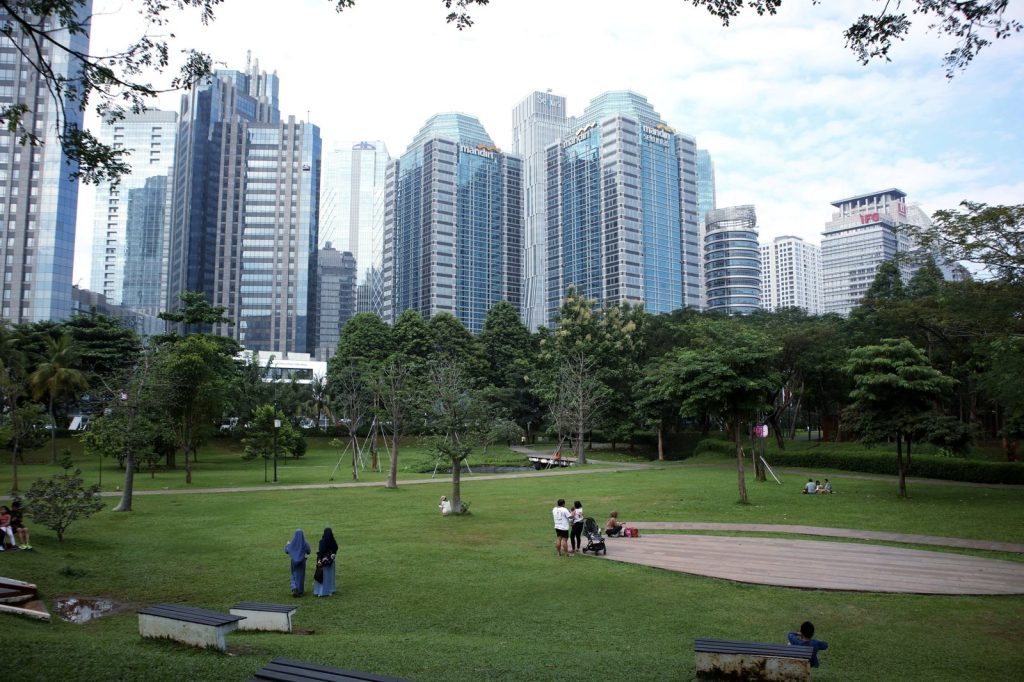
Indonesia’s authorities must act swiftly. The IDX’s location in Jakarta’s Sudirman CBD underscores its role as ASEAN’s financial hub, but its governance flaws have undermined that standing. The consultation period is a window of opportunity—but time is running out.
The rupiah’s weakness and the market’s collapse are symptoms of a deeper problem: Indonesia’s equity market is now seen as too risky for passive investors. The catch is that active investors may also reduce exposure if benchmarks shift, compounding the outflow risk. The question is whether Jakarta can reform fast enough to retain its place in MSCI’s emerging-market indexes.
For now, the market remains in freefall. The Jakarta Composite’s 11% crash mirrors the 1998 crisis fears, but this time, the trigger is not a currency shock—it’s a governance one. The mechanics here are brutal: without MSCI’s stamp of approval, Indonesia’s stock exchange risks becoming a financial island, cut off from the $19 billion in capital that keeps its economy afloat.
The Consultation Window and June 2027 Deadline
MSCI has initiated a consultation process to gather investor feedback on its proposal to reclassify Indonesia from an emerging market to a standalone market status. A final decision regarding this reclassification will be made by the end of June next year, providing Indonesian authorities with a specific timeframe to address MSCI’s objections. The primary concerns driving this review include longstanding issues related to market transparency, corporate governance, and ownership structures. These are not merely administrative hurdles but fundamental criteria that determine whether a nation qualifies for inclusion in the major indexes tracked by trillions of dollars in passive investment capital.
The consultation period offers Indonesia eight months to present counterarguments or implement improvement measures aimed at meeting global standards. However, the market’s current trajectory suggests significant challenges remain. The Jakarta Composite Index has fallen nearly 40% year-to-date, making it the worst-performing equity market in Asia. This decline reflects deep investor pessimism and a loss of confidence that persists despite the country boasting the largest economy in Southeast Asia with a market capitalization of nearly US$1 trillion.
While MSCI stated it “no longer believes it is appropriate to continue classifying Indonesia as an emerging market,” the proposed shift carries severe implications. If implemented, Indonesian stocks would be removed from these benchmarks, forcing funds that replicate or benchmark against them to sell their holdings. Beyond the immediate outflow of passive capital, active investors may also reassess their equity positions as benchmarks shift. The rupiah has already weakened to 18,070 per dollar, approaching its all-time low, signaling that currency traders are betting on further depreciation if the isolation continues.
The mechanics here are clear: without emerging-market status, Indonesia risks becoming a financial backwater where its market is treated as a speculative bet rather than a core investment destination. The consultation process is a window of opportunity, but time is running out for Jakarta to deliver on liquidity and accessibility before the June 2027 deadline. If the downgrade materializes, the isolation could last for years, severing the link between Indonesia’s $1 trillion stock market and the global capital flows it currently attracts.
Sources
- Indonesia Stock Exchange
- Indonesia Stocks Crash As Calls For Revolution Add To Political Tensions – Worthy Christian News
- Indonesian Stocks Plunge 11%, Worst Drop Since 1998 on MSCI Exclusion Review — BigGo Finance
Photo: S.aderogba (CC BY-SA 4.0)