
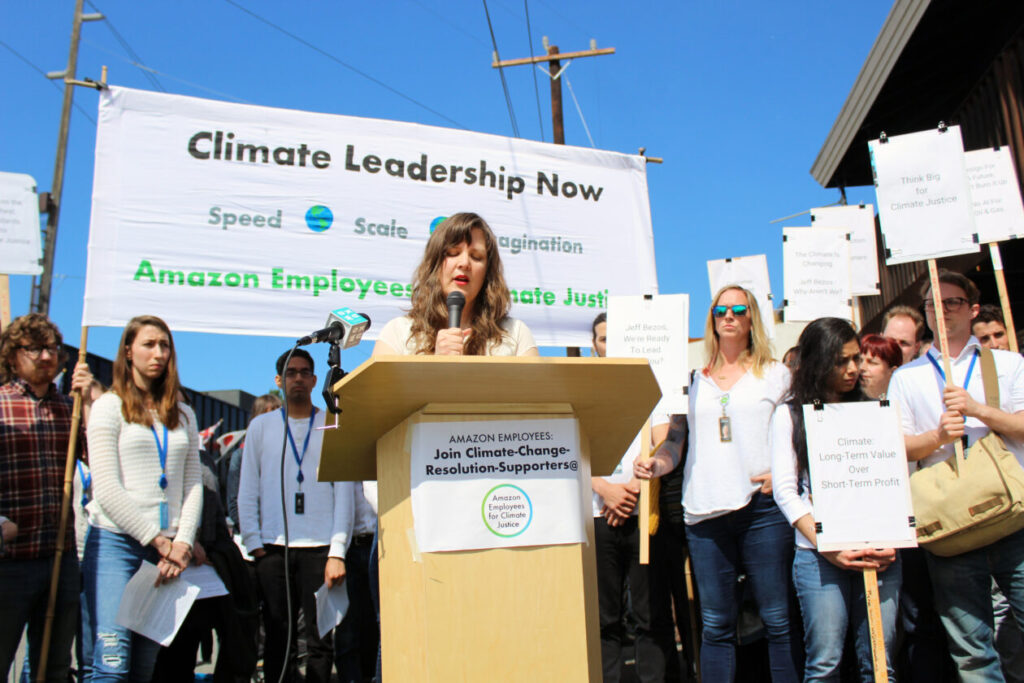
Allegations have emerged that Amazon may have threatened the jobs of staff members who publicly criticized the company’s environmental strategies. These claims surfaced in early January 2020, following a period of significant pressure from both inside and outside the organization to reduce the company’s carbon footprint. The group known as Amazon Employees for Climate Justice reported that the company’s human resources and legal departments reached out to specific staff members.
These communications reportedly questioned the employees about interviews they had given or comments they had posted on social media. This occurred shortly after thousands of employees participated in global climate strikes, which took place after CEO Jeff Bezos announced a transition toward renewable energy sources.
Demands for Aggressive Climate Action
Prior to these reported threats, a large number of workers voiced frustration with the scope and speed of Amazon’s green initiatives. These employees urged the tech giant to take more aggressive action to fight climate change, specifically demanding a goal of zero emissions by the end of the decade. In addition to emission targets, the activists called for two specific policy changes: the establishment of strict boundaries regarding partnerships with fossil fuel companies and an end to political or financial support for officials who oppose environmental regulations.
Corporate Defense and Policy Enforcement
In an interview with BBC News, Amazon defended its actions, stating that its approach to employee conduct is long-standing and consistent. The company argued that notifying employees about policy violations is a standard organizational procedure. Amazon stated, “As with any company policy, employees may receive a notification from our HR team if we learn of an instance where a policy is not being followed.” By framing these interactions as routine compliance checks, Amazon suggested they were not attempts at intimidation.
The company’s defense centered on existing codes of conduct that govern how employees speak publicly, emphasizing that continued employment depends on adhering to these internal guidelines.
Broader Context of Corporate Responsibility
The controversy took place during a year of heightened scrutiny regarding the tech industry’s impact on the planet. While Jeff Bezos’s announcement on renewable energy was a key point of discussion, striking workers argued that Amazon’s overall environmental impact—including packaging materials and supply chain logistics—contributed significantly to global warming. The situation highlights the tension between a corporation’s desire to maintain a progressive public image and its management of dissenting internal voices.
The involvement of legal teams indicates that the company views public statements as potential risks to its brand reputation. While no definitive resolution was reached in initial reports, the incident serves as a case study in the intersection of labor relations and environmental advocacy.
It underscores the complexities of managing employee discourse in high-profile sectors, where the perception of suppression can persist even if a company maintains that it is simply following standard policy. The dispute illustrates the delicate balance between corporate brand management and the genuine concerns of a workforce pushing for more sustainable business practices.




