
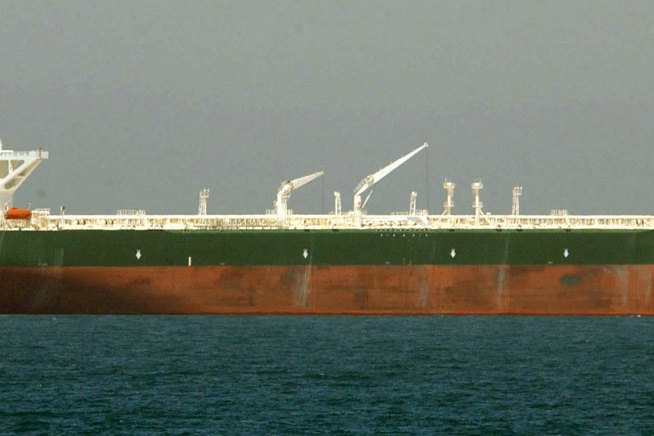
Straits of Hormuz — The sharpest flare-up in weeks of a war now six months old began with fire on the water. Iran says it struck 10 ships near Hormuz; the United States says five Iranian tankers went down overnight, and it published videos of ships burning. Whatever the exact ledger, one number moved decisively: oil, closing above $100 a barrel, its first time over that mark since July.
The waterway at the center of the fight carried up to 20% of the world’s oil and gas before the war began. Iran has been trying to close it; Washington has been enforcing a blockade of Iranian ports. Recent fighting has revolved almost entirely around who controls the passage.
Claims And Denials
Iran’s Islamic Revolutionary Guard Corps said Wednesday that the vessels it struck included two US ships and eight oil tankers, describing the 10 as “noncompliant”, its term likely covering ships that traversed without permission. A sailor died and another went missing. The US denied its vessels were hit; Central Command declared on social media that all “attempted attacks failed”. Separately, Iraqi officials reported a drone strike on a tanker in their waters carrying 2 million barrels of fuel oil, with no casualties reported and no oil leaks.
Iran also launched missiles at US bases in Jordan; authorities reported 18 intercepted and two falling in unpopulated areas. The US military, for its part, framed the sinkings as payback: Iran had targeted a US navy warship on each of the two previous days. Iranian state TV framed the sequence differently, saying the US strikes followed a “complex intelligence and operational action at dawn” that seized a US underwater drone operating in the strait; the American side called the captured craft a “defective” older model carrying no sensitive data. On a Tehran billboard, the drone is already advertised under a slogan: ‘Hunting the Hunter.’
A Doctrine Of Escalation
What has changed is the stated policy. Washington announced it will now attack Iranian tankers whenever Iran targets its warships. “Iran continues to try to hit US naval ships, and for every time they do that or try to do that, they’re going to lose tankers,” Secretary of State Marco Rubio told reporters. Tehran’s answer was to pledge 20 hits for every two or three tankers struck, and the IRGC said it would publish maps of a new, much larger forbidden zone near the strait — extending, for the first time, as far as the Gulf off Chabahar.
The Fire Spreads
The conflict is drawing the region in. Yemen’s Iran-aligned Houthi movement launched a wave of attacks on four Saudi cities on Tuesday, setting large fires at oil installations; 73 people were wounded. The Houthis say dozens have died in Saudi airstrikes, a claim Riyadh has not confirmed. Their offensive against the Saudi-backed Yemeni government in the south, launched last week, aims at the Red Sea — where a Houthi blockade, announced in July, would cut off another export route for the kingdom’s oil.
The economics land at home. Stocks fell on Wall Street, fuel and food prices are climbing in the US, and an administration already facing midterm elections must now campaign with an unpopular war and a living-cost squeeze deepening in the same news cycle.




