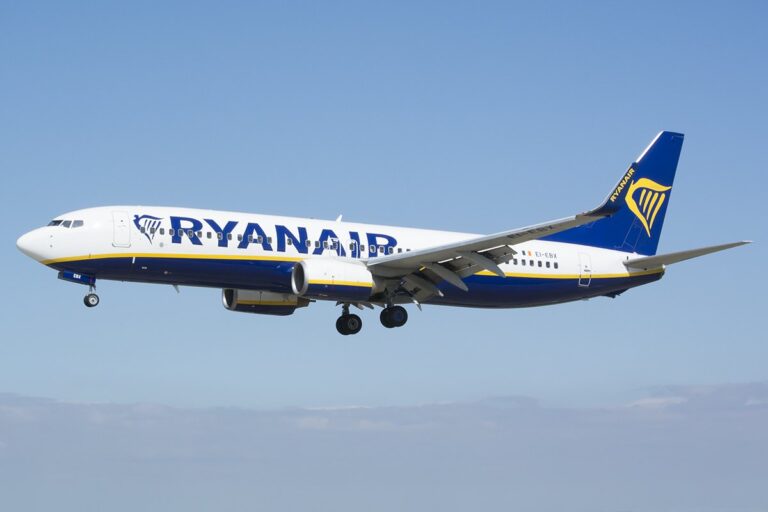
The long arc of aviation safety has bent sharply downward in measured risk, even as the volume of air travel has exploded. According to the International Air Transport Association, the fatal accident rate for commercial aviation stood at 0.11 per million flights in 2022. That figure represents a dramatic improvement from 1.0 per million flights in 1970, a time when flying was already far safer than the early days of the industry. The first recorded aviation fatality occurred in 1908, when Thomas Selfridge died in the crash of a Wright Flyer.
The Wright brothers themselves had suffered an accident during a test flight in 1903. By the 1920s, accidents were so common that the overall accident rate was extremely high by modern standards, and passengers routinely accepted considerable peril simply to board a plane.
A Century of Learning from Disaster
The pattern that has driven safety improvements over more than a century is one of tragedy followed by reform. Early air travel demanded that the entire industry build a culture of systematically learning from its mistakes.
Investigative bodies such as the U.S. National Transportation Safety Board were established to systematically determine the causes of accidents. Over time, a series of mandated technological interventions became compulsory after specific disasters. The cockpit voice recorder became mandatory in 1960, giving investigators a tool to understand the final moments before a crash.
The ground proximity warning system, GPWS, was mandated in 1974, designed to alert pilots if their aircraft was about to hit terrain. The traffic collision avoidance system, TCAS, became compulsory in 1993, providing a last-resort defence against mid-air collisions.
The deadliest single-aircraft accident remains Japan Airlines Flight 123 in 1985, which killed 520 people. That event, and others like it, drove further changes in maintenance and crew training. The aviation sector also addresses broader risks, including adverse weather, human error, and structural failures, through continuous regulation.
International standards now govern everything from pilot certification to maintenance schedules, resulting in a tightly monitored global system.
The 737 MAX and the Limits of Progress
Yet the industry’s safety record is not a straight line. The pattern of tragedy followed by reform repeated itself in the 2010s with the Boeing 737 MAX. The aircraft was introduced in 2017.
Within five months, it was involved in two fatal crashes: Lion Air Flight 610 in October 2018, which killed 189 people, and Ethiopian Airlines Flight 302 in March 2019, which killed 157. The crashes led to a 20-month grounding of the entire 737 MAX fleet worldwide.
The U.S. National Transportation Safety Board investigates all civil aviation accidents in the United States, and its findings contributed to the subsequent redesign of the aircraft’s flight-control software. The grounding demonstrated that a single flawed design could undo decades of statistical progress. For all the improvement, the current fatal accident rate of 0.11 per million flights means that, statistically, a passenger would need to take a flight every day for tens of thousands of years before being involved in a fatal accident.
But that statistic offers little comfort to the families of those on Lion Air Flight 610 or Ethiopian Airlines Flight 302.
Looking Ahead in a Cautious Industry
The next frontier for safety innovation is likely to involve automation and data analysis, though regulators remain cautious after the MAX episode. The NTSB continues to examine every civil aviation accident in the United States, and its recommendations carry weight internationally.
Aviation safety is distinct from aviation security, which focuses on intentional threats such as terrorism; security measures have expanded, but the core safety effort remains aimed at preventing unintentional mishaps. The long history of learning from disaster has created a tightly monitored global system governed by international standards. For now, the industry’s trajectory is clear: the risk of dying on a commercial flight is lower than it has ever been, and the mechanisms to keep it that way are, for the moment, firmly in place.
Understanding this context turns isolated incidents into part of an ongoing, data-driven effort to make air travel safer for everyone.