
“If they’re paying something close to full price, then yeah, I think it would be fair to characterize that as a bailout.” That was Mike Moffatt, founding director of the Missing Middle Initiative at the University of Ottawa, talking to CBC News about Prime Minister Mark Carney’s plan to take unsold condos in British Columbia and turn them into affordable homes.
The plan has two halves. Speaking in Ottawa on a Thursday, Carney said the government would “potentially” put up 10 per cent of roughly $1.45 billion in total spending to convert some 2,200 empty units into rent-to-own homes. The B.C. government would cover the rest.
The second half is about fees. Ottawa will provide B.C. with $1.6-billion for infrastructure, and the province will match it, for a total of $3.2-billion over 10 years, the Globe and Mail reported. Municipalities that receive the money must cut development charges by up to 50 per cent for three years. Carney said that could take as much as $40,000 off the cost of a new unit.
Why the units are empty
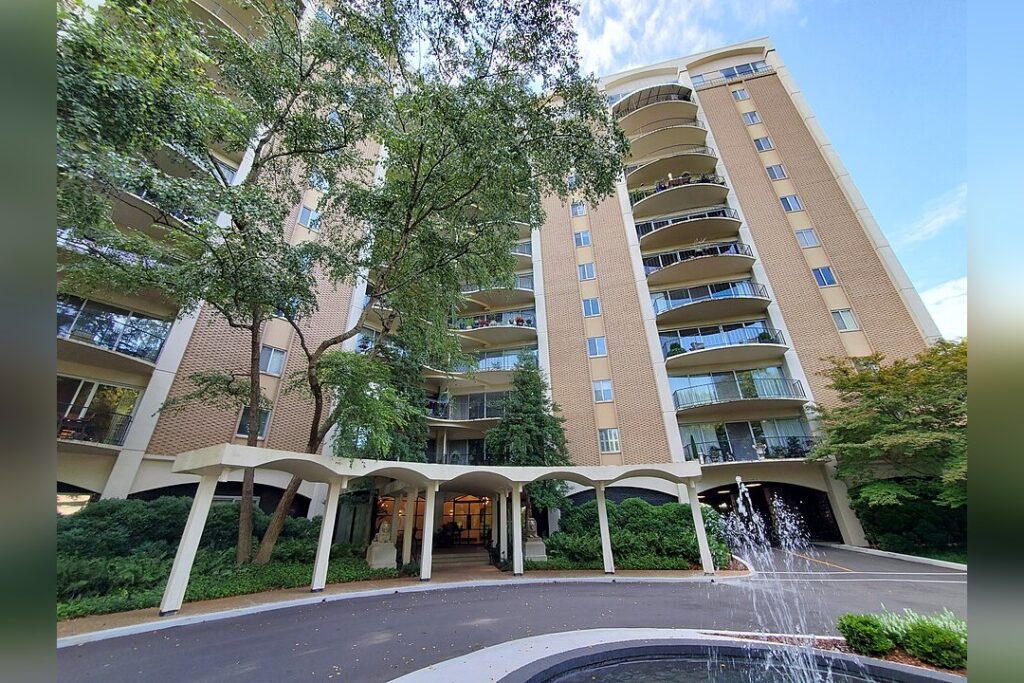
Carney laid out the problem in remarks prepared for an infrastructure announcement in Vancouver. “With higher interest rates, weak investor demand, developers are stuck,” he said. “They do not want to sell at a loss, but they also cannot afford to hold the empty units indefinitely.” He said the empty homes also discourage new construction and unsettle lenders and investors, leaving a market that is “in effect, frozen.”
Ottawa said about 2,500 newly built condos in the province are sitting empty. Investors once made up the majority of new condo buyers, but falling profitability has driven them away, which has meant fewer sales, buyer defaults and a pile of unsold product.
Canada Mortgage and Housing Corporation data shows 4,376 completed condos sitting empty in Metro Vancouver, a 76 per cent increase from a year earlier. Toronto has the same trouble: Urbanation reported a record 4,295 unsold new condos in the Greater Toronto Area in the first quarter of 2026, more than double the figure a year before.
Bailout or not
Opposition leader Pierre Poilievre called the scheme a “bailout” for big developers and “a transfer of wealth from the have-nots to the have-yachts.” Carney answered that the proposal is about supporting aspiring homeowners.
Moffatt said the government has not explained how it will acquire the units, which leaves the door open to skepticism. He thinks the plan “can be a win-win if structured correctly.” His test is simple. If Ottawa would not otherwise have bought these homes, it is a bailout. But the Build Canada Homes agency would have been turning to developers to construct new housing anyway, and here it would acquire finished units instead. How much governments will spend, and what discount off listing prices they get, is still unknown. A steep discount would change the picture, he said.
Andy Yan, director of the City Lab at Simon Fraser University, wants “surgical responses” rather than “blanket approaches.” He noted that nobody knows why these units have not been absorbed by the market. He also raised a question for existing owners: “What happens to the pricing of that unit for the government, but also for that particular owner who bought into that building?” The spike in unsold condos is recent enough, he said, that letting the market correct itself may be better.
Developers have their own view. Brad Jones of Wesgroup Properties said that if the industry “wanted a bailout we would have asked for it,” and that builders wanted a deal like the one Ottawa struck with Ontario in March. Wendy McNeil, CEO of the Homebuilders Association Vancouver, said development fees can add as much as 30 per cent to the cost of building condos. She called the aid “supporting an industry that delivers necessary housing.”
Sources
- ANALYSIS | Mark Carney's plan to bulk-buy unsold Vancouver condos might be a bailout, but it doesn't have to be | CBC News
- Ottawa, B.C. to spend $3.2-billion to cut homebuilding fees




