
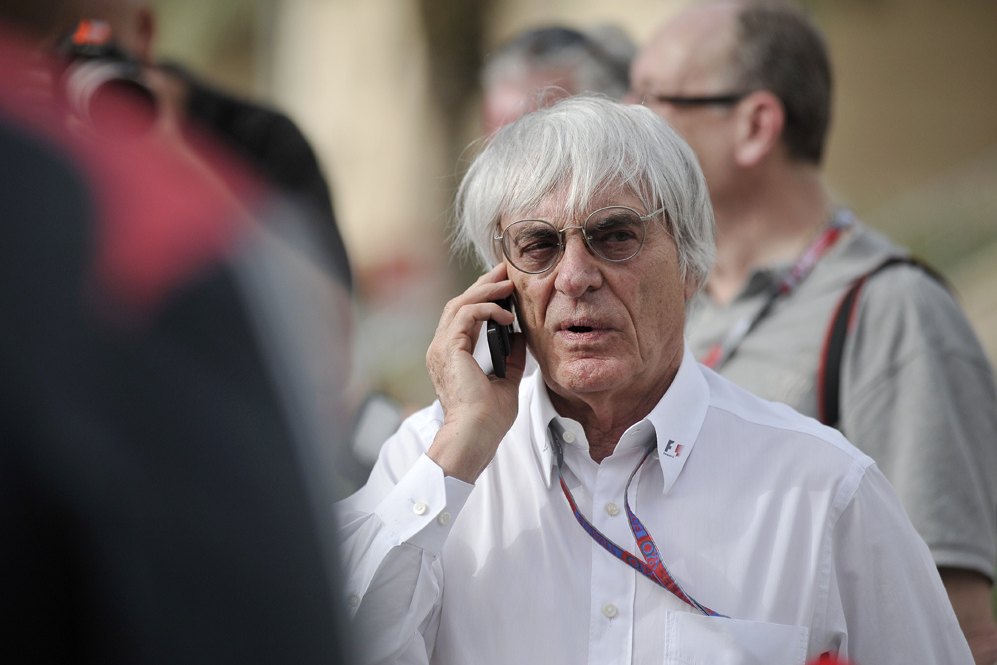
The Motorcycle Parts Trader Who Bought the Sport
Bernard Charles Ecclestone, born in the Suffolk hamlet of St Peter South Elmham in 1930, did not start with a checkbook. He started with a wrench. After World War II, the son of a fisherman and his wife Bertha Sophia, who had moved the family to Bexleyheath in southeast London in 1938, entered the workforce at sixteen. He left Dartford West Central Secondary School to work in a chemical laboratory before pivoting to the trade of motorcycle parts. This early exposure to the mechanics of commerce and machinery laid the groundwork for a career that would eventually control the global rights to the most lucrative sport on earth.
Ecclestone’s entry into Formula One was not through ownership, but through the grid. He began racing in Formula Three in 1949, winning multiple races at Brands Hatch in a Cooper Mk V. In 1958, he purchased two Connaught chassis to enter the Monaco and British Grands Prix as a privateer. He failed to qualify for both events. This early failure did not deter him; instead, it redirected his focus from the driver’s seat to the paddock. He became a driver manager, guiding Stuart Lewis-Evans and later Jochen Rindt, who posthumously won the World Drivers’ Championship in 1970. The mechanics here were simple: if you cannot drive the fastest car, manage the people who do, and then buy the car.
In 1972, Ecclestone purchased the Brabham team. He operated the outfit for fifteen years, leading it to 22 victories and two World Drivers’ Championship titles with Nelson Piquet. This was not merely a sporting achievement; it was a financial one. By co-founding the Formula One Constructors’ Association two years later, he positioned himself to lead the teams through the FISA-FOCA war. This conflict, a battle for control over the sport’s commercial and administrative future, ended with Ecclestone on the winning side. He had transformed from a team owner into the architect of the sport’s business model.
Monopolizing the Grid: The Concorde Agreement
The turning point in Ecclestone’s ascent was the 1987 Concorde Agreement. Under its terms, he and his companies gained control not just over the commercial rights, but over the administration, setup, and logistics of every Grand Prix. This was a masterstroke of corporate consolidation. By founding the Formula One Group in 1987, he centralized the revenue streams that had previously been fragmented. His pioneering sale of television rights in the late 1970s had shown the potential for global broadcasting, but the Concorde Agreement locked that potential into a single entity.
His influence extended beyond the asphalt. In 1996, he founded International Sportsworld Communicators, which controlled the commercial rights to the World Rally Championship until 2000. By 2002, his wealth had placed him fifth on the Sunday Times Rich List. Despite this financial dominance, Ecclestone remained aloof from the British establishment. He declined both a CBE and a knighthood from Queen Elizabeth II. He also co-owned the association football club Queens Park Rangers with Flavio Briatore from 2007 to 2011, overseeing their promotion to the Premier League. These moves demonstrated a pattern: Ecclestone did not just participate in industries; he acquired the levers of control.
The catch is that this control was absolute. For four decades, the sport operated under his singular vision. He was known in journalism as the “F1 Supremo,” a title that reflected his unchallenged authority. The money followed the rights, and the rights followed him. This structure generated immense wealth but also created a bottleneck. Any innovation or new partnership had to pass through his office. This centralization would eventually become the sport’s greatest liability.
The Liberty Media Pivot and the Digital Gap
In 2017, the era of the F1 Supremo ended. Ecclestone sold the Formula One Group to Liberty Media. He remained as chairman emeritus and adviser to the board of directors until his departure in 2020. This sale was not a retirement; it was a forced obsolescence. Liberty Media, a technology-focused conglomerate, saw an opportunity to take the sport to its next level. They understood that the traditional broadcast model was insufficient for the digital age.
Christian Horner, the former Red Bull Racing Team Principal, offered a stark assessment of this shift. In a recent interview, Horner compared his own dismissal in 2025 to Ecclestone’s exit, noting that F1 needed to modernize. Horner stated that Ecclestone did not believe in digital media, which hindered deals like the one with Netflix. “He didn’t believe in digital media and something like Netflix would have never happened in Bernie’s time because digital media didn’t pay and Netflix weren’t paying a big enough fee,” Horner said. This comment highlights the core financial disconnect. Ecclestone’s model relied on high-value, low-volume broadcast deals. Liberty’s model relied on high-volume, low-margin digital streaming. The former was a cash cow; the latter was a growth engine.
The mechanics of this transition were clear. Liberty Media sought to integrate Formula One into the broader digital ecosystem. They needed a leadership structure that was comfortable with data, social media, and global streaming platforms. Ecclestone, who had built his empire on telephone calls and handshake deals, was out of step. His departure in 2020 marked the end of an era where one man could dictate the terms of the sport. The sport was no longer a private fiefdom; it was a global media asset.
The Fall: Conviction and the £650m Settlement
The final chapter of Ecclestone’s career was not defined by the boardroom, but by the courtroom. In October 2023, he was convicted of tax fraud at Southwark Crown Court. The conviction was the culmination of years of legal battles and investigations into his financial dealings. He agreed to pay HM Revenue and Customs over £650 million in back taxes and penalties. This sum is not merely a fine; it is a correction of decades of alleged misreporting. The scale of the payment underscores the magnitude of the financial structures he had built and, allegedly, manipulated.
Ecclestone was sentenced to 17 months in prison, suspended for two years. This sentence, while severe in its financial implications, allowed him to avoid immediate incarceration. The suspension reflects the court’s consideration of his age and health, as well as the payment of the substantial sum to the state. However, the conviction itself is a stain on his legacy. It suggests that the very mechanisms of control he used to dominate the sport were also used to obscure his personal finances. The line between business strategy and financial fraud blurred in the end.
His personal life has also been marked by controversy. With the birth of his son in 2020, he became one of the oldest known fathers, aged 89. This event, while private, added to the public narrative of a man who defied conventional timelines. His life has been a series of extreme deviations from the norm: from a motorcycle parts trader to a global tycoon, from a racing driver to a convicted tax evader. The story of his life is a cautionary tale about the limits of power and the eventual reach of the law.
Legacy in the Digital Era
Bernie Ecclestone’s legacy is complex. He transformed Formula One from a niche motorsport into a global commercial powerhouse. His control of the commercial rights allowed the sport to grow in revenue and audience. However, his methods were often opaque, and his resistance to modernization ultimately led to his ouster. The sport he left behind is more digital, more global, and more corporate. It is also more profitable, but the question remains whether it retains the same soul.
The comparison to Christian Horner’s exit from Red Bull Racing in 2025 is telling. Horner, who led the team to eight Drivers’ and six Constructors’ World Championships, was dismissed after 20 years. He suggested that Red Bull’s management culture changed following the death of founder Dietrich Mateschitz in October 2022. “The company just wanted to go in a different direction, but perhaps it was perceived I had too much influence over the team,” Horner said. This mirrors Ecclestone’s experience. Both men were seen as having too much influence, too much power, and too much of a personal imprint on their respective organizations. The corporate world, increasingly driven by committees and data, has little patience for individual dominion.
On closer reading, the story of Bernie Ecclestone is a story of the transition from the old economy to the new. He built his empire on the back of traditional media and personal networks. His fall was precipitated by the rise of digital media and the demand for transparency. The £650 million settlement is a final accounting of his time in power. It is a reminder that no matter how much control one believes they have, the rules eventually change. And when they do, the old guard is left behind.
Sources
- Bernie Ecclestone
- Inside the making of Netflix’s Schumacher ’94
- Christian Horner: Red Bull thought I had too much influence after Dietrich Mateschitz died
Photo: Ryan Bayona (CC BY 2.0)




