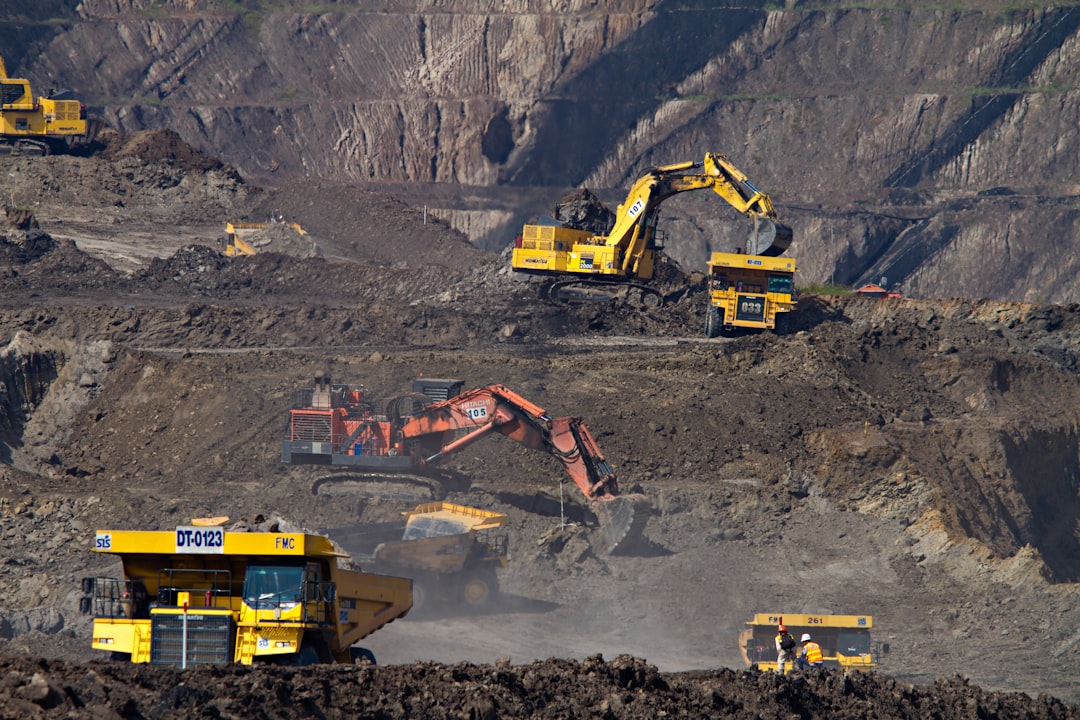
Melbourne. August 1885. A company called Broken Hill Proprietary is born in the silver, lead, and zinc fields of outback New South Wales. It was a mining outfit, plain and simple. More than 130 years later, that same corporate entity — now named BHP Group Limited — sits as one of the world’s largest natural resources firms. But the path from a single Australian mine to a global giant was never a straight line. It was built on two massive corporate maneuvers: a merger and a demerger, each reshaping the company head to toe.
The first big shift came in June 2001. BHP merged with Anglo-Dutch Billiton plc. The deal created BHP Billiton, a dual-listed company on both the Australian Securities Exchange and the London Stock Exchange. It was not a small thing. The merger gave BHP a far wider portfolio — iron ore, copper, coal, oil, gas — and a global footprint that stretched from Australia to South Africa to the Americas. Market capitalisation ballooned. The company was suddenly a heavyweight in every sense.
But size alone does not guarantee focus. By 2015, BHP Billiton had become a sprawling collection of assets, some of them dragging on performance. The company decided to cut. It demerged a swath of its operations — aluminium, manganese, nickel, silver, coal in South Africa — and packed them into a new listed entity called South32. The move was brutal and clean. BHP Billiton got smaller, leaner, and more concentrated on its core businesses: iron ore, copper, and coal. The demerger was not a retreat. It was a strategic narrowing.
That restructuring demanded a new name. In 2018, the company officially changed its corporate title to BHP Group Limited and BHP Group plc, reflecting the post-South32 reality. But the dual-listed structure, with a London listing, still lingered. Then came January 2022. BHP gave up its London Stock Exchange listing entirely. It became a solely Australian Securities Exchange-listed company. The move was a clear statement: the company’s centre of gravity had shifted back to Australia, where it all began in 1885.
Today, BHP is headquartered in Melbourne. It sells iron ore, copper, and coal. That is the core of the business. The company no longer carries the baggage of a global dual listing or a sprawling set of non-core assets. It is a simpler machine, built on the logic that mining is a local business, even when the customers are in China and the shareholders are in Sydney.
The history matters because it explains the present. BHP did not just happen. It was forged through a merger that made it global, then a demerger that made it focused, then a delisting that made it Australian again. Each step was a response to the market, to commodity cycles, to the hard reality that mining companies must either grow or shrink — they cannot stand still. The company’s trajectory is a case study in corporate evolution, one where the original 1885 mining company survived by changing everything except its basic purpose: pulling raw materials out of the ground.