
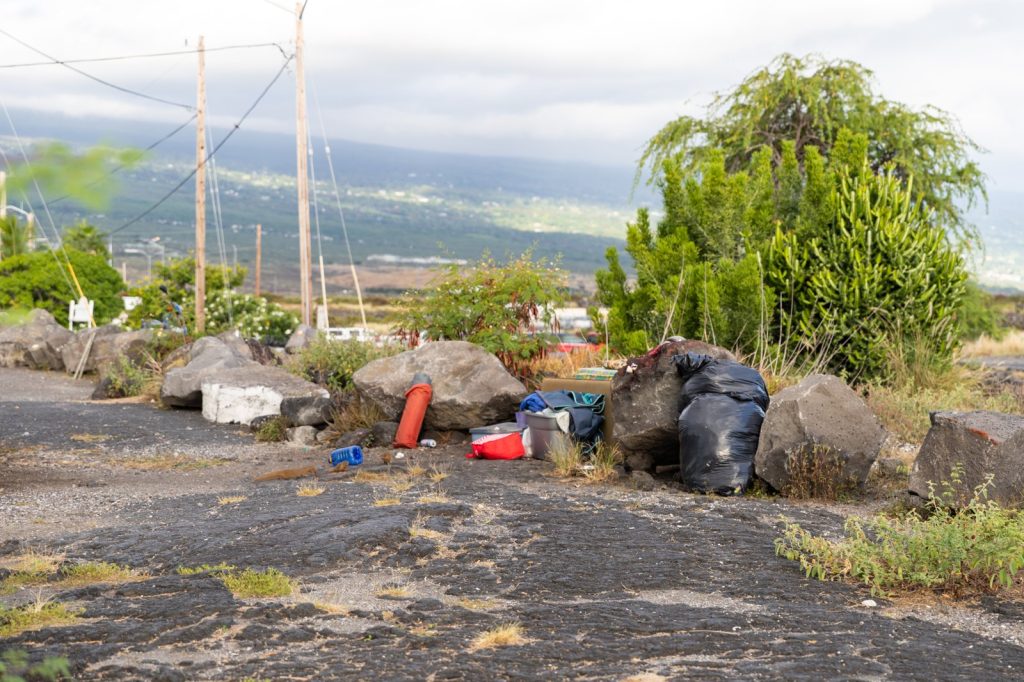
Honolulu, Sept. 1 — A political clock is running on the Big Island. Hawaiʻi County’s Homelessness and Housing Fund, a $9 million-a-year program bankrolled by property taxes on nonresident housing, is scheduled to sunset in June 2027, and the county council now faces a binary with no quiet option: let the levy lapse, or strengthen it into a permanent instrument.
The fund’s design is the strategically interesting part. Its revenue comes from vacation homes, vacant properties and investment holdings — asking, in effect, that those who profit from the island’s housing market without living in it help underwrite the damage that market does. The money currently bankrolls a full continuum of care: safe overnight sleeping programs, emergency shelters, permanent supportive housing, outreach, longer-term housing, substance use treatment, mental health care, rental assistance and other stabilization services. No single piece solves homelessness; the wager is that the system, taken whole, gives people a route back to shelter.
The Numbers Behind The Debate
The case for continuation rests on brutal arithmetic. Bridging the Gap, a Continuum of Care for homeless services covering the neighbor islands, reported that in 2025 on Hawaiʻi Island two households fell into homelessness for every single one that moved into permanent housing. UHERO data puts rental-rate growth at nearly 50% since 2019. And a 2020 statistical analysis by the U.S. Government Accountability Office linked a median rent rise of $100 a month to a 9% increase in homelessness — a national relationship with sharp local edges.
Council member Jennifer Kagiwada, who represents District 2 and wrote the case for continuation in an August 30 Civil Beat essay, frames the broader stakes around demographics rather than dysfunction. Many elders are not landing on the streets through bad choices, she argues; they are aging into homelessness under the accumulated weight of rising housing costs, fixed incomes, growing medical bills and scarce affordable options. Her warning reads: “No one should spend their later years wondering where they will sleep at night, yet for too many this is a reality.”
What An Expiry Would Actually Buy
Strategically, the sunset looks less like savings than cost-shifting. Killing the fund, Kagiwada argues, would not make the needs vanish — the burden would simply land elsewhere — on hospital emergency rooms, police and first responders, social service agencies, the parks and beaches, and the doorways of downtown businesses, while vulnerable residents lose pathways to stability precisely as affordability worsens. She is candid about accountability too: the county should keep measuring effectiveness and adjusting priorities as needs evolve. But “allowing this fund to expire without a sustainable replacement would move us in the wrong direction.”
What this signals is a wider test of prevention-first policy. Kagiwada’s essay presses for expanded prevention spending: rental assistance, stable-housing support and the services that keep residents housed before they ever enter the system — attacking inflow rather than polishing the response. The question she puts to her colleagues is double: not only how the money performs today, but “what it should accomplish in the years ahead, and what would our island look like if we were to discontinue the funding.”
The calculus for county policymakers is straightforward to state and hard to vote on. Renewing a tax on nonresident property invites resistance from powerful owners; letting it expire pushes the visible costs onto hospitals, police and parks while the invisible ones accumulate in doorways. Kagiwada’s answer is measured rather than maximalist: keep the fund, fix what underperforms. “Continuing, while thoughtfully strengthening, the Homelessness and Housing Fund is an important step toward providing the support our keiki and kūpuna deserve.” Between now and June 2027, the Big Island has to decide which bill it would rather pay.
Sources
- Hawaii County bill to extend homeless fund advances | Honolulu Star-Advertiser
- Big Island Should Strengthen Its Homelessness And Housing Fund – Honolulu Civil Beat




