
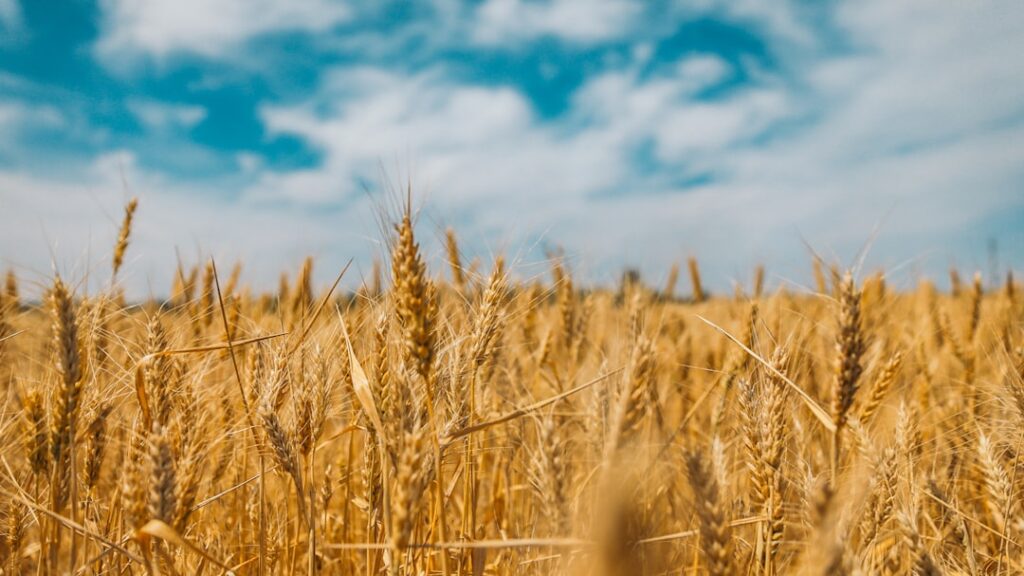
Black Sea Grain Supply Disrupted
The Black Sea, once a reliable corridor for grain shipments, has turned into a war zone. Russian naval vessels blockade Ukrainian ports while tanks move across wheat fields. Farmers who ought to be sowing have either fled to safety or taken up arms.
As a result, the region that supplies a large share of the world’s cereals is unable to export its harvest.
Immediate Impact on Global Markets
Since the invasion began, worldwide wheat prices have jumped by 55 percent. Analysts describe this increase not as a temporary fluctuation but as a structural shock.
Russia and Ukraine together account for nearly one‑third of global wheat and barley exports, with Ukraine also dominating sunflower oil markets and serving as a major corn source. When these flows cease, the shock spreads to every continent.
Compounding Pre‑Existing Stress
The crisis arrives at a moment when food prices were already at their highest level since 2011, even before any artillery fell. The COVID‑19 pandemic had strained supply chains, and droughts had reduced yields in other producing areas. The removal of two of the planet’s most productive agricultural zones from the market now adds a third layer of pressure.
Looming Shortage and Price Ripple Effects
The consequence is more than higher prices; a shortage of staples is expected to begin in July, when the new harvest would normally start moving toward consumers. European officials are already preparing for the loss of Ukrainian grain. Livestock feed costs have risen, which will push up meat and dairy prices.
Farmers will either transfer these expenses to consumers or face insolvency.
Household Budgets Under Pressure
This is not a remote humanitarian issue; it directly squeezes household budgets from Paris to Jakarta. The numbers reveal a stark reality.
Egypt, for example, depends heavily on inexpensive wheat imports to feed millions of Cairo’s poor. Many nations across North Africa and the Middle East rely on Black Sea grain, as do large parts of Asia. These economies are not wealthy enough to hold large reserves; they depend on imports and often subsidize bread to maintain social stability.
When bread prices climb, protests become more likely.
Food as a Weapon of War
The geopolitical logic is clear. Whether intentional or not, Russia is using food as a weapon.
Blockading Ukrainian ports and shelling farmland produces the same effect as a formal embargo: it cuts off supply, destabilizes importing countries, and forces Europe to seek alternatives. The Kremlin recognizes that food insecurity in cities such as Cairo or Tunis creates pressure on Western allies.
Ukrainian Farmers Unable to Work
Ukrainian growers cannot tend their fields while under bombardment. Those who survive are fighting. Export‑handling ports remain closed.
Each day of continued combat narrows the window for planting. If the fighting persists into summer, the lost harvest cannot be recovered, leaving silos empty and populations hungry when July arrives.
A Slow‑Motion Famine in Real Time
The world is witnessing a gradual famine unfold, not because of drought or disease, but because of tanks and missiles. The breadbasket is burning; grain that should nourish millions sits trapped behind a naval blockade.
The remaining question is how many people will go hungry before the conflict ends.




