
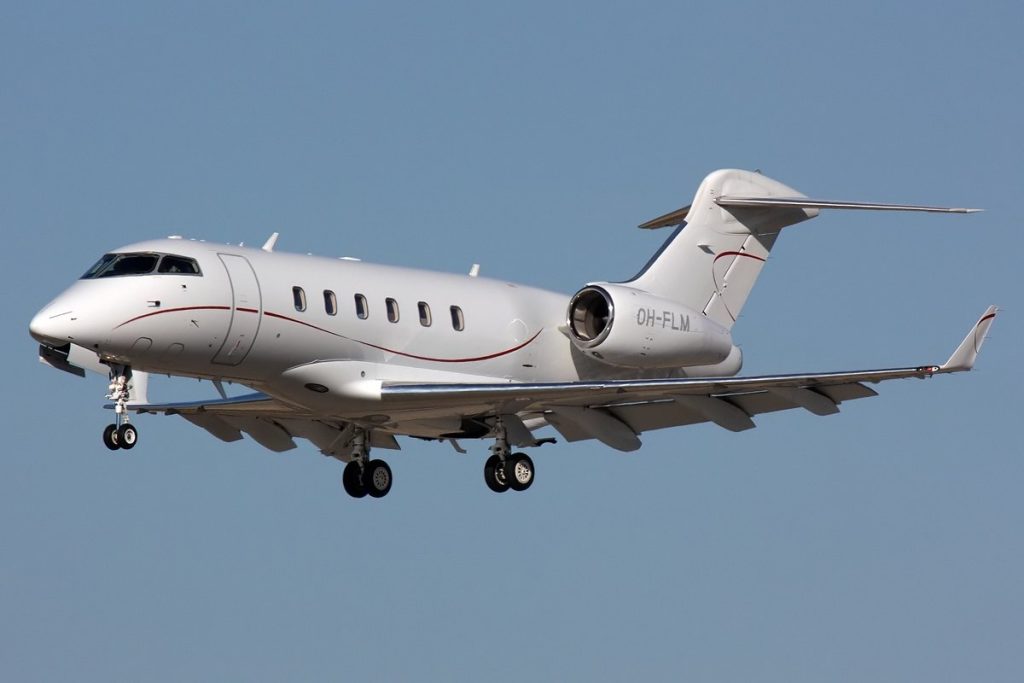
Some 648 CRJ regional jets fly for U.S. airlines, every one of them built in Canada, and together they are scheduled for more than 2,600 flights a day carrying 175,000 available seats. That is the arithmetic sitting behind President Donald Trump’s threat, posted on Truth Social in late January, to decertify every Canadian-made aircraft and put a 50 percent tariff on them. The target was Bombardier.
The president accused Ottawa of “wrongfully, illegally and steadfastly” holding back certification for several business jets from Gulfstream, the U.S. manufacturer that competes most closely with Bombardier. “We are hereby decertifying their Bombardier Global Expresses, and all Aircraft made in Canada, until such time as Gulfstream, a Great American Company, is fully certified,” he wrote. He claimed Canada had refused to certify four Gulfstream jet types, from the 500 through the 800, a claim whose accuracy is in question. Gulfstream said in 2011 that Transport Canada had cleared the G500 to fly at its maximum certified altitude, together with the G550, G450 and G350.
Bombardier’s answer
In a statement issued late on the Thursday after the post, Bombardier had noted the comments and was talking with the Canadian government. The Quebec-based manufacturer pointed out that it is an international company with more than 3,000 employees across nine major U.S. facilities, and credited itself with thousands of American jobs sustained through 2,800 suppliers. “Our aircraft, facilities and technicians are fully certified to FAA standards and renowned around the world,” the company said, noting it keeps investing in its U.S. operations, including a recent announcement in Fort Wayne, Indiana.
By Cirium’s count, first reported by FlightGlobal, about 2,700 Bombardier-built aircraft are registered as in service in the United States, 150 of them Global Expresses.
What decertification would touch
Nobody knows whether a president can, for political or economic reasons, actually order the Federal Aviation Administration to strip away either a type certificate or an airworthiness one. A type certificate blesses an aircraft design for a jurisdiction; an airworthiness certificate clears an individual aircraft to fly, granted once the FAA confirms it is “eligible and in a condition for safe operation,”. The agency has said revocation is possible for safety reasons, or when an aircraft no longer meets its approved design. Transport Canada did not respond to questions before deadline, and an industry source noted that manufacturers generally drive certification themselves.
The blast radius runs past business jets. The Canadian-made Airbus A220, built on lines in Mirabel, Quebec, and Mobile, Alabama, is exposed on paper; Airbus declined to comment. De Havilland Canada’s water bombers, coveted firefighting aircraft that proved crucial in disasters like the 2025 Los Angeles firestorm, are also in the frame. Helicopter industry watchers count thousands of Bell helicopters of Canadian manufacture flying in the United States as well.
CNN, citing Cirium data, reported that those planes are due to “make more than 2,600 flights daily”, day after day, across 175,000 available passenger seats. Richard Aboulafia, an industry expert, told the network it would be “a transportation disaster”. His worry was scope: a Global Express ban would sting, but a sweep across all Canadian-made jets would leave the American air travel system seriously impaired.
Beyond certification, a 50 percent tariff would land as a heavy blow to the industry and to Canada’s wider economy. Prime Minister Mark Carney had not directly responded at the time, and relations between Ottawa and Washington had cooled since his assertive speech at Davos rankled Trump. The two countries stayed embroiled in a trade war, with the president hunting leverage ahead of renegotiating the Canada-U.S. free trade agreement. Bombardier’s last word was a hope that this is “quickly resolved to avoid a significant impact” on air traffic and the flying public.
Sources
- 3 Aviation Stocks Worth Watching as Bombardier Tariff Risk Reshapes Regional Fleets – Simply Wall St News
- Bombardier responds to Trump tariff threat, aircraft decertification claims – Skies Mag




