
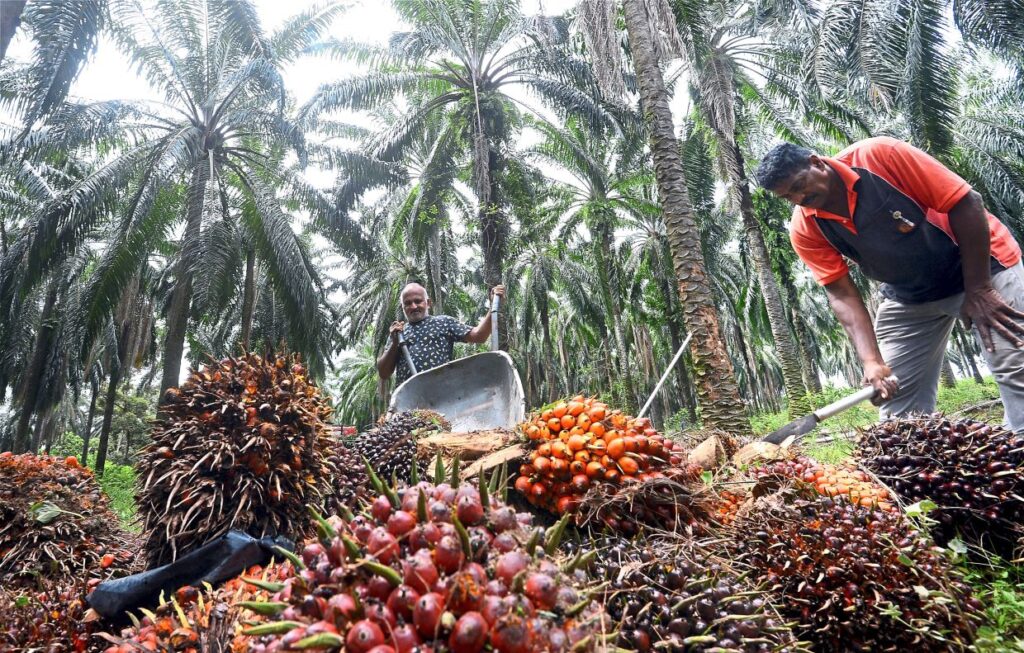
Palm oil prices will keep jumping around until the year ends, according to Boustead Plantations Bhd. Acting chief executive officer Fahmy Ismail gave the reason on Nov 22, as the company reported a third-quarter loss: Malaysia and Indonesia are both in their high crop season, so stocks are expected to be heavy in each country.
Here is what that means in plain terms. When two countries that grow most of the world’s palm oil are harvesting at the same time, there is more oil than buyers need, and prices wobble.
A possible wild card
Fahmy pointed to one thing that could turn demand the other way. The Russia-Ukraine conflict and severe droughts and heatwaves in Europe, China, India and the US have pushed up the price of other crops. Buyers priced out of those may switch to palm oil, which he said could raise the risk of a global crop shortage.
Costs stay high
Whatever prices do, the bills are not shrinking. “High production cost due to the impact of minimum wages coupled with higher fertiliser and diesel prices will continue to be a challenge in the remaining year,” Fahmy said.
In its filing with Bursa Malaysia, the group put it this way: “The group’s profitability is dependent on the crude palm oil (CPO) price direction and crop production.” It added that it is confident efficient cost management and crop improvement initiatives will deliver a positive outcome in 2022.
Some of that work is already showing. Peninsular Malaysia and Sabah have posted better fresh fruit bunch (FFB) yields this year through the company’s Plantation Performance Improvement Programs. Fahmy also said the group remains committed to the Reinventing Boustead Strategy, which aims to turn it into a sustainable, technology-based plantation company by stepping up mechanisation.
The quarter behind the warning
For the three months to Sept 30, 2022, Boustead booked a net loss of RM352,000. A year earlier it had made a net profit of RM95.56 million. Revenue slid to RM240.25 million from RM293.77 million, and profit from operations dropped to RM1.4 million from RM133.1 million.
Over nine months, the picture looks far better: net profit of RM508.02 million on revenue of RM913.37 million, against RM156.16 million and RM708.49 million a year before. The company’s earnings report credits a RM364.1 million gain from selling its Kulai Young land, plus a RM3.6 million gain on a government land acquisition at Telok Sengat Estate.
Boustead shares closed at 67 sen on Nov 22, down two sen or 2.9%, giving the company a market value of RM1.49 billion.
Sources
- Boustead Plantations in the red in 3Q due to lower palm product prices, higher operating costs
- Boustead Plantations expects continued volatility in palm oil prices




