
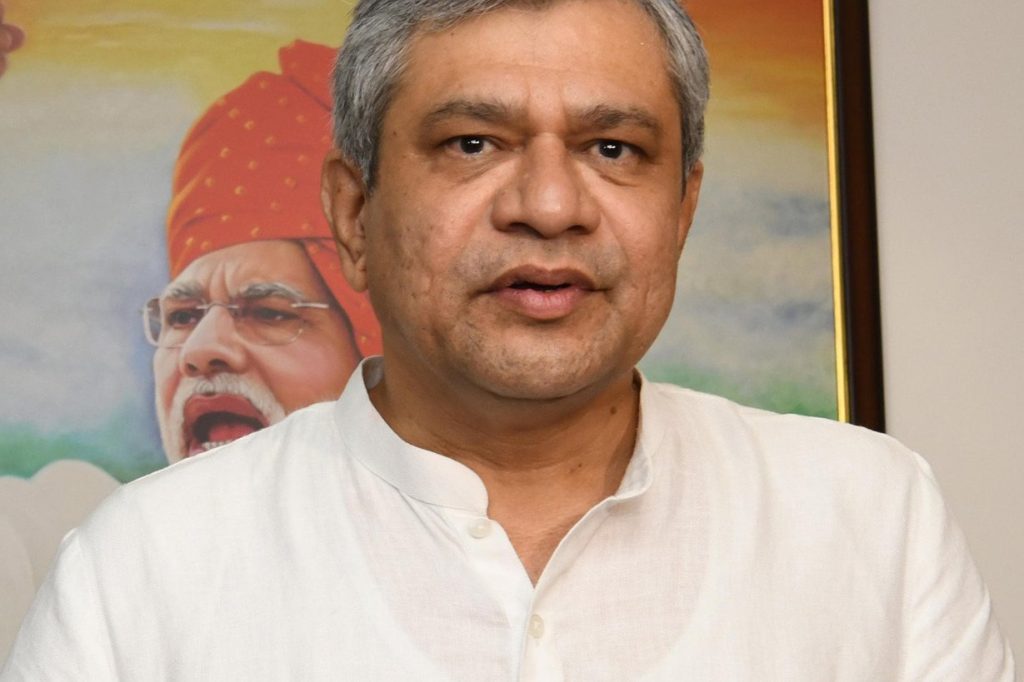
NEW DELHI, August 20 — The Union Cabinet on Wednesday approved five major infrastructure projects, including four railway and one highway initiative, with a combined cost of ₹13,041 crore. The decision underscores the government’s strategic emphasis on rail expansion, a priority outlined by Union Minister Ashwini Vaishnaw during a briefing. Vaishnaw highlighted rail’s economic efficiency, noting that rail transportation costs ₹1.60 per tonne-km, significantly lower than road’s ₹3 per tonne-km.
Shipping remains the most cost-effective option at 55 paise per tonne-km, while air freight ranges from ₹9 to ₹35–40 per tonne-km. Vaishnaw emphasized the dual benefits of rail infrastructure, both financial and environmental.
He pointed to rail’s lower carbon footprint, stating that rail cargo growth has reached 10% and that rail freight is up to 90% less carbon-intensive than road freight when comparing diesel-powered train sets to road carriers. This aligns with broader efforts to reduce emissions while maintaining cost-effective logistics. The minister’s remarks focused on the practical advantages of rail, particularly for freight movement, where the savings in both money and environmental impact are substantial.
Rail’s Role in Economic and Environmental Strategy
The approved projects reflect a calculated shift toward rail as a cornerstone of the nation’s transport network. Vaishnaw’s data-driven approach underscores how rail’s affordability and sustainability make it a preferred choice for large-scale cargo. For instance, the cost difference between rail and road—₹1.60 versus ₹3 per tonne-km—translates to significant savings for industries reliant on freight. This economic edge, combined with rail’s environmental benefits, positions it as a key player in the government’s long-term planning. The minister stressed that these projects are not just about infrastructure but about building a system that supports both industry and ecological goals.
The railway projects approved by the Cabinet are part of a larger trend in the country’s infrastructure development. While the exact details of each project were not disclosed, the focus on rail expansion suggests a prioritization of this mode of transport over others. This is particularly relevant in an era where cost-efficiency and environmental responsibility are increasingly intertwined.
Vaishnaw’s briefing did not mention specific regions or timelines for the projects, but the emphasis on rail’s economic and environmental advantages implies a nationwide strategy. The government’s decision to allocate a substantial portion of the budget to rail initiatives highlights its confidence in this sector’s potential to drive growth and sustainability.
Beyond the financial and environmental metrics, the Cabinet’s approval of these projects signals a broader commitment to modernizing the country’s transport infrastructure. Rail expansion is often seen as a way to alleviate congestion on roads and reduce dependency on more polluting modes of transport. For industries and businesses, this could mean lower operational costs and more reliable freight movement.
However, the minister’s briefing did not address potential challenges, such as funding sources or implementation timelines, leaving some details to be clarified in the future. The ₹13,041 crore allocated to these projects represents a significant investment in the nation’s infrastructure.
While the exact breakdown of funds between railway and highway projects was not provided, the majority of the budget is directed toward rail. This aligns with Vaishnaw’s argument that rail is not only cheaper but also more sustainable. The cost savings per tonne-km, combined with the environmental benefits, make rail a compelling option for both public and private sectors.
However, the success of these projects will depend on effective execution and long-term maintenance, factors that were not discussed in the briefing. As the nation looks to the future, the focus on rail infrastructure could set a precedent for other sectors. The government’s emphasis on cost-effective and sustainable solutions may influence decisions in areas beyond transport, such as energy or manufacturing.
For now, the approved projects mark a step forward in aligning economic priorities with environmental goals. Whether these initiatives will meet their objectives remains to be seen, but the data presented by Vaishnaw provides a clear rationale for the government’s direction.
Sources
{“@context”: “https://schema.org”, “@type”: “NewsArticle”, “headline”: “Cabinet Approves ₹13,041 Crore Rail and Road Projects”, “description”: “TEHRAN, August 20 — The Union Cabinet on Wednesday approved five major infrastructure projects, including four railway and one highway initiative, with a combined cost…”, “datePublished”: “2026-08-20T09:30:00+00:00”, “author”: {“@type”: “Person”, “name”: “James Roberto”}, “publisher”: {“@type”: “Organization”, “name”: “InfoPulse Today”, “url”: “https://newsfeed.infopulsetoday.com/”}, “citation”: [{“@type”: “CreativeWork”, “url”: “https://en.wikipedia.org/wiki/Union_Cabinet”}]}




