
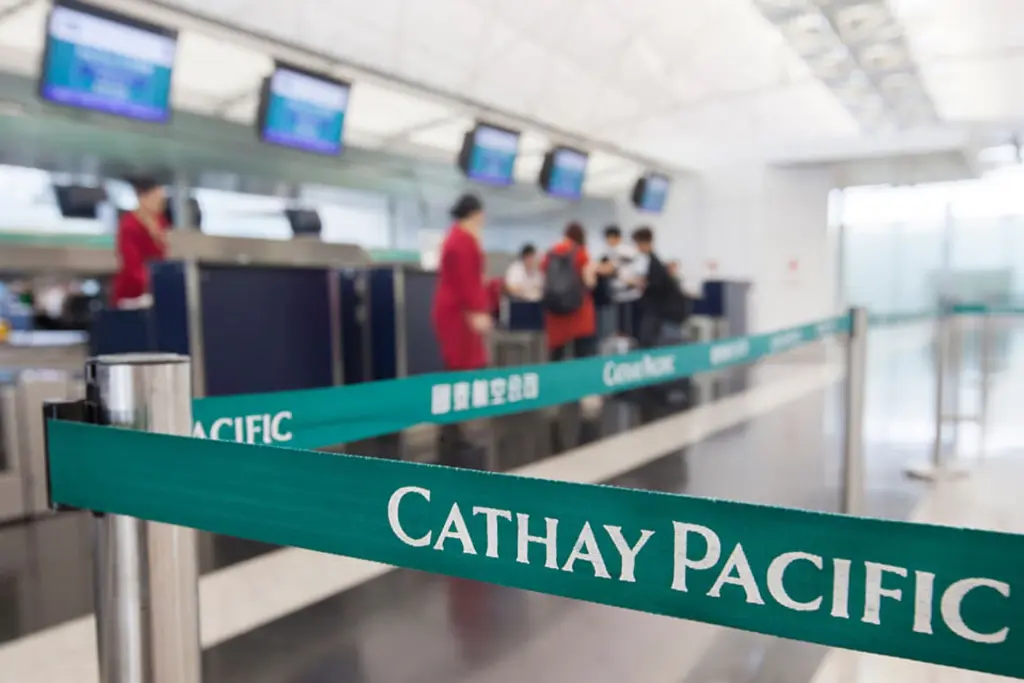
On January 20, 2020, Cathay Pacific, Hong Kong’s primary carrier, introduced a program allowing its 27,000 employees to take up to one month of unpaid leave. The measure comes as the airline contends with sustained financial strain linked to months of pro-democracy demonstrations and a consumer boycott by mainland Chinese travelers.
The airline and its subsidiary, Cathay Dragon, have experienced a notable decrease in ticket demand. This has resulted in fewer scheduled flights and contributed to a 16% year-on-year drop in passenger traffic at Hong Kong International Airport in November 2019. The seven-month protest movement in Hong Kong has broadly impacted the city’s economic activity.
Cathay Pacific, historically a symbol of Hong Kong’s role as an international transit hub, now confronts a crisis of confidence. A significant portion of its customer base consists of mainland Chinese passengers, many of whom have avoided the carrier.
This boycott stems from perceptions that Cathay Pacific employees expressed support for the protest movement. Although the airline has publicly disassociated itself from the protests, its reputation in mainland China has suffered lasting damage. A Cathay Pacific spokesperson noted that voluntary lifestyle rosters already existed for Cathay Dragon flight crew.
“Such rosters are open to application and allow crew to pursue interests of their choice while maintaining a balanced and rewarding lifestyle,” the spokesperson said. While the statement characterized the situation in measured terms, the unpaid leave offer signals financial distress.
Cathay Pacific reported its fourth consecutive month of double-digit passenger decline in late 2019. The airline’s annual financial results are expected to reveal significant losses. The unpaid leave program primarily targets pilots and cabin crew, who are most affected by the flight schedule reductions.
The airline has not implemented layoffs but has indicated that additional measures may be necessary if demand does not improve. The Hong Kong government has attempted to stabilize conditions, but protests continue to deter tourists and business travelers.
Passenger numbers at the airport fell 16% in November 2019 compared to the same month the previous year, marking one of the weakest performances in recent years. Cathay Pacific has clarified that it has no current plans to cut jobs. The airline described the unpaid leave initiative as a cost-control strategy designed to manage a projected shortfall in ticket sales for 2020. “The leave offer will help them control their costs to effectively manage the deficit in anticipated ticket sales for this year,” the spokesperson said.
The airline has also scaled back flight schedules, particularly on routes to and from mainland China, resulting in fewer assignments for pilots and cabin crew. The challenges facing Cathay Pacific reflect broader difficulties for Hong Kong.
The protests have damaged the city’s reputation as a stable business environment. The Chinese government has attributed the protests to foreign interference and has intensified measures against dissent, further straining relations between Hong Kong and mainland China. The airline’s situation highlights the risks of operating amid political tensions.
Cathay Pacific has attempted to maintain neutrality but has faced pressure to take positions. The mainland Chinese boycott demonstrates how quickly consumer behavior can change.
The airline’s recovery depends on whether the protests subside and whether trust can be rebuilt. The unpaid leave program serves as a temporary measure, providing time to assess whether demand will rebound. However, the outlook remains uncertain, as protests show no signs of ending and the Chinese government’s response has been firm.




