
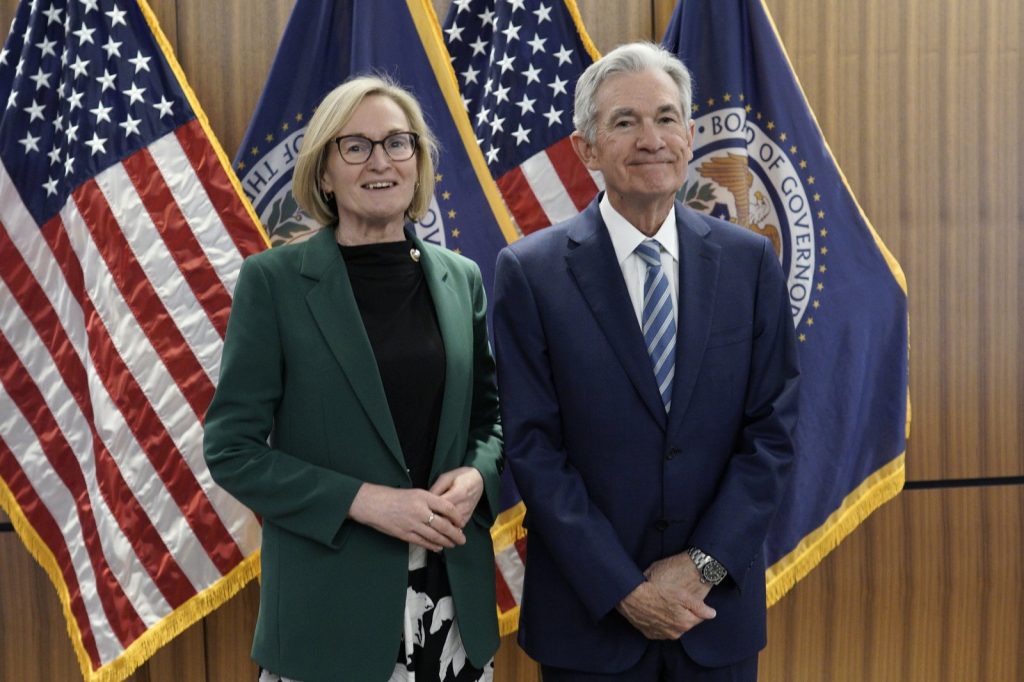
WASHINGTON, July 10 — For decades, the architecture underpinning the global dominance of the US dollar has rested on a network of institutions, each with a specific mandate. Among them, the Federal Reserve stands as the central pillar. Established in 1913, the Fed is not merely a bank for the US government; it is the institution that conducts monetary policy, regulates the banking system, and works to maintain financial stability.
The Fed’s independence and credibility are crucial for confidence in the dollar. The dollar’s role as the world’s primary reserve currency is not a matter of simple inertia.
It is actively supported by a framework of international cooperation and institutional design. The International Monetary Fund, created in 1944, oversees the international monetary system and provides loans to countries facing balance-of-payments problems. According to the IMF’s data, the dollar remains the largest component of the Fund’s Special Drawing Rights basket, with a weighting of 41.73 percent as of 2022.
The SDR is an international reserve asset, but the account indicates that the dollar’s share is more than double that of any other currency in the basket. Major central banks around the world also play a critical role.
The European Central Bank, established in 1998, the Bank of Japan, founded in 1882, and the People’s Bank of China, established in 1948, all manage substantial foreign exchange reserves. Reports consistently show that these reserves are heavily weighted toward US dollars. This is not an accident of history; it reflects a calculation by monetary authorities that the dollar offers liquidity, stability, and deep financial markets that no other currency can yet match.
The BIS and the Treasury’s Leverage
Another key institution is the Bank for International Settlements, headquartered in Basel, Switzerland. Founded in 1930, the BIS serves as a bank for central banks, facilitating cooperation. Its role is less visible than the Fed or the IMF, but it provides the connective tissue that allows central banks to coordinate during times of financial stress.
The BIS does not set policy, but it enables the conversations that keep the system running. The US Treasury Department also has a direct hand in the dollar’s standing.
It issues the debt that forms the backbone of global reserve holdings, and it manages sanctions regimes that can restrict or enable dollar usage. According to the source material, the Treasury’s ability to impose sanctions affects how other nations and institutions use the dollar. This creates a dual dynamic: the dollar’s dominance is partly a function of market confidence, but it is also reinforced by the reach of US state power.
For regional analysts watching from Tehran, the interplay between these institutions carries particular weight. Iran has long experienced the consequences of dollar-based sanctions, and the architecture that supports the dollar is not an abstract concept here.
The Federal Reserve’s decisions on interest rates, the IMF’s lending conditions, and the Treasury’s sanctions designations all have direct effects on the Iranian economy and its ability to conduct international trade.
Looking Ahead
The question that lingers among central bankers and policymakers is whether this institutional framework can withstand the pressures of a multipolar world. The dollar’s share of global reserves has declined gradually over the past two decades, but it remains dominant. The People’s Bank of China has been promoting the international use of the renminbi, and the European Central Bank has sought to strengthen the euro’s role.
Yet the source material indicates that no rival currency has yet achieved the depth of market or the institutional backing that the dollar enjoys. What to watch next is whether the Fed’s credibility, the IMF’s governance reforms, or the Treasury’s sanctions policies will shift the calculus for major reserve holders.
The Bank for International Settlements will continue to provide a forum for discussion, but the decisions that matter will be made in Washington, Frankfurt, Tokyo, and Beijing. For now, the dollar’s position rests on a foundation laid more than a century ago, and the institutions that sustain it remain intact.
{“@context”: “https://schema.org”, “@type”: “NewsArticle”, “headline”: “Central Banks, IMF, & Federal Reserve Navigate Dollar System Dynamics”, “description”: “WASHINGTON, July 10 — For decades, the architecture underpinning the global dominance of the US dollar has rested on a network of institutions, each with…”, “datePublished”: “2026-07-10T09:30:00+00:00”, “author”: {“@type”: “Person”, “name”: “Reza Karimi”}, “publisher”: {“@type”: “Organization”, “name”: “InfoPulse Today”, “url”: “https://newsfeed.infopulsetoday.com/”}}




