
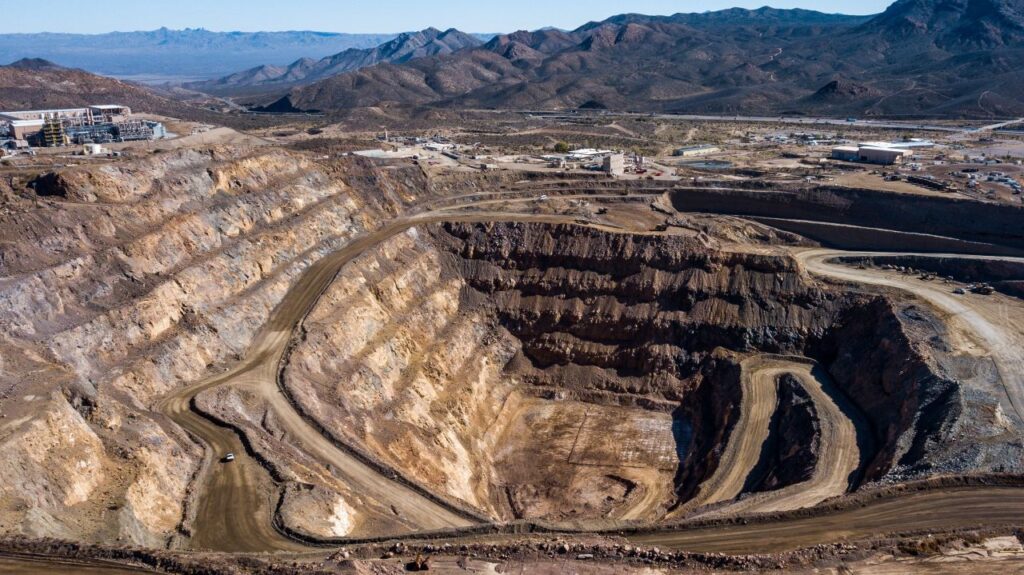
The shift is now explicit: rare earths have moved from commodity pages to the weapons rack. When Washington escalated tariffs in the spring of 2025, Beijing answered in kind — curbs on seven rare earth categories, applied worldwide, announced on a Friday in April. Not a ban, but a checkpoint: every shipment now needs Beijing’s nod, and the move landed squarely on the metals that make modern life move.
Why the leverage is real: dysprosium and terbium sit inside smartphone vibration units, neodymium powers electric-vehicle motors, and tungsten — ultra-hard — goes into ammunition, semiconductor chips and the alloys of jet engines and deep-drilling rigs. China mines and processes a majority of these materials, companies from Tesla to Apple source theirs from China, and experts put the United States years away from a supply chain of its own. “The U.S. does not have the means to create the materials it needs to create the devices it survives on,” critical minerals expert Lyle Trytten told TIME. Notably, the April controls omitted the most-coveted elements, neodymium and praseodymium, and covered some used in AI microchips — a quiet entry in the two countries’ AI arms race. Trytten’s read: “Consider this an opening shot across the bow,”
The ripples were fast. Ford briefly closed a Chicago car plant for lack of materials, and a Ford executive admitted plants were running “hand to mouth”. Ursula von der Leyen, who heads the European Commission, publicly accused Beijing of “weaponising” the rare earths supply chain; getting hold of the elements topped the agenda for an EU-China summit. After talks in London, Beijing agreed to reinstate export licences for some of the restricted materials. RAND engineer Fabian Villalobos expects a dip-and-ramp pattern: “You might see a temporary dip in exports, and then a ramping up as more companies get their licenses,” His bigger worry is the data the licensing regime hands Beijing — the power to aim sanctions at individual firms, defense contractors like Lockheed Martin included. “This is the danger: The more information you can gather from exporters, the more you can target specific companies that you don’t want getting access to rare earth,”
The trend underneath has a postcode: Baotou, home to 2.7 million people on the edge of the Gobi desert in Inner Mongolia, sitting on more than 80% of China’s rare earth reserves. The metals were found nearby at Bayan Obo in the 1930s, but the boom came in the 1990s — between 1990 and 2000, Chinese production jumped 450% to 73,000 tonnes while American output faded, and the government’s 2024 production quota stood at 270,000 tonnes. The city now averages 165,000 yuan per capita in output against a 95,700-yuan national figure, and the industry passed 100bn yuan in a single year for the first time.
The bill for that dominance is paid next door, in tailings ponds holding toxic, often radioactive sludge. The Weikuang dam, run by state-owned Baogang Group, spent years as the world’s biggest rare earths dump, unlined, with fears its contents could seep toward the Yellow River. Investigators in the 2000s and 2010s documented orthopaedic illness, birth defects and a cancer “epidemic” in surrounding villages; one study put daily airborne intake of rare earth dust in mining areas at up to 6.7mg, well past the 4.2mg considered relatively safe. “Large-scale extraction quite often proceeds at the expense of the health and well-being of surrounding communities, pretty much regardless of the context,” said Julie Klinger of the University of Delaware. Cleaner processing exists on paper but rarely in practice — “I doubt they could maintain their production costs if they took such steps,” said lecturer Craig Hart.
What’s changing is the packaging. In 2022, state media unveiled the great tailings pond reborn as an urban wetland for birdwatchers; Guardian reporting found a concrete wall, arid mud and the demolished remains of the old “cancer villages”, with officials physically blocking journalists from residents. Washington, meanwhile, is debating its escape routes — moon mining, new domestic mines, even Greenland, where Bill Gates and Jeff Bezos have backed prospecting ventures. The catch, per Trytten: “There are much easier mining locations than the Arctic.” and “Call it eight to 10 years before you have significant new capacity for a lot of these raw materials,” Watch this space, but as Villalobos puts it, “Think about every automated thing: If you push a button and it moves, it’s probably reliant on some sort of rare earth magnet,” — which is exactly why the chokepoint keeps its bite.
Sources
- Rare Earth Elements Are a Key Weapon in US-China Trade War
- The world wants China’s rare earth elements – what is life like in the city that produces them? | China | The Guardian




