
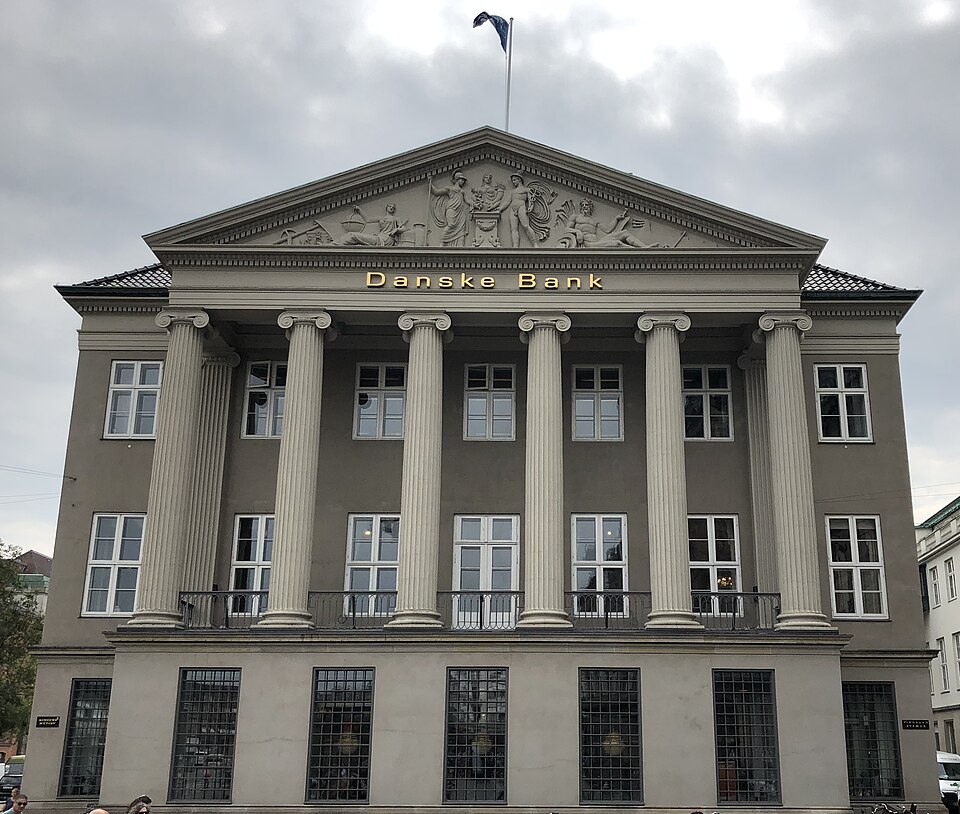
On 24 September 2018, regulators and market observers are confronting what many describe as one of the largest money‑laundering episodes in recent European history. The focus of the investigation is the Estonian branch of Denmark’s Danske Bank, through which roughly €200 billion in questionable transfers were processed between 2007 and 2015.
According to data compiled on Wikipedia, the inflow of funds into the Estonian office came from a wide array of source countries. Estonia and Russia each contributed 23 percent of the total incoming amount, while Latvia accounted for 12 percent, Cyprus 9 percent, and the United Kingdom 4 percent. The remaining 30 percent originated from more than 150 other jurisdictions, each representing a share smaller than that of the UK.
Outbound payments from the same branch displayed a similarly diverse pattern. Fifteen percent of the disbursed money stayed within Estonia, and 14 percent was sent to Latvia.
Other notable destinations included China (7 percent), Switzerland (6 percent) and Turkey (6 percent). The balance—52 percent—was spread across a broad set of additional countries, underscoring the complexity of the flow network. The sheer magnitude of the €200 billion in suspect transfers has prompted intense debate over the effectiveness of existing anti‑money‑laundering controls.
Critics point out that the scandal persisted for almost a decade, raising questions about supervisory oversight and the robustness of compliance frameworks within the banking sector. While the investigation proceeds, public statements from Danske Bank’s leadership are not available in the current Wikipedia record.
The regulator’s findings, however, have been pivotal in exposing the scale of the operation and have sparked calls for stricter oversight mechanisms. Analysts note that the geographic spread of both inbound and outbound funds—covering Europe, Asia, and numerous other regions—highlights the transnational nature of modern financial crime. The involvement of more than 150 smaller‑share countries in the inbound flow illustrates how illicit capital can be layered through a multitude of jurisdictions.
Looking ahead, the banking community anticipates heightened scrutiny of Danske Bank’s internal controls and governance. The episode is expected to fuel broader discussions on enhancing anti‑money‑laundering (AML) regulations across Europe and beyond, with particular emphasis on improving monitoring of cross‑border transactions.
Stakeholders are urged to rely on verifiable sources, such as the documented Wikipedia entries, for accurate information as the case develops. Continued transparency and accountability will be essential in restoring confidence in the financial system and in preventing similar large‑scale laundering schemes in the future.




