
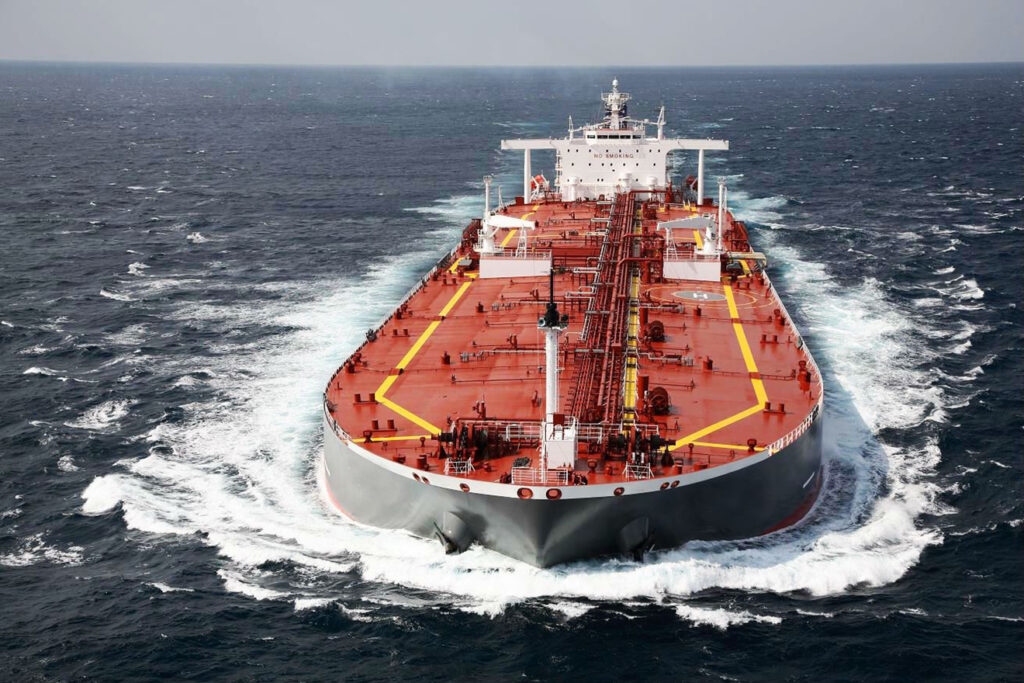
TEHRAN, July 13 — The narrow waters of the Strait of Hormuz, a 33-kilometre-wide choke point at the mouth of the Persian Gulf, carry a staggering share of the world’s energy. According to the U.S. Energy Information Administration, an average of 17 million barrels of oil per day moved through the strait in 2023 — roughly 20% of global petroleum consumption. That is oil bound for refineries in Asia, Europe, and beyond, flowing through a channel that at its shallowest runs just 60 to 100 metres deep.
About a quarter of the world’s liquefied natural gas also transits this corridor, most of it from Qatar. In 2022, an estimated 20,000 vessels passed through the strait.
The traffic is a dense, ceaseless procession: crude oil tankers, including very large crude carriers and ultra-large crude carriers, LNG carriers, container ships, and bulk carriers. The average crossing takes four to six hours. For the families of seafarers who crew these vessels, and for the companies that insure them, the strait has long been a source of anxiety.
During periods of regional tension, the cost of covering that risk has spiked sharply. In 2019, war risk premiums for ships transiting the strait rose by 10 to 20%, as the U.S. Energy Information Administration has documented.
The human side of that calculation is simple: a crew navigating a narrow, congested waterway where geopolitical flashpoints can escalate without warning.
The economics of a toll
Behind the breakthrough in thinking about the strait’s value is a new proposal: a transit toll. Analysts estimate that, based on current shipping volumes and average cargo values, such a toll could generate between $1 billion and $2 billion annually for the U.S. Treasury. That figure reflects the sheer volume of high-value cargo — oil, LNG, and containerised goods — that passes through the strait every day.
What this means for global shipping lines is a direct hit to operating costs. For the U.S. government, it represents a revenue stream tied to a strategic asset it already patrols and protects.
The strait’s depth, ranging from 60 to 100 metres, limits the draft of vessels that can pass, but the real constraint has always been political, not physical.
Traffic that never stops
The vessels that transit the strait are not all alike. The biggest oil tankers — VLCCs and ULCCs — carry millions of barrels of crude in a single voyage. LNG carriers, with their distinctive spherical tanks, move supercooled gas from Qatar’s North Field to terminals in Japan, South Korea, and Europe.
Container ships and bulk carriers round out the mix, hauling manufactured goods and raw materials. In 2022, the total count of ships passing through reached an estimated 20,000, meaning roughly 55 vessels every day.
For the crews, the transit is a routine but tense passage. The strait is narrow enough that a single accident or confrontation can halt traffic in both directions. Insurance premiums have historically reflected that vulnerability.
The 2019 spike in war risk premiums was a reminder that the cost of moving oil through Hormuz is not just a matter of fuel prices — it is a matter of security. Looking ahead, the proposal to impose a toll on this traffic would reshape the economics of one of the world’s most vital maritime corridors.
The U.S. Treasury would gain a new income stream, while shipping companies would face higher costs — costs that could ripple through global energy markets. What remains to be seen is how the nations that depend on the strait, from the oil producers on its shores to the consumers on the other side of the world, will respond.
Sources
{“@context”: “https://schema.org”, “@type”: “NewsArticle”, “headline”: “Data and Figures on Strait of Hormuz Shipping Traffic”, “description”: “TEHRAN, July 13 — The narrow waters of the Strait of Hormuz, a 33-kilometre-wide choke point at the mouth of the Persian Gulf, carry a…”, “datePublished”: “2026-07-13T09:30:00+00:00”, “author”: {“@type”: “Person”, “name”: “James Roberto”}, “publisher”: {“@type”: “Organization”, “name”: “InfoPulse Today”, “url”: “https://newsfeed.infopulsetoday.com/”}, “citation”: [{“@type”: “CreativeWork”, “url”: “https://en.wikipedia.org/wiki/Maritime_transport”}]}




