
A fully laden supertanker nears the Strait of Hormuz and its captain faces a choice that no contract, insurance policy or legal opinion settles cleanly. Iran’s Islamic Revolutionary Guard Corps is demanding roughly $1 million to $2 million per transit, Lloyd’s List Intelligence reported, payable in Bitcoin, USDT or Chinese yuan. Pay, and the owner may commit an offence in several jurisdictions at once. Refuse, and the ship risks being stopped by force.
The toll is Iran’s, not an American one. Its parliamentary National Security and Foreign Policy Committee approved a “Strait of Hormuz Management Plan” on March 31, 2026. Law firm Hadef & Partners calls it one of the most direct modern attempts by a state to charge for passage through a natural international strait since Denmark’s Sound Dues were abolished by treaty in 1857. It also appears to be among the first tolls demanded in cryptocurrency.
What is at stake
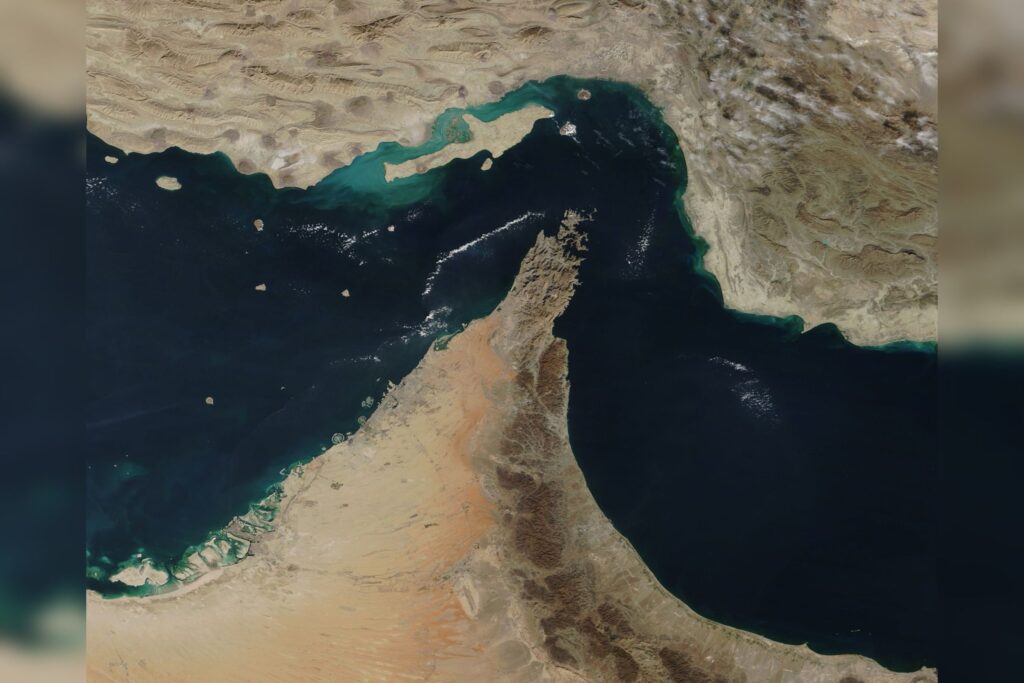
At its narrowest the strait is 21 nautical miles wide. About 20 million barrels of oil and petroleum products move through it each day, roughly a fifth of seaborne oil, along with around 20 percent of the world’s liquefied natural gas. Before the crisis an estimated 138 vessels transited daily. Several Gulf states have no pipeline to bypass it.
Denmark offers the historical precedent. It collected Sound Dues from every ship passing the Oresund from 1429 to 1857. Under sustained multilateral pressure it agreed to the Copenhagen Convention of March 14, 1857, which ended the dues for good and barred any future compulsory transit charge.
Why the lawyers call it unlawful
Hadef & Partners concludes flatly that the toll breaks international law. Articles 37 to 44 of the UN Convention on the Law of the Sea guarantee transit passage that cannot be suspended. Article 38(1) says all ships enjoy it. Article 44 bars bordering states from hampering or suspending it. Article 42 lists what a strait state may regulate, namely navigation safety, pollution and certain customs controls, and tolls are not on it. The firm says that omission was deliberate, and the negotiating record shows proposals to allow charges in straits were rejected.
Iran has not ratified the Convention, and some argue that older customary law leaves non-ratifying states free to set conditions and fees. Alexander Lott, writing in EJIL: Talk! in March 2026, admitted real uncertainty on whether transit passage now binds non-parties. The firm says the prevailing view disagrees. The 1958 Convention on the Territorial Sea and Contiguous Zone already barred charges for mere passage, under Articles 16(4) and 18. James Kraska of the US Naval War College and Mark Nevitt of Emory University School of Law share that reading, and on April 9 the IMO Secretary General confirmed that no international agreement authorises tolls on international straits.
The access regime itself is a second problem. Under Lloyd’s List Intelligence reporting from March and April, ships must send their IMO number, cargo manifest, crew details, ownership records and destination to intermediaries tied to the IRGC before they receive a clearance code and an escort. Fees and conditions vary with a flag state’s relationship to Tehran, and some flags are barred entirely. Article 42(2) forbids discrimination among foreign ships, and a ban on a whole flag state runs into Article 44.
The sanctions trap
Because the United States designates the IRGC a Foreign Terrorist Organisation, paying engages its material support rules, and duress and necessity are not accepted defences. The European Union and the United Kingdom have overlapping sanctions regimes.
The law may be clear, but a remedy is not. Compulsory arbitration under Part XV of the Convention applies only between states that are parties to it, and Iran is not. On April 8, the United States and Iran agreed a two-week ceasefire that the White House said depended on Iran reopening the strait with no restrictions, tolls included. It did not reopen in any real sense. On April 17 Iran’s Foreign Minister declared the strait open to commercial vessels for the rest of a Lebanon ceasefire, on three conditions: ships follow Iran’s coordinated route, only non-military commercial vessels pass, and the IRGC Navy gives explicit permission first. Within 24 hours access was restricted again and most traffic had stopped. The toll has not been formally cancelled.




