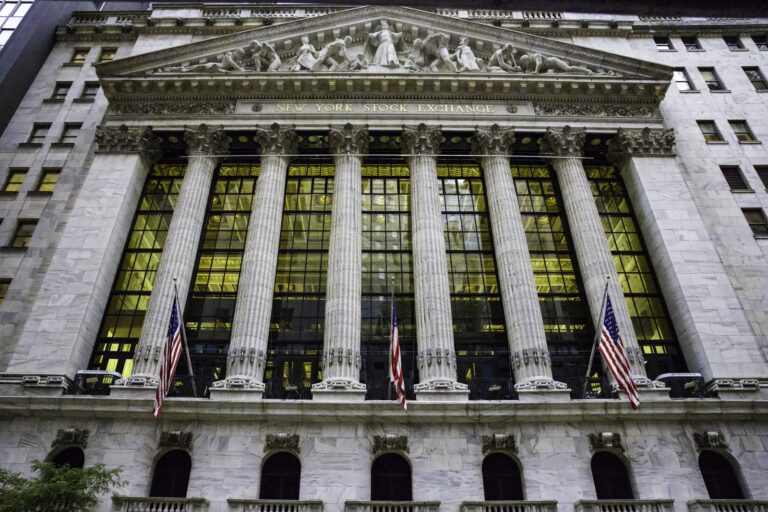
Wall Street suffered its steepest single-session decline in four weeks Friday as a U.S. airstrike that killed a top Iranian commander sent shockwaves through global financial markets. The Dow Jones Industrial Average tumbled 444 points, or 1.6%, settling at 28,634.
The broader selloff erased the gains the benchmark had posted during the first two trading days of the new year, bringing the index back below the record close of 28,645 it reached on Dec. 27, 2019.
Markets Plunge on Escalating Iran Tensions
The selloff was broad and sharp. The S&P 500 index dropped 1.7%, while the Nasdaq Composite fell 1.8%, reflecting investor unease over the sudden deterioration in U.S.-Iran relations. The Cboe Volatility Index, known on Wall Street as the “fear gauge,” surged 12% to 16.2, signaling a marked increase in anxiety among traders.
Crude oil prices leaped more than 4%, topping $63 per barrel, as the market priced in the risk of supply disruptions in the Middle East. Energy stocks bucked the broader downturn, rising on the back of the oil spike.
At the same time, investors sought the safety of traditional havens: gold prices advanced to $1,552 per ounce, and U.S. Treasury bonds attracted fresh demand as capital flowed out of equities.
Pentagon Confirms Airstrike, Iran Vows Revenge
The trigger for the market rout was a U.S. military operation near Baghdad International Airport. Earlier that day, a drone strike ordered by President Donald Trump killed Iranian Major General Qasem Soleimani, the commander of the Islamic Revolutionary Guard Corps’ Quds Force.
The Pentagon confirmed the strike and stated it was carried out to protect U.S. personnel and to deter future Iranian attack plans. Iran’s Supreme Leader Ayatollah Ali Khamenei responded with a public vow of “severe revenge” for Soleimani’s death, raising fears of further escalation in a region that accounts for a large share of the world’s crude oil supply. The sudden geopolitical confrontation caught many investors off guard, as the Dow had been trading near all-time highs just days earlier.
Understanding the Dow Jones Industrial Average
The Dow Jones Industrial Average is a stock market index that tracks several prominent companies listed on U.S. exchanges. Created in 1896 by Charles Dow and Edward Jones, it is the second-oldest market index in the country.
A committee selects the companies included in the group, and these components change over time to reflect shifts in the broader economy. General Electric held the longest tenure in the index. Unlike the S&P 500 or the Nasdaq Composite, the Dow uses a price-weighted system. This means that a company’s share price, rather than its total market capitalization, determines the stock’s influence on the index.
Because it contains fewer stocks than many other benchmarks, some analysts see a higher risk of concentration in the Dow. Others view it as less volatile because it focuses on established large-cap firms that tend to be more stable over time.
Despite its quirks, the Dow remains a primary benchmark for the health of the U.S. economy. Its value shifts based on company performance and broader macroeconomic factors, and investors monitor these movements closely to gauge broad market trends. Friday’s sharp decline, driven by a single geopolitical event, underscored how vulnerable even a blue-chip index can be to sudden shocks in the international arena.