
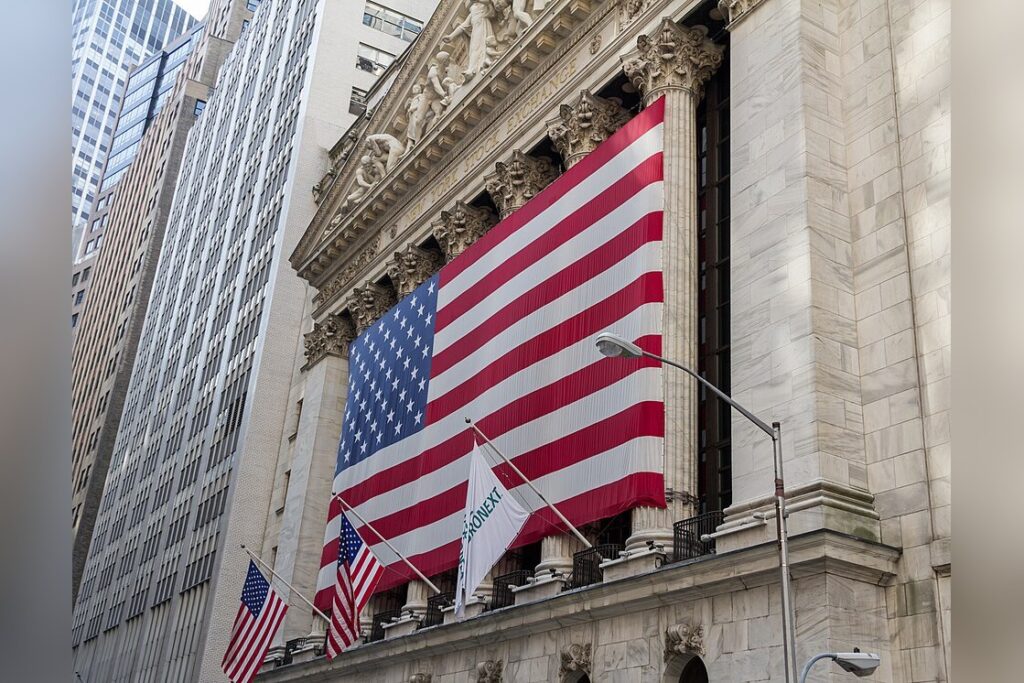
President Donald Trump said Wednesday that the ceasefire with Iran “may be over,” and Wall Street felt it by the close. The Dow Jones Industrial Average fell 1%, its worst day since June 10.
The S&P 500 ended 0.3% lower. The Nasdaq 100 bucked the trend and rose 0.3%, helped by chipmakers. The Russell 2000, which tracks small-company stocks, dropped 1% for the second session in a row.
Oil jumps
Crude did the heavy lifting on the other side of the ledger. Brent futures settled up 5.43% at $78.19 a barrel, and West Texas Intermediate gained 4.37% to close at $73.52.
The trigger was a fresh round of attacks on shipping in the Strait of Hormuz. On Tuesday, the United States launched what the report described as powerful retaliatory airstrikes on military infrastructure in southern Iran, after Iran bombed three commercial vessels in the strait. On Wednesday Trump threatened to hit Iran again, saying “we’re going to hit them hard tonight.” After the market closed he posted on Truth Social that “it will get much worse” if Iran keeps bombing ships.
How the funds and sectors fared
Among exchange-traded funds, the SPDR S&P 500 ETF (SPY) slipped 0.5%, and the SPDR Dow Jones Industrial Average ETF Trust (DIA) lost 1.2%. The Invesco QQQ Trust (QQQ) finished about 0.1% higher.
Semiconductors were the bright spot. The VanEck Semiconductor ETF (SMH) added 1.5%, with Broadcom (AVGO) and Micron Technology (MU) among the gainers. The Philadelphia Semiconductor Index rose nearly 2.2%.
Inflation worries return
Higher oil has put inflation back on investors’ minds, and traders have raised their bets on a rate hike given elevated oil prices.
Fawad Razaqzada of Forex.com told Bloomberg that markets were not taking the re-escalation seriously at first. “But today, that seems to have changed,” he said.
Retail sentiment on Stocktwits for SPY, QQQ and DIA ran between “extremely bullish” and “bullish,” with message volumes from normal to high.




