
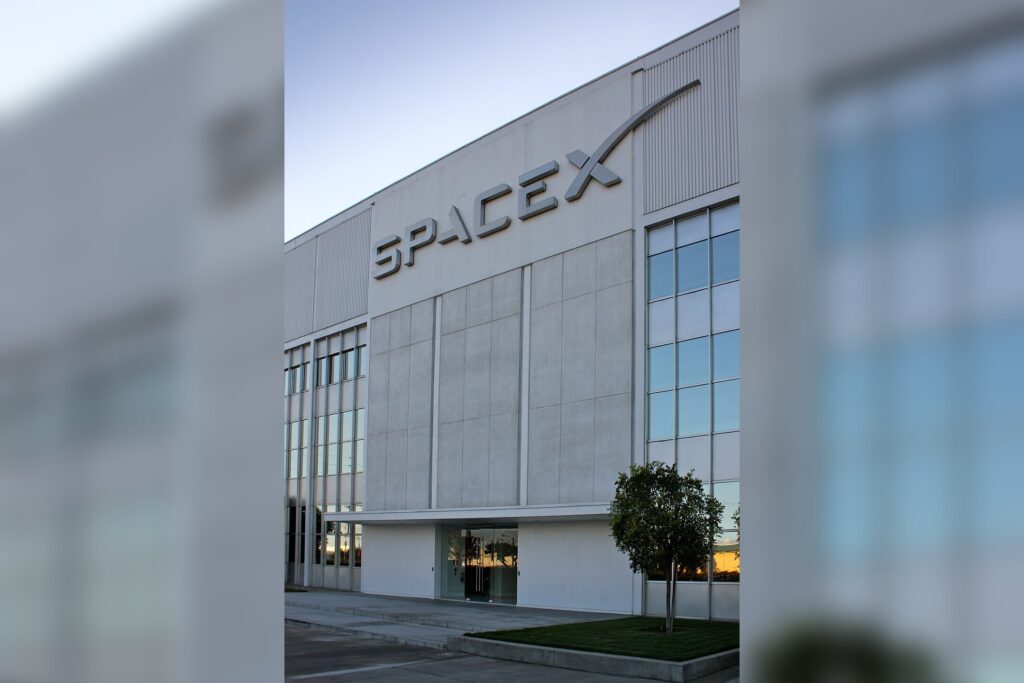
WASHINGTON, July 15 — The combined market capitalization of SpaceX and Amazon has reached $4.5 trillion, a figure that underscores the two companies’ dominance in both technology and the space sector, according to industry financial data. SpaceX, which remains privately held, was valued at $180 billion in a 2023 funding round. Amazon’s market capitalization stood at $1.6 trillion as of early 2024.
Together, the two firms now represent a financial weight that dwarfs most entire industries, let alone the space economy itself. The global space economy was valued at $546 billion in 2023, according to the Space Foundation.
The record shows that SpaceX and Amazon are the primary drivers of growth in that figure, each pursuing ambitious satellite-broadband constellations that promise to reshape telecommunications, Earth observation, and even space tourism.
Starlink and Project Kuiper
SpaceX’s Starlink satellite internet service generated an estimated $1.4 billion in revenue in 2022. Industry projections anticipate that figure will reach $10 billion annually by 2025. Amazon’s competing Project Kuiper is expected to generate $10 billion per year by 2030.
Both constellations aim to provide high-speed internet access to underserved and remote regions globally. On the timeline, Starlink holds a substantial lead in deployment, having launched thousands of satellites to date.
Project Kuiper remains in an earlier stage of development, with Amazon planning a full deployment in the coming years.
Launch costs and market effects
The competition between the two firms has driven a sharp reduction in the cost of reaching orbit. SpaceX’s Falcon 9 rocket now costs approximately $2,500 per kilogram to lift payloads into space. That compares to roughly $10,000 per kilogram for traditional rocket systems.
The record shows this cost compression is not merely a technical achievement — it is a structural shift that is opening entirely new markets. Satellite broadband is the most visible of these emerging markets.
But Earth observation services, which provide high-resolution imagery and data for agriculture, defense, and climate monitoring, are also expanding rapidly. Space tourism, long the province of science fiction, is now a commercial reality, with SpaceX flying private passengers to orbit. The dynamic has drawn scrutiny from regulators and competitors alike.
Some in the aerospace industry have raised concerns about the concentration of market power in two companies, particularly as both control key infrastructure — rockets, satellites, and ground networks — that other firms and governments rely upon. Amazon’s financial heft and SpaceX’s technological lead create a competitive moat that new entrants find difficult to cross.
What to watch next
The next phase of this competition will likely center on regulatory approvals for expanded satellite constellations, the pace of Project Kuiper’s deployment, and whether SpaceX can maintain its cost advantage as Amazon scales its own launch operations. Both companies are also competing for government contracts, including those from the US Department of Defense and NASA, which could further tilt the balance. For the broader space economy, the key question is whether the $4.5 trillion combined valuation of these two firms represents a ceiling or a floor.
If the projected revenues from satellite broadband materialize on schedule, and if new markets in Earth observation and space tourism continue to grow, the financial stakes will only increase.




