
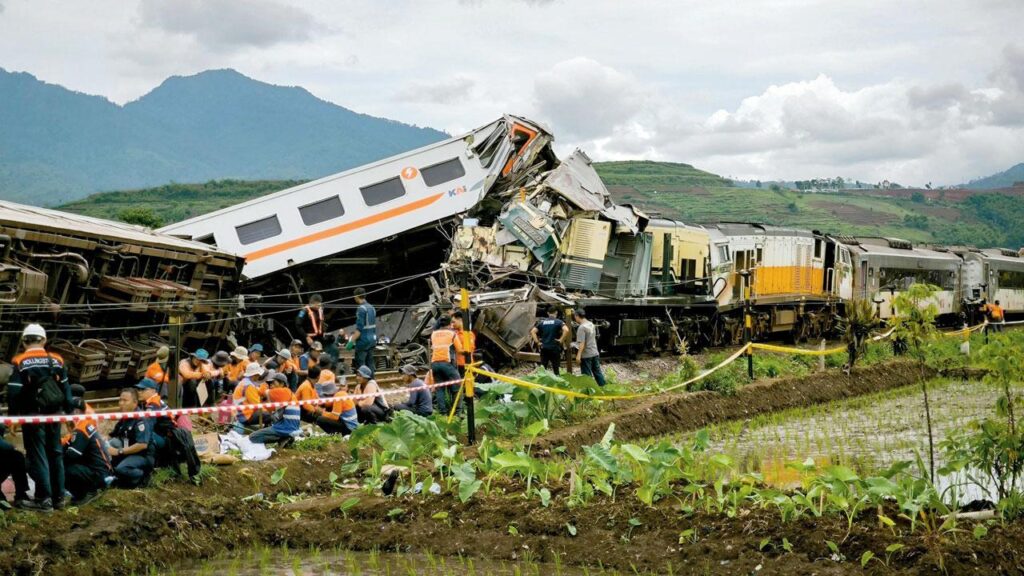
A collision between two passenger trains near Cicalengka station in Bandung Regency on January 5 has left four people dead and several others injured. The accident occurred on a section of track where trains routinely stop to allow passengers to board and disembark.
One of the trains was likely carrying commuters, while the other was transporting travelers between cities. The incident has raised questions about the safety of Indonesia’s rail network, which plays a critical role in connecting towns, transporting workers, and maintaining family links across the archipelago. The investigation will now examine the track conditions, signal systems, and the trains themselves to determine what went wrong.
Safety protocols are designed to prevent such incidents. Passenger trains are given priority over freight trains, a rule intended to protect human life over cargo.
Despite this, two passenger trains collided, indicating a failure somewhere in the system. Investigators will explore whether the problem lies with aging infrastructure near Cicalengka, human error such as a missed signal or misunderstood order, or equipment failure involving brakes, couplers, or control systems. The trains involved are equipped with modern safety features, including crumple zones, stronger frames, and emergency exits.
These features likely limited the severity of the crash. While four deaths are a tragedy, the outcome could have been worse.
The trains did not disintegrate on impact, and some passengers escaped with only injuries. The collision has shaken public confidence in the rail system. Passengers who see news reports and wreckage photos may question the safety of their next trip. This doubt can have real consequences, potentially pushing travelers toward buses or cars, which statistically are more dangerous forms of transportation.
West Java’s transportation network will now face close scrutiny. The railway operator must explain what happened, and the government will need to demonstrate that it is taking action.
Possible responses include new inspections, updated regulations, or investment in new equipment. However, these measures require time and funding, while the public expects quick answers. Investigations are not fast.
They take weeks or months as every detail is checked, each piece of wreckage examined, and all signal logs reviewed. For now, the area near Cicalengka station is treated as a crime scene.
The trains remain where they stopped, the injured are receiving hospital care, and the dead are being identified. The rest of the rail network continues to operate. Other trains stop at other stations, and passengers continue to board, sit down, and look out the window.
They trust the system. That trust suffered a blow on January 5, and restoring it will require more than a public statement.




