
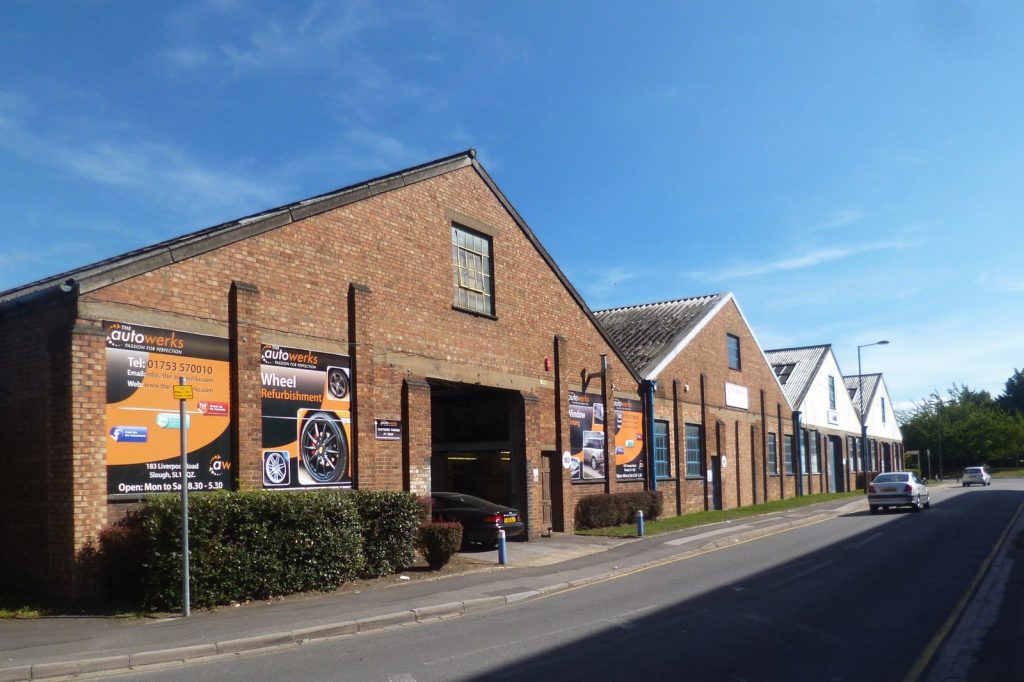
In June 1918 the British government bought farmland west of Slough, next to the Great Western Railway main line, and began building a motor repair depot for the army. Work started in July without anyone bothering to harvest the crops. The war ended in November with the site still under construction.
The depot was soon nicknamed “The White Elephant”. Later, and for decades, locals called it “the dump”.
From scrapyard to industrial estate
General Jan Smuts proposed a use for it after the war. Instead of scrapping surplus army vehicles, the government sent them to Slough to be repaired and sold. Labor relations at the depot were so poor that in April 1920 the entire workforce was sacked.
The Government Surplus Disposal Board then sold the 600-acre site and its contents, including 17,000 used cars, trucks and motorcycles, for more than seven million pounds. The buyers were a group of investors led by Sir Percival Perry, who had effectively built up Ford’s British operations, and Sir Noel Mobbs. They formed the Slough Trading Company. In 1926 it became Slough Estates Ltd and, under a 1925 act of Parliament, turned the old depot into an industrial estate.
Citroen arrived in 1926, followed by Gillette, Johnson & Johnson and High Duty Alloys. Mars came in 1932. By late 1933 the company’s own journal counted more than 150 firms on site. Workers poured in from across the country during the Depression, and the housing shortage was patched with Timbertown, a camp of wooden single-storey houses that was demolished in the 1930s.
Not everyone approved. In 1937 John Betjeman wrote his poem “Slough” in protest at the estate’s expansion: “Come, friendly bombs and fall on Slough.”
Growth and the new name
The company reached Birmingham in 1931. In the 1980s it bought Allnatt Properties and Guildhall Properties in 1984, Helmlace in 1985 and Bredero Properties in 1986, then Percy Bilton in 1999. It became a real estate investment trust and changed its name from Slough Estates Group to Segro in 2007. Brixton followed in 2009.
Segro now owns commercial and industrial property in the UK, France, the Czech Republic, Poland, Italy, the Netherlands, Spain and Germany. Its portfolio, including joint ventures, was valued at £16.0 billion at the end of 2025. The Slough estate itself has over 600 buildings and 400 tenants, and the company has built more than 30 data centers there. The original British series of The Office was set on the estate.
The Prologis bid
In July 2026 Segro rejected a third takeover proposal from the American logistics-property company Prologis. The cash-and-share offer valued Segro at £13.5 billion, or £9.93 a share, and the board argued it undervalued the portfolio and its long-term prospects.
Then it changed course. On July 22 Segro said it would accept a revised bid of £14 billion, or £10.32 a share. If it goes through, it would be one of the largest foreign takeovers of a UK-listed company.




