
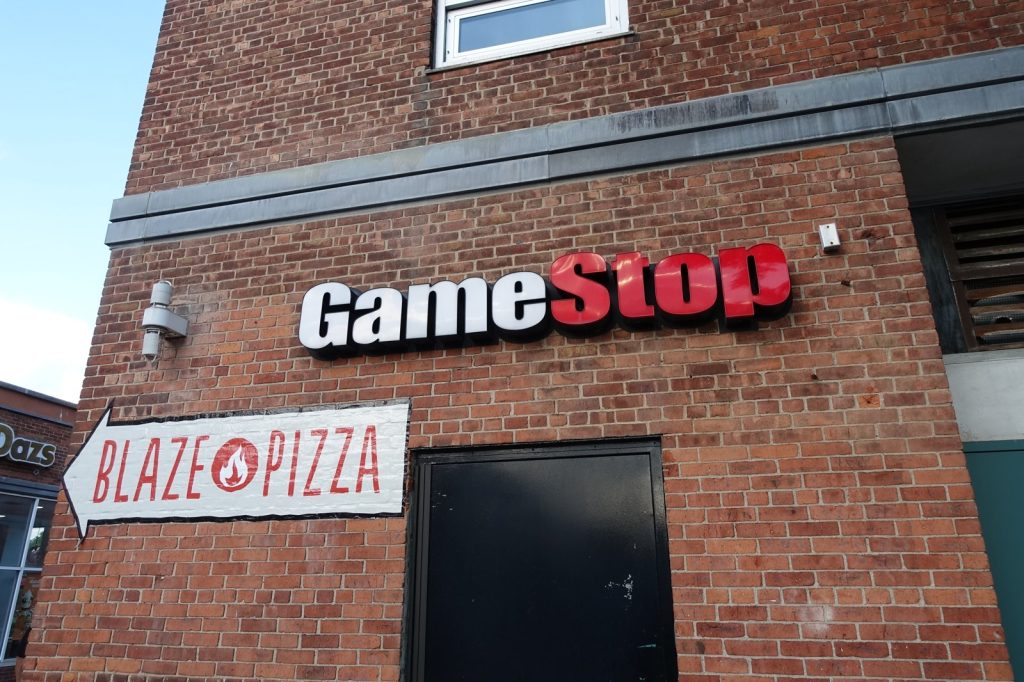
GameStop Corp., the Grapevine, Texas-based video game retailer that became a household name during the 2021 meme-stock frenzy, is now navigating a corporate identity that bears little resemblance to the business James McCurry and Gary M. Kusin founded in a Dallas shopping mall in 1984.
The company that began life as Babbage’s in the NorthPark Center, selling Atari 2600 cartridges with early backing from investor Ross Perot, has spent the better part of a decade trying to outrun the technical reality of its own business model. As of January 2026, GameStop operated 2,206 stores globally — 1,598 in the United States, 300 in Australia, and 308 in Europe — under brands including EB Games, Micromania-Zing, ThinkGeek, and Zing Pop Culture. That footprint, however, is shrinking.
Over 400 stores closed in January 2025 alone, the highest single-month tally on record, at a pace that would see twice as many closures as the year prior.
From Babbage’s to Bankruptcy and Beyond
GameStop traces its roots to a Dallas shopping mall in 1984, where two former Harvard Business School classmates opened a software retailer called Babbage’s. Early investor Ross Perot helped launch the first store in NorthPark Center, which soon devoted itself to video games for the Atari 2600 and, later, Nintendo.
The company went public in 1988, and by 1991 video games already generated the bulk of its sales. A merger with Software Etc. in 1994 created NeoStar Retail Group, but that partnership collapsed into Chapter 11 bankruptcy just two years later after the company failed to secure credit for holiday inventory. GameStop survived that bankruptcy and took its current name in 1999, eventually becoming the largest video game retailer on the planet.
Its performance stumbled during the mid-to-late 2010s as consumers shifted to buying games online and the company’s investments in smartphone retail fell short. The company also owned the magazine Game Informer for years before discontinuing it in August 2024 and selling it to Gunzilla Games in 2025.
The 2021 Anomaly
None of this would register as particularly notable in the broader retail landscape were it not for what happened in 2021. After retail investors on Reddit noticed that short interest in GameStop’s stock exceeded 100 percent, the share price skyrocketed from $17.25 to over $500 per share.
The Securities and Exchange Commission’s subsequent report attributed the volatility only in part to retail investors — a finding that left room for the more complicated mechanics of institutional short squeezes and options market-making to share the blame. GameStop was ranked 577th on the Fortune 500. The company is now, as ever, a case study in how market narratives can diverge sharply from underlying business performance.
A New Pivot to Digital Assets
On March 25, 2025, GameStop announced a plan to use its cash reserves to buy Bitcoin, marking a strategic pivot from traditional game sales to digital assets and collectibles. The move came as the company had already sold off its last major media property: Game Informer magazine. The Bitcoin pivot is the latest attempt to rewrite that story, but the store closure data from early 2025 suggests the underlying pressures have not abated.
At its core, GameStop is a Grapevine, Texas-based retailer that sells video games, electronics, and pop-culture merchandise through thousands of stores worldwide. The company now faces a familiar pattern: declining foot traffic, a shrinking store footprint, and a search for new revenue.
Why this matters for readers is that GameStop’s struggles reflect broader changes in how people buy games and entertainment, and its latest attempt to reinvent itself—by turning cash reserves into cryptocurrency—marks another chapter in a decades-long effort to adapt or perish.




