
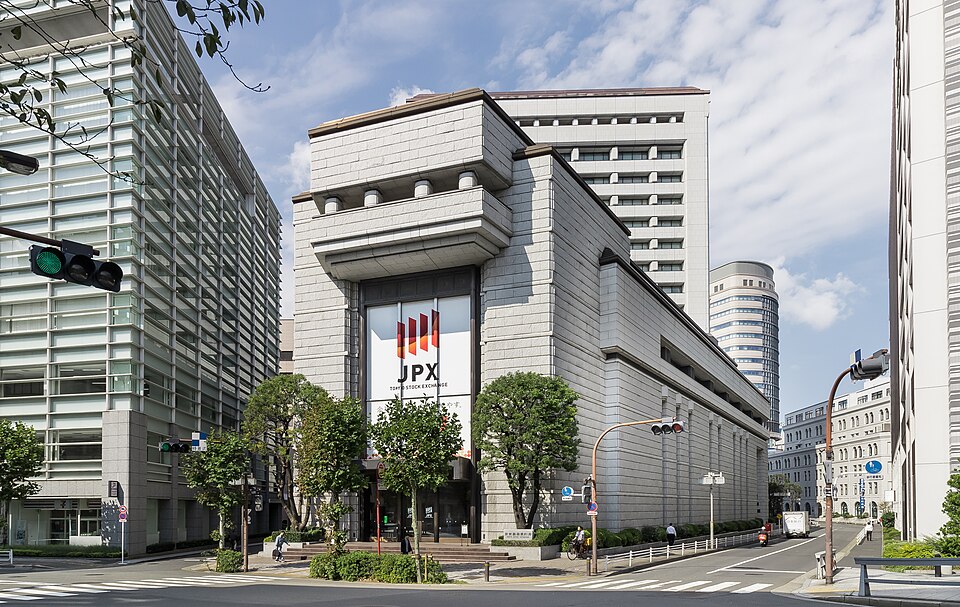
Chip stocks drove Monday’s trading in Asia. Japan’s Nikkei 225 added 2.1 percent to finish at 66,399.84, and South Korea’s Kospi jumped 4.6 percent to 6,995.39.
Samsung Electronics rose 5.7 percent and memory chipmaker SK Hynix 8.1 percent. In Tokyo, Rohm gained 7.8 percent, Tokyo Electron 4.7 percent and Renesas Electronics 3.1 percent.
“The AI complex continues to provide the local equity markets with its most dependable growth pulse,” said Stephen Innes, a former trader. He added that AI was “firmly in the leadership seat”, and that despite all the hand-wringing over valuations, “the hardware trade is still refusing to roll over.”
Elsewhere in the region
Other markets were quieter. Hong Kong’s Hang Seng lost 0.9 percent to 25,413.12. The Shanghai Composite gained less than 0.1 percent to 3,932.70, and Australia’s S&P/ASX 200 did the same, to 9,010.90.
In early European trading the CAC 40 in France was little changed at 8,282.06. Germany’s DAX slipped 0.2 percent to 25,993.23, and Britain’s FTSE 100 fell 0.2 percent to 10,814.01. US markets were shut for Labor Day, with Dow futures down 0.3 percent at 53,273.00 and S&P 500 futures little changed at 7,721.75.
Oil, the yen and the Fed
Brent crude rose 4 cents to $96.32 a barrel, after further escalation in the six-month-long US war with Iran. US benchmark crude fell 29 cents to $91.19. The US military called a claim that Iran had struck an uncrewed American vessel in the Strait of Hormuz a “total lie”. The strait remains effectively closed. A senior Iranian official said Tehran plans to announce an “exclusion zone” outside it, aimed at vessels it believes are trying to transit. That came after US strikes on three Iranian oil tankers, which followed Iranian ballistic missile launches at US warships.
The dollar slipped to 155.95 yen from 156.22, a rebound for the yen after the dollar reached 160 last week. The weakening yen has worried Japanese leaders, and attention is on what the Bank of Japan does with interest rates at its next meeting later this month. “The stronger-than-expected US employment report generated only a limited recovery in the dollar,” said Linh Tran, a market analyst at XS.com, “suggesting that the market is currently responding more strongly to the changing BOJ policy outlook.” The euro cost $1.1634, up from $1.1621.
Traders expect the Federal Reserve to raise rates before the year ends, with inflation still well above 3 percent. The Fed’s next meeting ends September 16, and August inflation figures are due September 11.




