
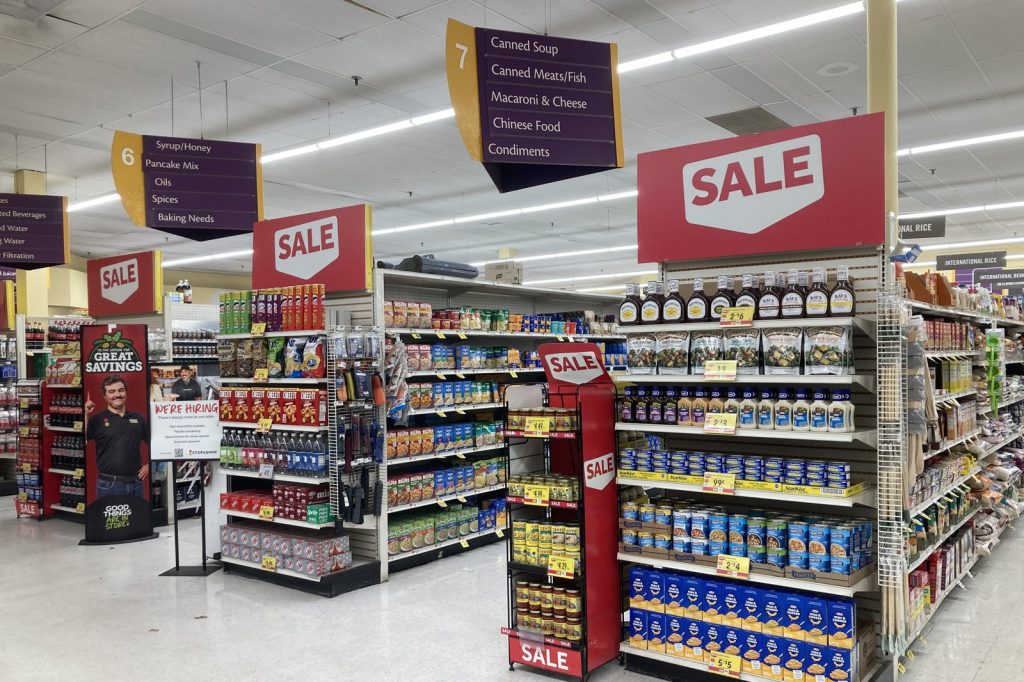
Grocery prices were 1.8 percent higher in September 2026 than a year earlier, according to the Agriculture Department’s Economic Research Service. From August to September they rose just 0.1 percent.
The wider numbers ran hotter. The all-items Consumer Price Index climbed 0.6 percent in the month and stood 3.7 percent above September 2025. Food overall was up 2.5 percent on the year. Restaurant and other foodservice prices rose 3.5 percent over the same period and 0.2 percent for the month.
Eggs down, fruit up
Of the 15 grocery categories the agency tracks, 11 got more expensive between August and September. One was flat and three fell. Only three moved by a full percentage point or more: beef and veal dropped 1.3 percent, fresh fruit gained 2.0 percent and eggs gained 1.0 percent.
Eggs are still far cheaper than they were. They were 20.6 percent lower than a year before, and the agency forecasts a 29.3 percent decline for 2026 as a whole. Avian influenza, which began spreading in 2022, had thinned laying flocks and pushed retail egg prices up 32.2 percent in 2022 and 21.9 percent in 2025. Fewer new outbreaks were detected in the first quarter of 2026 than a year earlier, and the supply of replacement pullets has been enough to cover normal flock turnover and unexpected losses.
Beef went the other way on the year. Prices were 3.5 percent above September 2025, and the agency expects an 8.7 percent rise for 2026 because federally inspected beef production has been lower in most months than in 2025. Coffee was 7.1 percent higher, and sugar and sweets 5.5 percent higher, with candy and chewing gum behind most of that increase.
The forecast
For 2026, the agency projects grocery prices will rise 2.3 percent, within a range of 1.9 to 2.7 percent. Over the 20 years from 2006 to 2025 they averaged 2.6 percent a year. All food is forecast to rise 2.8 percent this year and 1.7 percent in 2027, though the 2027 range is wide, from a 2.5 percent drop to a 6.2 percent gain.
Farm-level prices tend to swing harder than store prices, and the retail index usually trails them. Cattle prices at the farm fell 4.4 percent from August to September. Farm-level eggs fell 39.7 percent in that single month.




