
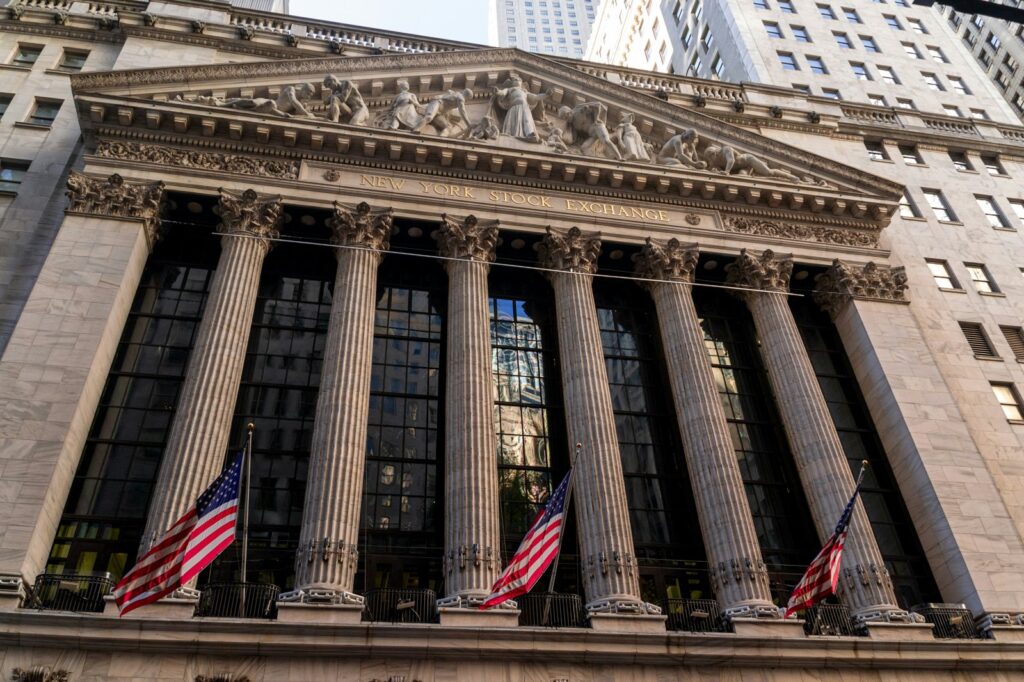
NEW YORK, October 15, 2026 — Hotter-than-expected U.S. inflation data sent the Nasdaq to its steepest single-day decline since late July on Wednesday, as traders sharply increased bets on another Federal Reserve rate hike this month. The tech-heavy index fell 1.88 per cent to 26,692.87 points, while the S&P 500 dropped 1.11 per cent to 7,718.94 points, its biggest one-day slide since July 29, according to The Business Times.
Inflation Data Spurs Rate Hike Bets
U.S. consumer prices accelerated in September as petrol costs surged and price pressures broadened beyond energy, data from the Labor Department’s Bureau of Labor Statistics showed. The report forced interest rate traders to price in a 37 per cent chance that Fed policymakers will raise rates in October, up from 22 per cent on Tuesday, according to CME’s FedWatch tool. “Investors are not happy with the report because that puts pressure on the Fed to raise rates to combat inflation,” said Adam Sarhan, chief executive of 50 Park Investments, in New York. “Inflation remains public enemy number one for the market and for the Fed.”
Tech and AI Stocks Lead Declines
Eight of the 11 S&P 500 sector indices declined, led lower by information technology, down 2.6 per cent, followed by a 1.78 per cent loss in communication services. The Philadelphia Semiconductor Index dropped 4.3 per cent, marking a sixth straight session of losses and its longest losing streak since May 2025. Oracle lost 8.8 per cent, while AI-infrastructure firms CoreWeave and Nebius tumbled 15 per cent and 10 per cent, respectively. Dell and Hewlett Packard Enterprise sank 11.4 per cent and 8.2 per cent, respectively, after Barclays downgraded the AI server makers to “equal-weight” from “overweight.”
Banks Weigh on Financial Sector
The S&P 500 Banks index dipped 0.7 per cent to its lowest close since June. Bank of America fell 4.8 per cent after the lender’s profit fell in the third quarter; it set aside US$1.2 billion to cover regulatory fines for failures to detect potential money laundering. Morgan Stanley dropped almost 3 per cent despite a rise in quarterly profit.
Market Breadth and Volume
Volume on U.S. exchanges was relatively heavy, with 18.0 billion shares traded, compared to an average of 17.6 billion shares over the previous 20 sessions. The Dow Jones Industrial Average declined a marginal 0.09 per cent to 51,621.48 points. After hitting a record high last week, the S&P 500 remains up almost 13 per cent in 2026, though the median index stock has gained just 4 per cent and over 200 components are in negative territory for the year.
Healthcare Sector Shows Resilience Amid Market Turmoil
While most sectors declined, healthcare emerged as a notable outperformer during the trading session. According to S2, the healthcare sector led gainers on Wednesday, providing a counterbalance to the broad-based sell-off driven by inflation concerns and rate hike fears. This divergence highlighted shifting investor sentiment toward defensive assets amid growing uncertainty about monetary policy.
The resilience in healthcare was underscored by specific stock movements, with Eli Lilly cited in S2 as climbing despite broader market volatility. The pharmaceutical giant’s strength was attributed to its ability to withstand macroeconomic headwinds, offering investors a perceived safe haven during periods of heightened inflation anxiety and rising Treasury yields, which increased by 2 basis points to 5.24% as noted in the same source.
This sector-specific strength contrasted sharply with the declines in technology and AI-related stocks, reinforcing the market’s rotation toward industries less sensitive to interest rate fluctuations. The healthcare outperformance also aligned with broader trends observed in the session, where gold prices fell 1.79% to $4,083.51, indicating that traditional havens were not uniformly favored, further emphasizing healthcare’s unique appeal during the inflation-driven sell-off.
Market Reaction and Sector Declines
The Nasdaq’s steepest single-day decline since late July reflected broad-based selling pressure across multiple sectors, with eight of the 11 S&P 500 sector indices finishing lower. Information technology led the decline, falling 2.6 per cent, while communication services dropped 1.78 per cent, underscoring investor retreat from growth-oriented and rate-sensitive areas of the market.
The Philadelphia Semiconductor Index slipped 4.3 per cent, extending its losing streak to six consecutive sessions—the longest since May 2025—as concerns over AI valuations and Chinese competition intensified. This downturn in semiconductors contributed to broader tech weakness, even as some firms like GlobalFoundries saw gains from government-backed initiatives.
Financials also came under pressure, with the S&P 500 Banks index dipping 0.7 per cent to its lowest close since June. Bank of America fell 4.8 per cent after setting aside $1.2 billion for regulatory fines tied to anti-money laundering failures, while Morgan Stanley declined nearly 3 per cent despite posting higher quarterly profits, illustrating how sector-wide concerns outweighed individual company performance.
Trading volume on U.S. exchanges reached 18.0 billion shares, surpassing the 20-session average of 17.6 billion, indicating heightened investor activity and uncertainty following the inflation release. Despite the sell-off, the S&P 500 remained up nearly 13 per cent for the year, though over 200 components were in negative territory and the median stock had gained only 4 per cent, highlighting a narrow market leadership driven largely by earlier AI-related strength.
Sources
- Nasdaq ends sharply lower as hot inflation data stirs rate hike worries
- Stock Market Midday, Oct. 14: Hot Inflation Weighs on Markets, CoreWeave Plummets 15%
- US stocks: Nasdaq ends sharply lower as hot inflation data stirs rate-hike worries
Photo: David Vives / Unsplash (Unsplash License)




