
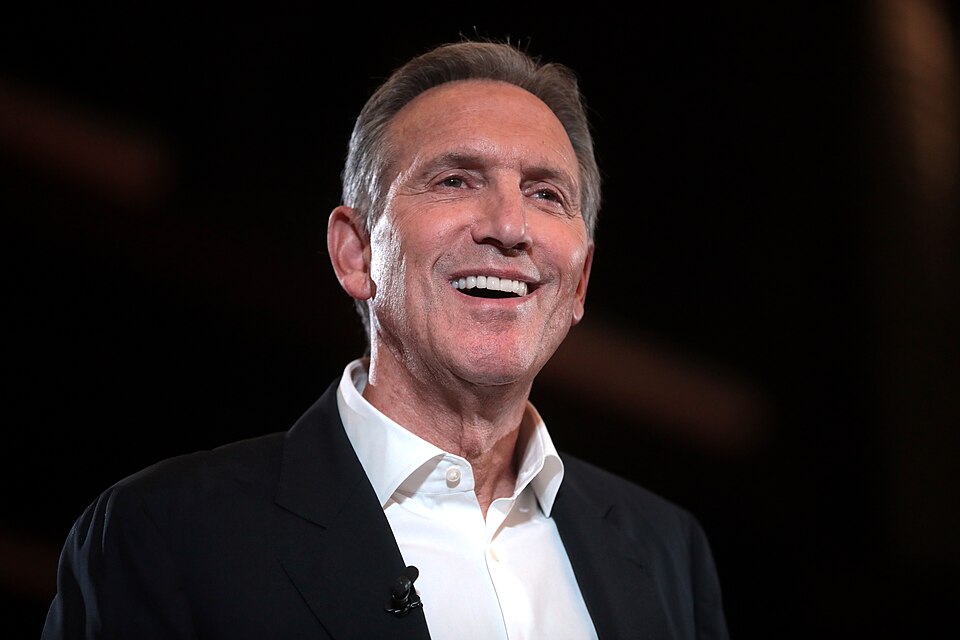
“When I walked in this store for the first time,” Howard Schultz later said of the original Starbucks in Seattle, “I knew I was home.” He was an appliance salesman then, and he had come only because a small coffee shop in the Northwest kept ordering more of his employer’s coffee makers than Macy’s did.
Brooklyn to Seattle
Schultz was born in Brooklyn on July 19, 1953, and spent his childhood in the Bayview Housing projects in Canarsie. The family had little. His mother, Elaine, worked as a receptionist, while his father, Fred, took odd jobs; when Schultz was seven, Fred was injured on the job as a diaper deliveryman and had no health insurance. Schultz later said the household sometimes went without food.
Sports got him out. A football scholarship took him to Northern Michigan University, and he graduated in 1975 with a degree in communications. Sales jobs followed, including a stint at Hammarplast, a seller of housewares and European coffee makers. That job pointed him toward Starbucks, then a Seattle roaster of beans and brewing gear with only a handful of locations.
The Milan idea
In 1982 Schultz joined the company to run retail operations and marketing. A trip to Milan the next year changed his thinking: he saw coffee bars everywhere, and a sense of community around them. Starbucks sold beans, not drinks. The founders, who liked the bean business, did not want to follow him. Zev Siegl, one of them, recalled saying “Oh no, that’s not for us.” Schultz kept pushing until they let him open a coffee bar in a new Seattle store. It drew hundreds of people a day.
It was not enough to keep him. In 1985 Schultz left to start his own coffee bar company, Il Giornale. Two years later, with investors behind him, he bought Starbucks, merged the two and became CEO. Investors had to be convinced that Americans would pay a premium for a drink they were used to buying for 50 cents.
He also built the company around its staff, whom he called partners. Starbucks offered health insurance to full-time and part-time workers, and stock options arrived when the company went public in 1992.
Leaving and returning
Schultz announced in 2000 that he was stepping down as CEO, though he stayed on the board. He returned to the top job in 2008, when the brand was struggling, and ordered more than seven thousand stores to close temporarily for retraining. Profits more than tripled by 2010. By 2012 Starbucks had more than 17,600 stores in 39 countries. In a 2009 CBS interview he summed up the pitch: “We’re not in the business of filling bellies; we’re in the business of filling souls.”
In late 2016 he said he would step down again, effective April 2017, with Kevin Johnson taking over. He left as chairman in June 2018, when the chain had more than 28,000 stores in 77 countries. Then came politics. In January 2019 he said he was preparing to run for president as an independent, and in September 2019 he dropped the idea after back pain forced a series of operations and pulled him off the trail.
A late return, and unions
Johnson retired in 2022, and Schultz came back as interim CEO. Workers at hundreds of stores had filed for union elections, starting with a Buffalo, New York, store in 2021. Schultz drew criticism for how he handled it. On October 2, 2024, the National Labor Relations Board ruled that a remark he made to a California barista in 2022, suggesting the worker could look for a job elsewhere, was a coercive threat.
He handed the job to Laxman Narasimhan in March 2023 and left the board that September, with the title of lifelong chair emeritus. He co-founded the venture capital firm Maveron. By October 2024, Forbes estimated his net worth at $3.4 billion, down from a peak of $4.9 billion in 2021.
Sources
- Howard Schultz: Biography, Former Starbucks CEO, Businessman
- Howard Schultz | Biography | Research Starters | EBSCOhost




