
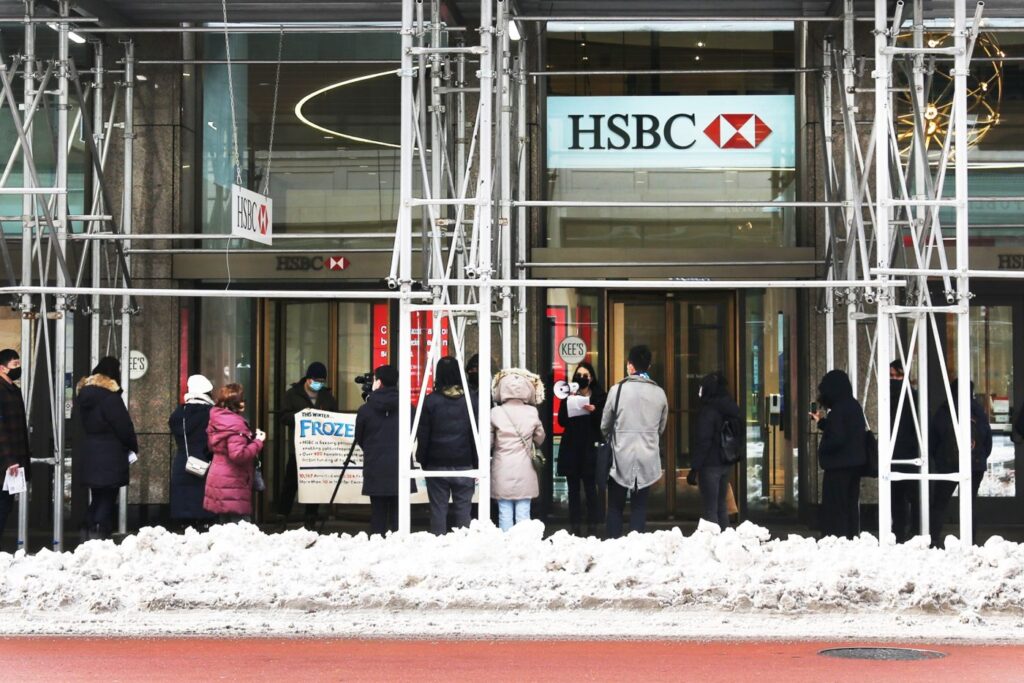
In mid‑2020, HSBC complied with a request from Beijing to freeze the bank accounts of several Hong Kong activists living abroad. The action, taken shortly after the National Security Law was enacted on 30 June 2020, ignited a wave of criticism and raised questions about the bank’s priorities. The National Security Law for the Hong Kong Special Administrative Region created four new offences—secession, subversion, terrorism and collusion with foreign forces—and granted authorities expanded powers to surveil, detain and search individuals suspected of violating those provisions.
Under Hong Kong’s Basic Law Article 18, national laws listed in Annex III become applicable in the city, a mechanism used to introduce the security legislation. HSBC’s decision to block the accounts was presented by the bank as a compliance measure aimed at avoiding punitive action from Chinese regulators.
Nonetheless, human‑rights organisations, politicians and members of the public viewed the move as an attempt to silence dissent and curtail freedom of expression. Observers described the episode as a test of the bank’s loyalty, questioning whether commercial interests in mainland China were being placed above commitments to democratic values. Despite the intense public scrutiny, HSBC was not fined for the freezes.
Critics have described the lack of penalty as a lenient outcome given the alleged impact on the individuals whose assets were frozen. The episode also highlighted broader concerns about the National Security Law’s potential for abuse, as it introduced a framework for extensive surveillance and enforcement that many argue threatens free speech and assembly in Hong Kong.
In the years following the incident, HSBC has invested heavily in strengthening its compliance infrastructure. The bank has pledged to enhance staff training and to adopt stricter internal controls to avoid a repeat of the 2020 episode. While the institution maintains that adherence to Chinese law is essential for protecting its business interests in the region, advocates argue that these steps fall short of demonstrating a genuine commitment to human‑rights standards.
The controversy remains a reference point for debates about corporate responsibility in geopolitically sensitive environments. It underscores the dilemma faced by multinational banks operating under divergent legal regimes: balancing regulatory compliance with the expectations of stakeholders who demand respect for democratic principles.
Since the law’s implementation, its impact on Hong Kong’s civil liberties has been widely criticised. Observers note that the legislation’s broad definitions and enforcement powers have contributed to a chilling effect on political expression and public assembly. The HSBC account‑freeze case continues to be cited as an early illustration of how the law can be applied to financial institutions and the individuals they serve.
Looking back, the episode serves as a reminder of the complexities inherent in global business operations. It highlights the importance for firms to navigate not only commercial imperatives but also the ethical implications of complying with laws that may conflict with internationally recognised human‑rights norms.
As the debate over Hong Kong’s security framework persists, the HSBC incident remains a touchstone for evaluating how financial entities respond to governmental pressure in contested political contexts.




