
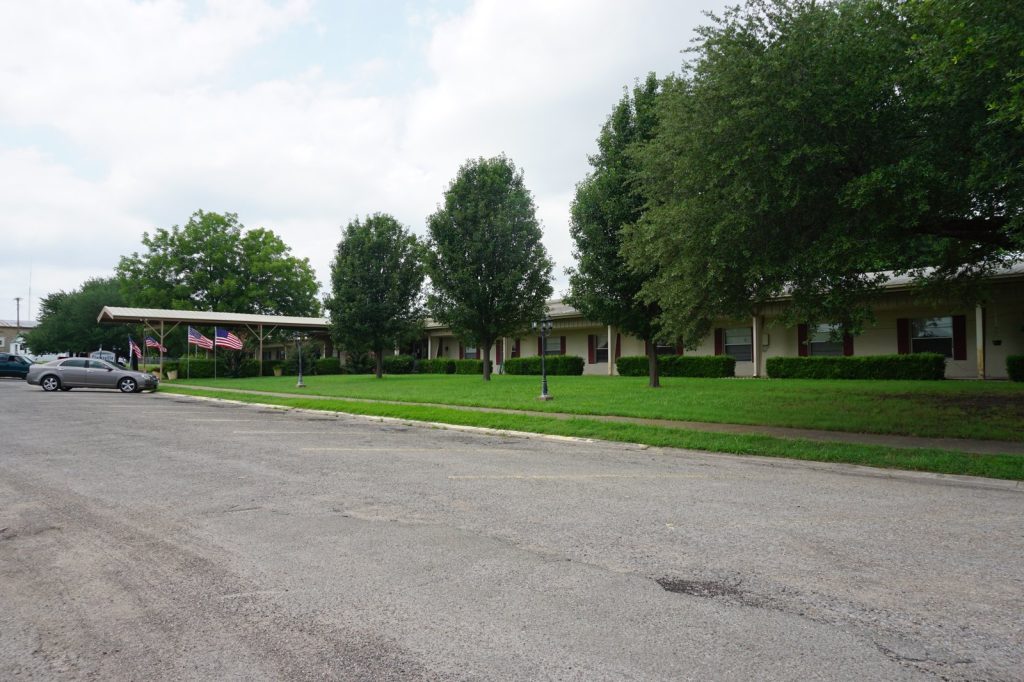
A nursing assistant in Tennessee says they once drove to a Sonic, on their own time and their own dime, to buy a hamburger for a hungry resident. The kitchen at their Ensign Group facility was allegedly kept locked. The assistant makes $16.75 an hour.
That account is one of many Hunterbrook Media says it received after publishing a first investigation into The Ensign Group, which it describes as America’s largest chain of nursing homes. The outlet disclosed that Hunterbrook Capital is short Ensign stock ($ENSG) and long a basket of comparable securities, and that positions may change at any time.
Ensign has not answered. According to Hunterbrook, the company ignored repeated emails and phone calls and did not respond to Bloomberg News either. It also did not engage when Hunterbrook sent a billboard truck to its headquarters. It sent security after the driver. What the company did do, Hunterbrook reported, was expand its stock repurchase authorization to $100 million.
Food, soap and a locked kitchen
Staff from Texas, Arizona, California and Tennessee wrote in, most of them anonymously for fear of retaliation. The Tennessee assistant, who has worked at the facility for a decade, claimed it was stripped of resources once Ensign took over. They also claimed it won a company award for cutting its food budget while residents went hungry. The award is not on display. “It’s not something to be proud of,” the assistant said.
Portions are small, they said. “They’re getting like half-cup-sized portions. Like if you were on a weight loss diet.” Asked what had changed most since Ensign arrived, the assistant answered: “The dignity of our residents.”
A nursing assistant at an Ensign home in California described a similar problem. Residents with diabetes or hypertension got the same meals as everyone else. “I don’t think it’s adequate,” the assistant said. “It’s not healthy at all.” With the floor so short-staffed, residents with dementia who cannot feed themselves are simply left unfed, they said, and “the patients end up losing weight, and they just go downhill.”
Federal law requires nursing facilities to give each resident a well-balanced diet that meets his or her specific needs.
Three former employees described shortages of even the cheapest supplies. A former licensed practical nurse wrote of constant gaps in basic materials for patients with “numerous wounds.” In Tennessee, an assistant said essentials were rationed and locked in closets that only management could open, so staff bought soap and deodorant themselves. The California assistant described the same closets. “For the first year or more we didn’t have access to bottles of soap,” they said.
Staff also lacked the alcohol pads needed to clean catheter drainage tubes, the California assistant said, so “people just empty it” and close it up again. That could cause urinary tract infections. “That could kill them.”
Staffing numbers
Both Tennessee employees, speaking independently, described the same practice: office, housekeeping and dietary workers had their hours logged as floor CNA hours. One said the point was so that “they don’t have to staff more CNAs for that shift.” The former LPN raised the same concern. The Tennessee assistant also said their own hours were misreported, with lunch breaks they never took inserted and one shift logged at 19 hours. “I know I didn’t work 19 hours,” they said. HR called it a mistake. Weeks later, they said, another 19-hour shift appeared.
Hunterbrook noted that padding nursing hours this way would also lift a facility’s CMS 5-star ratings for staffing and overall quality, which it said it found in its first investigation.
The same assistant estimated the building now has a single registered nurse for 67 patients. Sometimes nobody is free to help move a resident out of bed. “These people are wanting their showers. It’s impossible.”
An LPN who worked at an Ensign facility in Texas said there often weren’t enough aides to take patients to the bathroom. “I care deeply about the residents and have watched conditions deteriorate despite raising concerns internally,” the nurse wrote. As a new LPN, the nurse was responsible for some of the sickest patients in the building. “I was too ignorant at the time to realize my license was in jeopardy the longer I worked at this facility.” The nurse later quit skilled nursing altogether: “I loved my patients and wanted nothing but the best for them, but it was so hard on the soul to see the neglect.”
The California assistant recalled months when the floor had at most one RN, and the only RN giving hands-on care was the assistant director of nursing. LPNs covered the rest alone, though in California they are not licensed to manage ventilators or give IVs independently.
Ensign has not replied to Hunterbrook or other outlets, but the company has spoken with Wall Street. Analysts at RBC Capital Markets and UBS Securities published notes reassuring investors after talks with management, and Ensign also spoke directly with hedge funds that hold the stock.




