
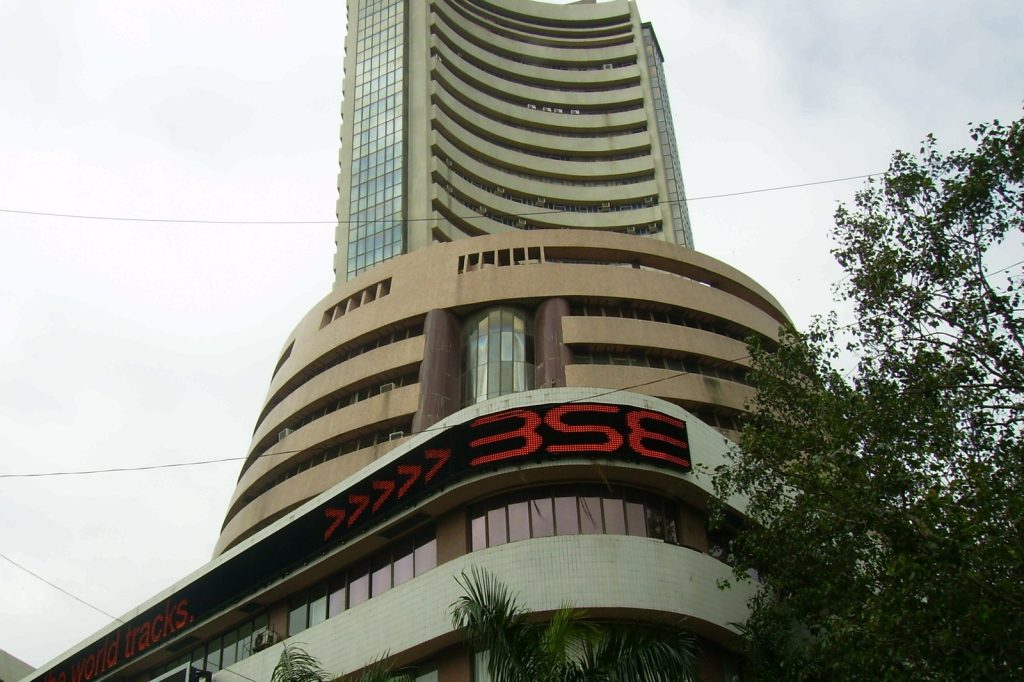
MUMBAI — The numbers tell a clear story. India’s stock markets closed Monday with the Sensex down 372.10 points and the Nifty below 24,000. That 0.48 percent drop for the Sensex and 0.46 percent for the Nifty came on the back of a single, sharp catalyst: renewed US-Iran hostilities around the Strait of Hormuz.
Brent crude jumped 1.51 percent to USD 73.09 a barrel. Oil prices and the Strait of Hormuz are linked by a simple, brutal logic.
A fifth of global petroleum passes through that narrow waterway. When attacks happen there, oil gets more expensive. When oil gets more expensive, importing nations like India feel it fast.
The session was worse before it got better. The Sensex hit an intraday low of 76,621.75 — a drop of 478.72 points.
That is a 0.62 percent fall at its worst moment. Then the two sides agreed to halt hostilities and renew talks. The market clawed back some ground, but not all of it.
The final close of 76,728.37 still represented a 372.10-point loss. Ponmudi R, CEO of Enrich Money, an online trading and wealth tech firm, put it bluntly. The deal’s durability, he said, remains in question.
He warned of “headline risk and volatility deeply embedded in market reactions.” That is a careful way of saying no one trusts the truce. Kotak Mahindra Bank was the worst performer among Sensex stocks.
It fell 3.24 percent. The trigger was not geopolitical. The bank announced that its Managing Director and CEO, Ashok Vaswani, will quit upon completion of his three-year tenure.
He will not seek re-appointment when his current term ends on December 31, 2026. That is more than two years away, but markets dislike leadership uncertainty.
The sell-off was immediate. Other losers included Mahindra & Mahindra, Maruti, InterGlobe Aviation, UltraTech Cement and Larsen & Toubro. These are not random names.
Mahindra & Mahindra and Maruti are auto stocks, sensitive to fuel prices. InterGlobe Aviation runs IndiGo, India’s biggest airline. Jet fuel is a major cost.
When crude rises, airline stocks fall. UltraTech Cement and Larsen & Toubro are infrastructure plays, tied to construction and capital spending.
They fell too, pulled down by the broader mood. The numbers reveal a pattern. The market did not crash.
A 0.48 percent decline is not a rout. But the intraday volatility — nearly 479 points from peak to trough on the Sensex — shows how quickly sentiment can shift when geopolitics turns hot.
The Strait of Hormuz is a chokepoint, not just for oil tankers but for investor confidence. A single weekend of attacks and counterattacks was enough to push the Nifty below the 24,000 psychological level. Brent crude at USD 73.09 is not a crisis level.
But the direction matters. Oil had been hovering lower in recent weeks. The jump Monday erased those gains and then some.
For India, which imports roughly 85 percent of its crude, every dollar rise in oil prices widens the trade deficit and pressures the rupee. Those effects take time to show up in corporate earnings, but the stock market prices them in immediately.
The Sensex had 30 stocks. The Nifty had 50. Some went up.
The report notes that stocks such as E — the text cuts off, but the implication is that some names bucked the trend. That is normal.
Even on bad days, there are winners. But the dominant story Monday was the sell-off, driven by a single geopolitical flashpoint. The agreement to halt hostilities and renew talks is fragile.
The report calls it a deal with “durability” in question. That is the key number that cannot be quantified: the probability of a breakdown. Markets hate uncertainty.
Monday’s trading session was a direct reflection of that.
{“@context”: “https://schema.org”, “@type”: “NewsArticle”, “headline”: “India’s Sensex Drops 372 Points as US-Iran Tensions Raise Oil Prices”, “description”: “MUMBAI — The numbers tell a clear story. India’s stock markets closed Monday with the Sensex down 372.10 points and the Nifty below 24,000. That…”, “datePublished”: “2026-06-29T12:09:07+00:00T09:30:00+00:00”, “author”: {“@type”: “Person”, “name”: “Reza Karimi”}, “publisher”: {“@type”: “Organization”, “name”: “InfoPulse Today”, “url”: “https://newsfeed.infopulsetoday.com/”}}




