
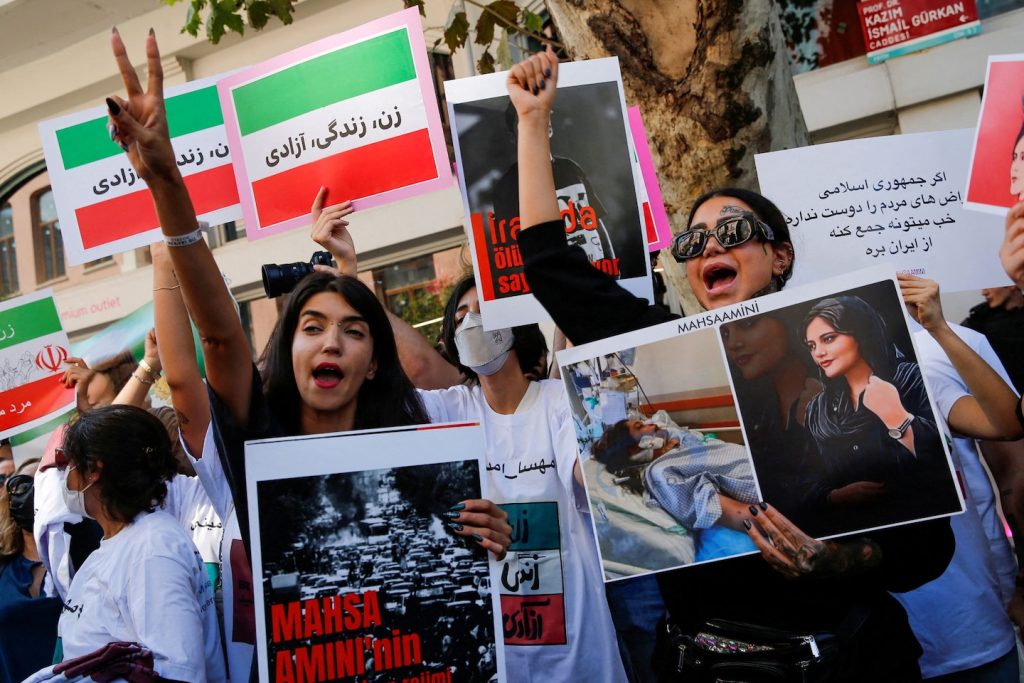
Five young men were put to death in Iran in the space of a week, all convicted over the January 2026 protests. For families across the region who have watched the country’s crackdown, the speed of it is hard to ignore. Amnesty International says the trials behind these sentences were grossly unfair and tainted by torture.
The five are Ali Hemmati Sistanian, Alireza Raisi, Alireza Sepahi, Majid Nikandish and Siavash Jamshidi Kheirabadi. They were executed between September 30 and October 5, 2026.
Mashhad, Shahr-e Kord and Esfahan
Nikandish and Sistanian were executed on September 30 in Mashhad, in Razavi Khorasan province. Iran’s judiciary news agency Mizan said they were accused of blocking streets, destroying property, arson and involvement in the deaths of four members of the security forces during protests in Mashhad on January 8, which authorities labelled a “coup”. Amnesty says televised forced confessions, including some taken when they had no lawyer, were used to convict them. The group Iran Human Rights, based outside the country, reported that Nikandish suffered prolonged solitary confinement and was hung by his arms, leaving him with a dislocated shoulder and a broken jaw.
Kheirabadi was executed on October 3 in Shahr-e Kord, in Chaharmahal and Bakhtiari province. Mizan said he was convicted of “waging war against God” for drawing and firing a firearm, and of gathering and colluding against national security. Amnesty says it has often seen that second charge used against people for simply joining protests. His confession, too, was televised and used as evidence.
Raisi and Sepahi were executed in Esfahan on October 5 after the “Alikhani Square” mass trial over the January 8 protests there. Their forced confessions aired on state media on January 23, before the trial opened. Amnesty learned that Sepahi was tortured in detention, with prolonged solitary confinement, beatings and electric shocks, and that he had no lawyer during interrogation. Five other men from the same case were executed earlier, and at least eight more are at risk.
A wider pattern
Diana Eltahawy, Amnesty’s Deputy Regional Director for the Middle East and North Africa, said the authorities “weaponize the death penalty” so that dissent costs too much and the population is frightened into silence. She pointed to denied access to lawyers, ignored torture complaints and trials before Revolutionary Courts as a familiar pattern.
Iranian authorities have executed at least 34 people in connection with the January uprising, Amnesty says. Security forces killed thousands of protesters and bystanders on January 8 and 9. Politically motivated executions rose further after US-Israeli attacks on Iran on February 28, 2026, and Amnesty says authorities now cite “wartime conditions” to justify tighter repression.
The organisation wants coordinated diplomatic pressure to stop all planned executions, a referral of Iran to the International Criminal Court by the UN Security Council, and an international criminal justice mechanism set up through the UN General Assembly. Amnesty opposes the death penalty in all cases.




