
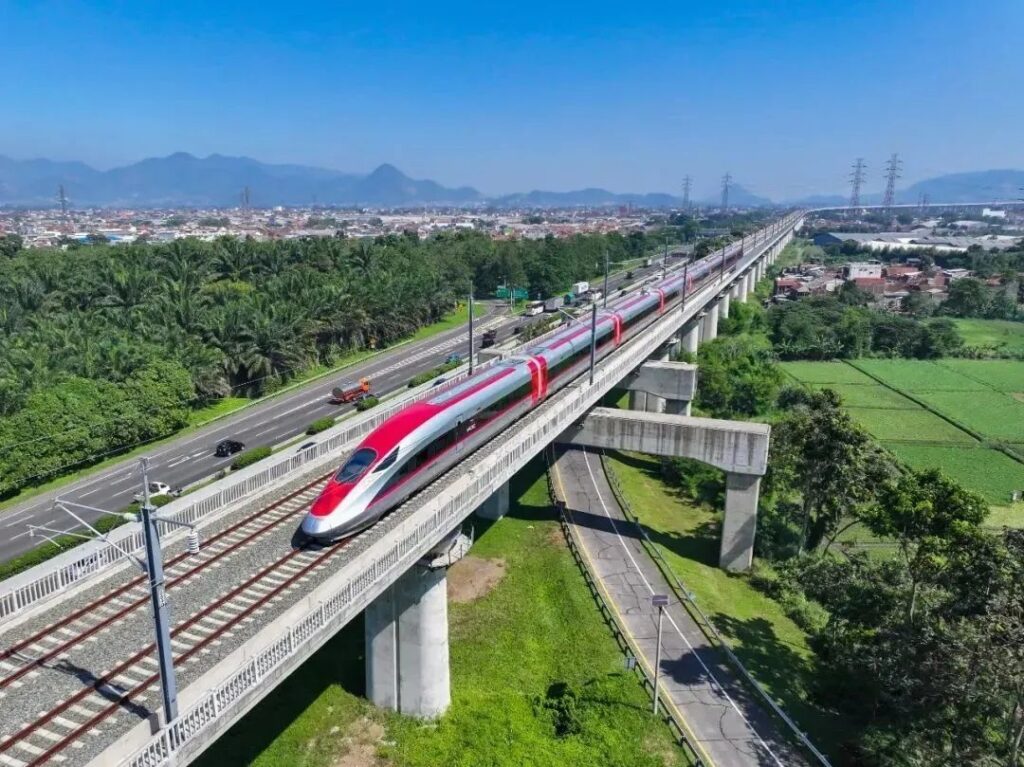
JAKARTA, 19 April, 2024 The Jakarta-Bandung High-Speed Railway (HSR) observes its six-month milestone, having transported 2.56 million passengers since its inception. Operated by PT Kereta Cepat Indonesia-China (KCIC), a collaboration between Indonesian and Chinese state-owned firms, the HSR has conducted 7,050 train trips, covering over 1.26 million kilometers since its commercial launch in mid-October last year. Currently, the railway operates 52 daily train trips, up from 14, and offers over 31,000 passenger seats, a significant increase from the initial 8,400.
The peak daily passenger count reached 21,537, with a maximum seat occupancy rate of 99.6%. Leveraging China’s expertise in high-speed rail, KCIC ensures smooth operations, including during adverse weather conditions.
Dynamic fare policies, optimized schedules, and enhanced station facilities aim to better serve passengers. As Southeast Asia’s inaugural high-speed rail system, the HSR achieved the two-million-passenger mark in early March, revolutionizing travel between Jakarta and Bandung. Deputy Minister Septian Hario Seto foresees a shift towards mass transport, facilitated by the railway’s design speed of 350 km/h, which reduces travel time between the two cities from over three hours to just 40 minutes.
The development of high-speed rail networks has been a key focus for many countries in recent years, as they seek to improve transportation infrastructure and reduce travel times between major cities. This trend is driven by the need for efficient, reliable, and environmentally friendly transportation solutions that can support economic growth and urbanization.
In the context of Southeast Asia, the region’s rapid economic development and growing population have created a pressing need for modern transportation systems that can connect cities and facilitate the movement of people and goods. High-speed rail systems, like the Jakarta-Bandung High-Speed Railway, offer a number of benefits, including reduced travel times, increased passenger capacity, and lower environmental impacts compared to other modes of transportation. These systems require significant investment in infrastructure, including the construction of dedicated rail lines, stations, and maintenance facilities.
However, they can also generate significant economic returns, both through the creation of jobs and stimulation of local economies, as well as through the efficient movement of people and goods. The collaboration between Indonesian and Chinese state-owned firms on the Jakarta-Bandung High-Speed Railway reflects a broader trend of international cooperation on major infrastructure projects. Such partnerships can bring together expertise, technology, and funding from different countries, helping to drive the development of complex and ambitious projects.
In the case of high-speed rail, China has developed significant expertise and experience in recent years, with a large and expanding network of high-speed lines that connect many of the country’s major cities. The success of the Jakarta-Bandung High-Speed Railway has significant implications for the future of transportation in Indonesia and Southeast Asia more broadly.
As the region continues to urbanize and grow, there will be a need for efficient, reliable, and sustainable transportation systems that can connect cities and facilitate the movement of people and goods. The development of high-speed rail networks, like the Jakarta-Bandung line, can play a key role in meeting this need, and can help to drive economic growth, reduce congestion and pollution, and improve the quality of life for citizens in the region.




