One hundred twenty-four light-years away, a molecule hangs in the air of an alien world. Dimethyl sulfide. On Earth, almost every puff of it comes from living things—phytoplankton, bacteria, the decay of organic matter. The James Webb Space Telescope has now found it in the atmosphere of K2-18b.
The planet is a sub-Neptune, roughly the size of Neptune but orbiting a red dwarf star. The University of Cambridge research team that made the detection did not set out to find life. They set out to study the atmosphere. They pointed Webb at K2-18b and watched starlight filter through the planet’s upper air. Different molecules absorb light at specific wavelengths. The pattern that came back contained the signature of dimethyl sulfide.
That is a fact. The interpretation is where things get careful.
Dimethyl sulfide is what biologists call a biosignature—a chemical produced in nature almost exclusively by living organisms. On Earth, marine microbes churn out roughly 60 million metric tons of it every year. No known geological or chemical process produces it in meaningful quantities. If you find it in an atmosphere, the simplest explanation is biology.
But simplest is not the same as certain. K2-18b is not Earth. It is bigger, colder, and wrapped in a thick envelope of hydrogen and helium. The chemistry of such an atmosphere is not fully understood. There could be reactions that generate dimethyl sulfide without life. The Cambridge team has not claimed otherwise. They have reported a detection and noted its implications.
The implications are large.
K2-18b sits in the habitable zone of its star—the region where liquid water could exist on a rocky surface. But the planet is not rocky. It is a sub-Neptune, which means it likely has no surface at all, just a deep, crushing atmosphere that transitions into a hot, high-pressure interior. Habitable does not mean inhabited. It means the temperature is right for liquid water. That is all.
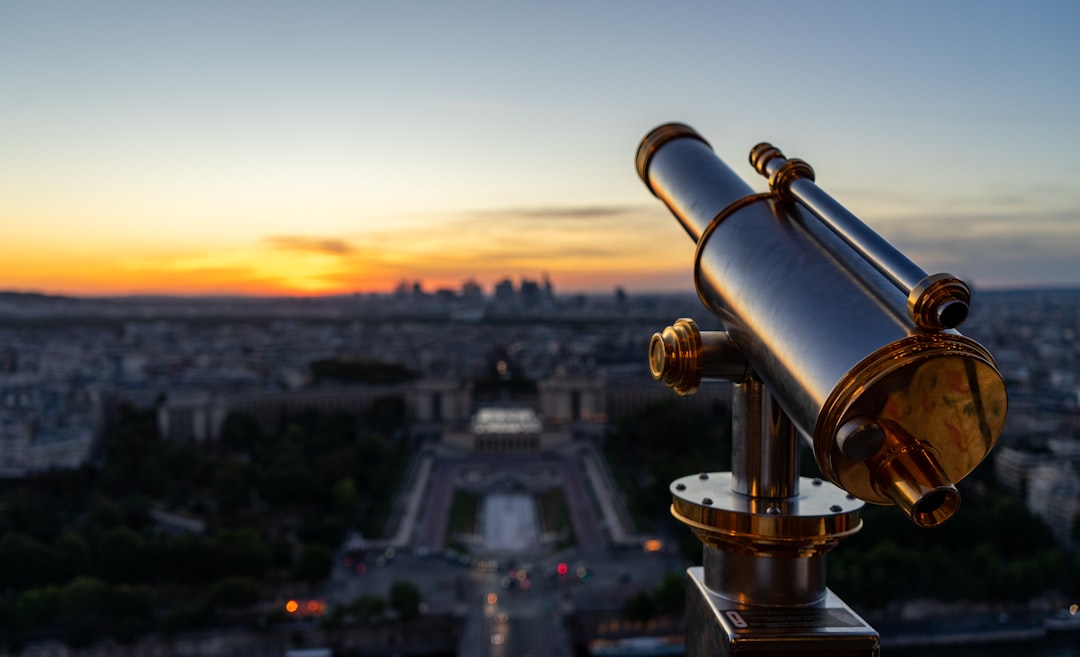
Still, the detection of dimethyl sulfide changes the conversation. Before Webb, astronomers could study exoplanet atmospheres only in the broadest strokes—detecting water vapor, carbon dioxide, methane. Specific organic molecules were out of reach. Webb’s infrared instruments changed that. They can pick out individual chemical fingerprints. They can see dimethyl sulfide at 124 light-years.
The University of Cambridge has been running since 1209. It has seen theories rise and fall. This one is early. The detection is a single data point, not a conclusion. The researchers will need to confirm it with additional observations. Other teams will try to replicate it. The molecule could be there. It could be something else that looks similar in Webb’s data. That is how science works.
But the fact remains: a chemical tied to life on Earth has been found on a world 38 parsecs away. That is not nothing. It is a reason to keep looking.
Webb was built for moments like this. Its 6.5-meter mirror and its position a million miles from Earth give it the sensitivity to read the skies of distant planets. It was designed to detect biosignatures. It has now done exactly that. Whether the signature means life or means something else, the telescope has done its job.
The next step is more time on K2-18b. More wavelengths. More analysis. The planet will not go anywhere. It will keep orbiting its star, keep letting starlight pass through its atmosphere. Webb will keep watching. And somewhere in that light, the answer is waiting.