
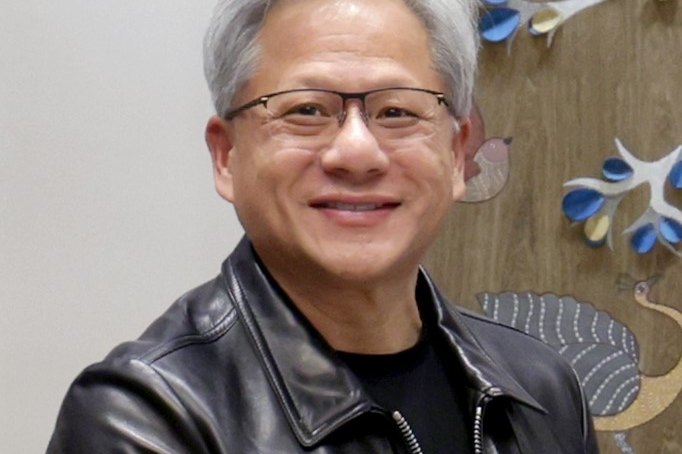
The youngest student at Oneida Baptist Institute in Clay County, Kentucky, was nine years old, and his job was cleaning the toilets. Every student had a job. This one scrubbed the bathrooms for a hundred teenage boys. His name was Jensen Huang.
Fortune reported that Huang, now chief executive of Nvidia, told the story in a recent appearance on Joe Rogan’s podcast. He and his brother had been sent to the United States in the mid-1970s with almost nothing. Their family was living in Bangkok during one of Thailand’s periodic coups, and their parents decided it was no longer safe for the boys. They contacted an uncle in Tacoma, Washington, whom the family had never visited, and asked him to find a school that would take two foreign boys with little money. He found Oneida, in one of the poorest counties in the country.
A school without locks
Huang described dorms with no closet doors and no locks. Students smoked constantly, and they settled arguments with knives. He said he tried smoking for a week at nine. His roommate was a 17-year-old wrapped in tape from a recent fight, the “toughest kid in school.” His brother was assigned to the tobacco fields the school ran to fund itself, “kind of like a penitentiary,” Huang said. He joked that he only wished the boys had been “a bit more careful” in the bathroom.
Fortune noted how cheerful he stayed throughout the interview, even on the grimmest details. Most of his memories of the period, he said, were good. He recalled telling his parents about a restaurant that was “lit up” like “the future,” where the food came in a box and the hamburger was incredible. “It was McDonald’s,” he said, laughing.
Phone calls to Bangkok cost too much. So the parents bought the boys a cheap tape deck, and once a month the brothers recorded an audio letter about life in coal country. Their parents taped over the same cassette and mailed it back.
Two years later the parents reached America with suitcases and a little money. His mother worked as a maid. His father, a trained engineer, circled openings in the newspaper classifieds and phoned whoever answered, and eventually landed a job at a consulting engineering firm designing factories and refineries. “They left everything behind,” Huang said. “They started over in their late thirties.”
One memory still “breaks my heart,” he told Rogan. In a rented, furnished apartment, he and his brother broke a flimsy particleboard coffee table. “I just still remember the look on my mom’s face,” he said. “They didn’t have any money, and she didn’t know how she was going to pay it back.”
From a Denny’s booth to the DGX-1
Huang worked at Denny’s, first as a dishwasher and then as a busboy. Fortune wrote that the idea for Nvidia took shape in a booth there, where he met two friends to sketch out a company that would build a chip for 3D graphics on a personal computer.
Nvidia’s best-known bets drew little applause at first. When the company introduced CUDA in 2006, the cost of the chip roughly doubled, revenue did not move, and the company’s valuation fell from about $12 billion to between $2 billion and $3 billion. “When I launched CUDA, the audience was complete silence,” Huang said. “Nobody wanted it.”
The first AI supercomputer, the DGX-1, got the same reception: silence, and no purchase orders. The only call came from Elon Musk, who said his “nonprofit AI lab” needed one. Huang thought the deal was dead. “A nonprofit is not buying a $300,000 computer,” he told Rogan. Musk insisted, so Huang loaded one of the first units into his car and drove it to San Francisco. In 2016 he climbed the stairs to a cramped upstairs office where researchers including Pieter Abbeel and Ilya Sutskever were working. It was OpenAI. He left the machine and drove home.
Fortune put the value of Huang’s company at $4.5 trillion. He does not call any of it foresight, the article said, just an extension of the risk his parents took with two boys and a tape deck.




